
In 1995 the movie Waterwold, starring Kevin Costner, was released in theaters worldwide. The motion picture narrates the desperate search for the last shred of emerged land by the mutant Martin, who is living in a world where the Polar icecaps have melted and the entire planet is covered by oceans. The year is 2500 or so.
Is this just pure science fiction? Not really, considering the daunting scenarios being provided to us by the scientific community. In fact, for several years now, there has been awareness of how global warming is causing the melting of glaciers and the rise of sea levels, with even catastrophic consequences for those living along the coasts and on the islands of oceanic archipelagos.
Hollywood has been providing us with a range of dystopian futures related to climate change for some time now, however, they seem not so unrealistic considering what is happening under our eyes. At the same time, the world of architecture and engineering have been moving in the direction of solutions that have a science fiction feel and that are fascinating in their innovative capacity.
If in the desert of Saudi Arabia the futuristic The Line is being built, a linear and vertical Smart City, as long as 170 kilometers, 500 meters high and just 200 meters wide, which is scheduled to be completed by 2030, in South Korea the race is on for another city of the future, namely the floating city OCEANIX Busan, to be accomplished by 2025. A kind of response to the scenario feared in the aforementioned movie Waterworld.
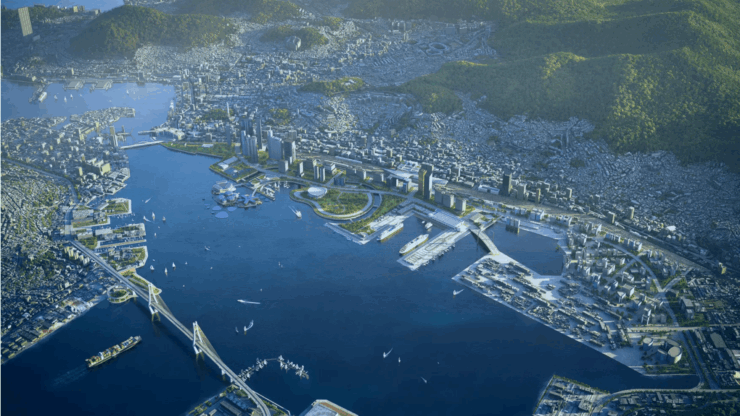
South Korea has a densely populated coastline, stretching 2413 km and directly facing the ocean; the consequences for the Country, if appropriate measures are not taken ASAP, would be catastrophic. The Korean Government, conscious of the risks, but driven by its characteristic growing impulse toward innovation and experimentation, has rejected all those traditional solutions that involved the construction of dams in the sea (such as Venice’s MOSE) or drainage systems (similar to those implemented for example in the city of Miami, Florida), to focus on the development of a floating metropolis in the Busan metropolitan area.
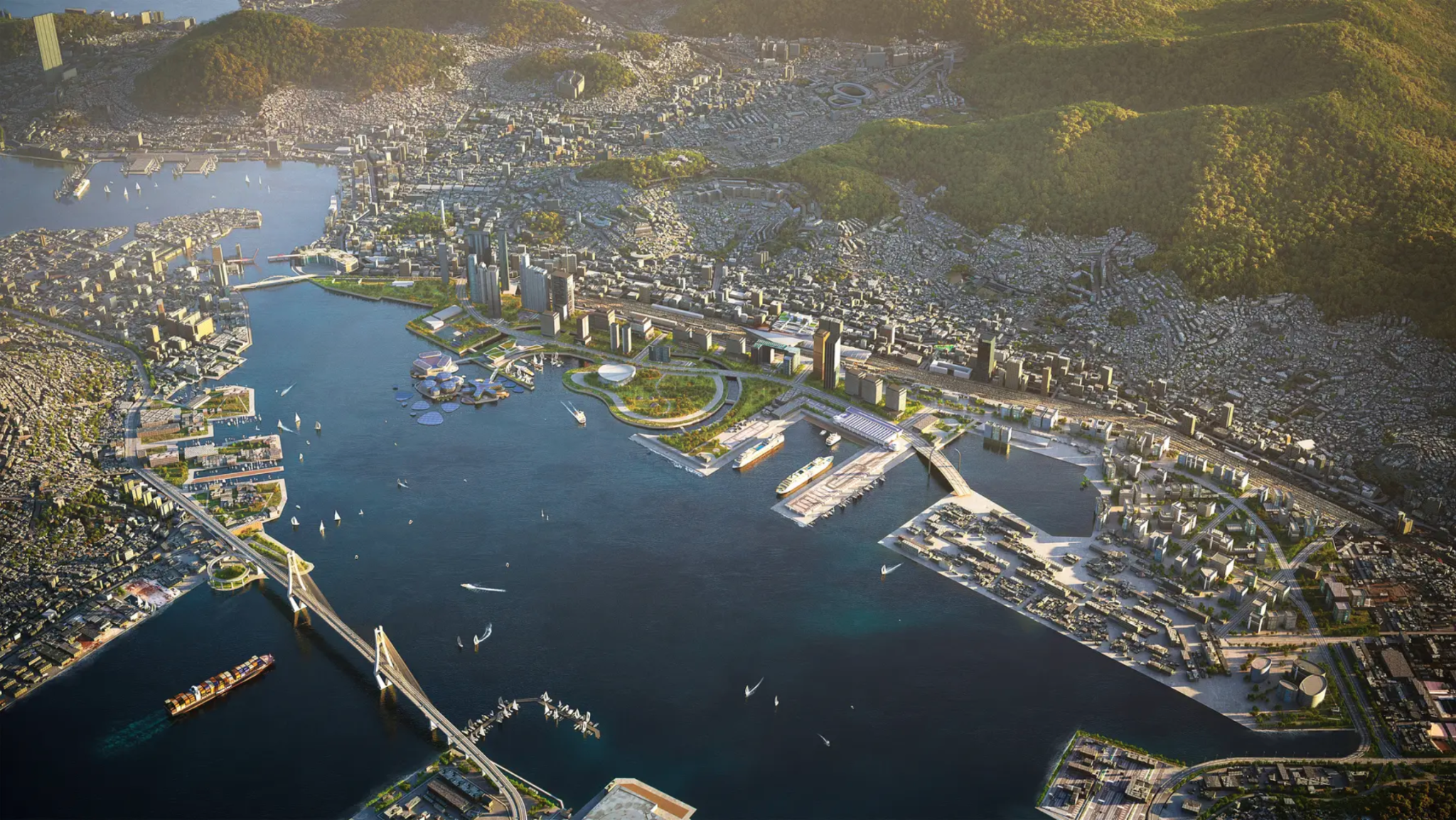
You might wonder why Busan and not Incheon perhaps, on the doorstep of the capital. The answer lies in the fact that Busan is a window for the Country to the eyes of the world, much more than the international airport city. In fact, Busan is the largest port city in South Korea and simultaneously the second largest metropolis in size and population density after Seoul. The city also turns out to be overpopulated as it houses 3.5 million inhabitants in an area of just 770 square kilometers, meaning on average something like 3,400 inhabitants per square kilometer, with a remarkable growth trend for the upcoming years because of its strong attractiveness. Everyone is willing to move to Busan. For a local comparison, Rome’s average population density is 2230 inhabitants per square kilometer, while Milan’s is 2036. Seoul, for the record, has 15604 inhabitants per square kilometer.
Returning to Busan, its most important feature and reason for worldwide fame is its impressive port complex, which combines 4 ports into one and makes it one of the major trade gates in the Far East as well as one of the largest containership ports in the world. Just think that Busan’s port activity generates 3% of South Korea’s GDP. Last but not least, the metropolis is ranked as the 10th top destination in the world for hosting global-scale events, which leads it to be a city under heavy tourist pressure.
This all makes Busan the most suitable territory to realize this innovative floating city prototype: OCEANIX Busan.
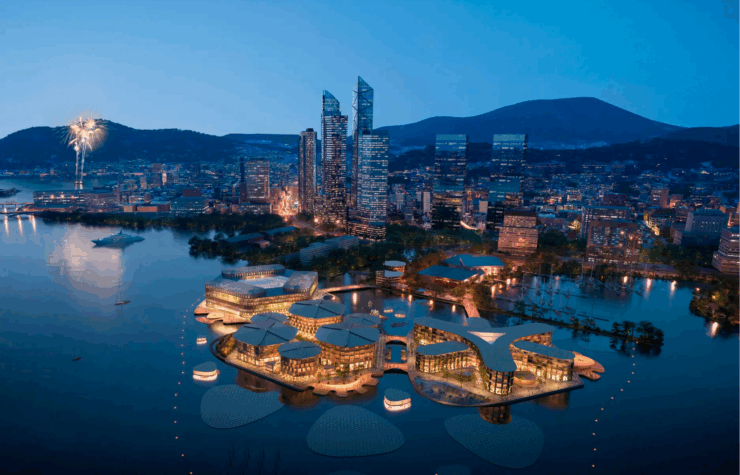
“The site in Busan is the perfect place for us to build the prototype. It’s close to the city, yet has relatively deep water. Each platform will have a mobility pavilion where you can switch between land-based and water-based vehicles. You can also walk from your house or use a boat, a kayak, or a ferry to move between the platforms as the city grows.
DANIEL SUNDLIN – PARTNER, BIG
Link
Envisioned by the imaginative genius of Bjarke Ingels, the founder of the homonymous architecture firm, better known as BIG, OCEANIX Busan is the world’s first prototype of a resilient and sustainable floating community. As stated on BIG’s website, the project was unveiled during the Second United Nations Roundtable on Sustainable Floating Cities, held in April 2022. BIG’s firm partnered with local architectural firms like the Samsung SAMOO Architects and Engineers as well as the British design group ARUP; it was also partnered with the Busan Metropolitan City and UN-Habit (The United Nations Human Settlements Program of the United Nations Assembly), an organization which aims to bring to reality resilient and sustainable projects for the future of the planet.
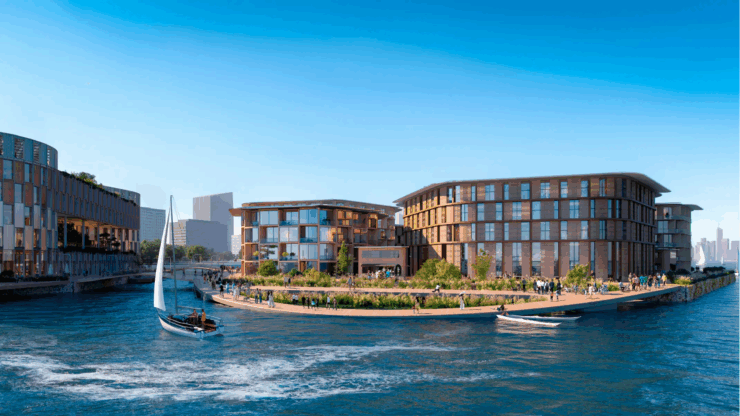
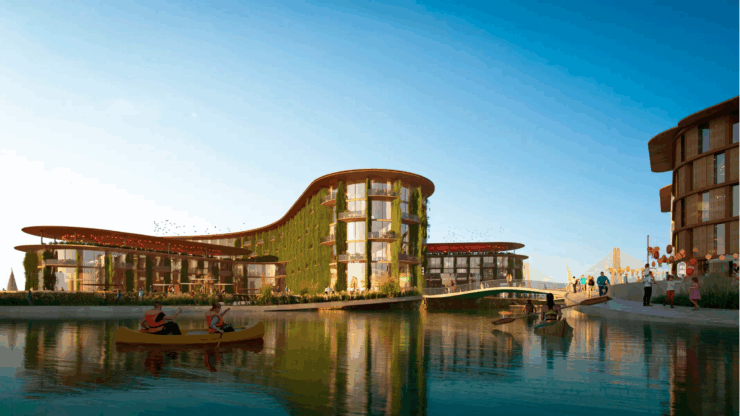
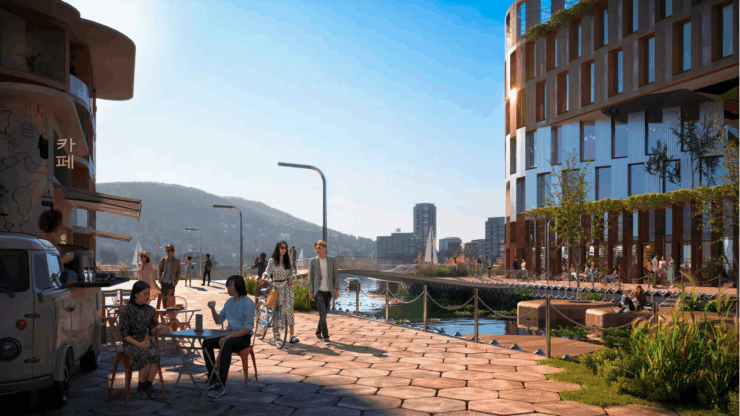
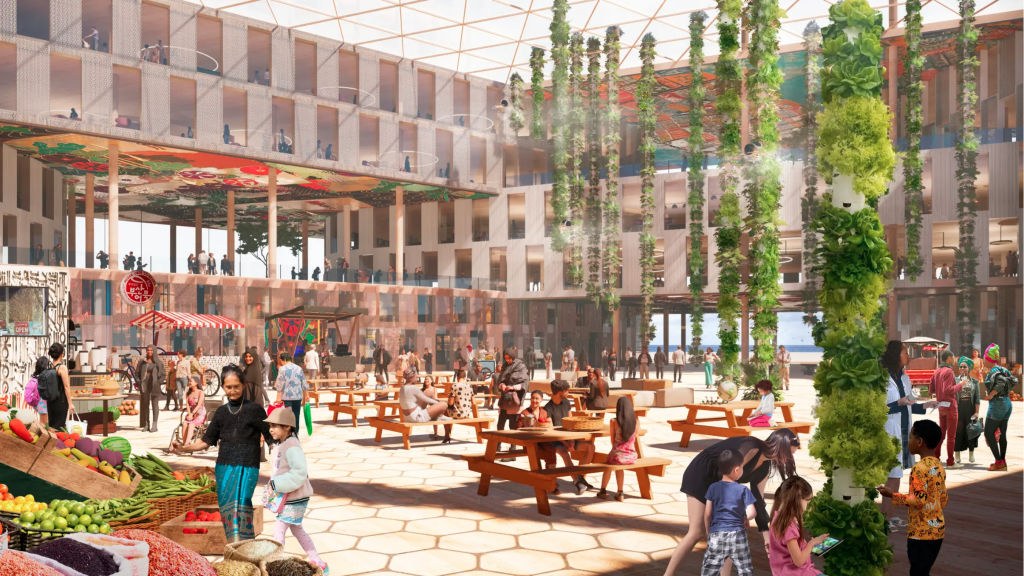
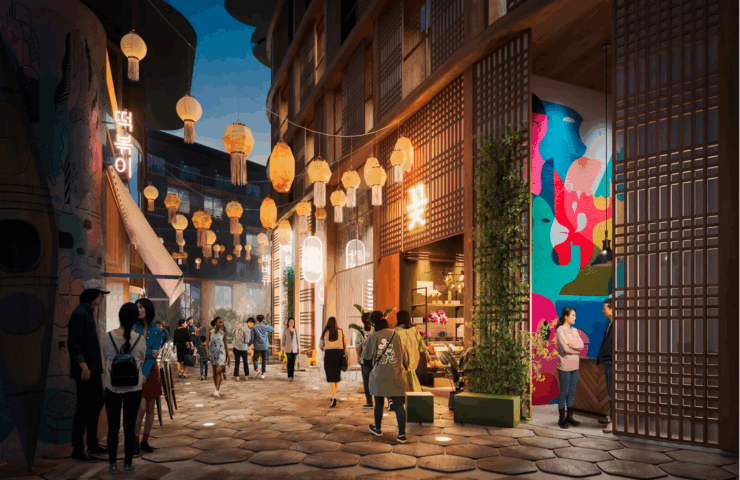
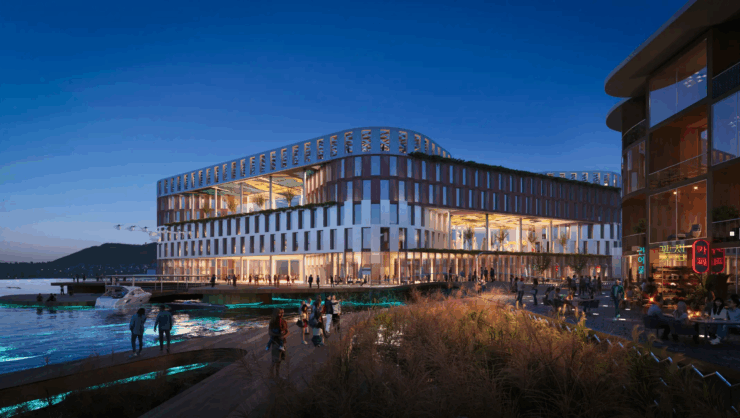
According to what is detailed on the website of the lead developer, the project will start with the construction of three interconnected platforms with a total area of 15.5 acres (about 62,000 square meters), capable of housing a community of 12,000 people. Each neighborhood has been designed to serve a specific purpose: living, research and lodging. Accordingly, the Living Platform will be the dedicated space for permanent residents and will serve them as a place of living and social gathering; the Research Platform, will fulfill the role of the experimental garden of the floating city through the construction of a temperature-controlled garden and hydroponic towers. Finally, the Lodging Platform will become a hub for the temporary accommodation of tourists, thanks to the construction of hotels with rooms overlooking the harbor, restaurants, stores and other common spaces. Each platform will be connected to the mainland with variable span bridges, circumscribing a protected blue lagoon in addition to floating outposts for rest, art and performances. Although a connection to the land-based subway line is planned, inter-platform transportation will not be based on cars and trains, but will be possible through a system of “shared and multimodal mobility,” in which aquatic buses also appear to be contemplated, according to renderings made available on the BIG studio website.
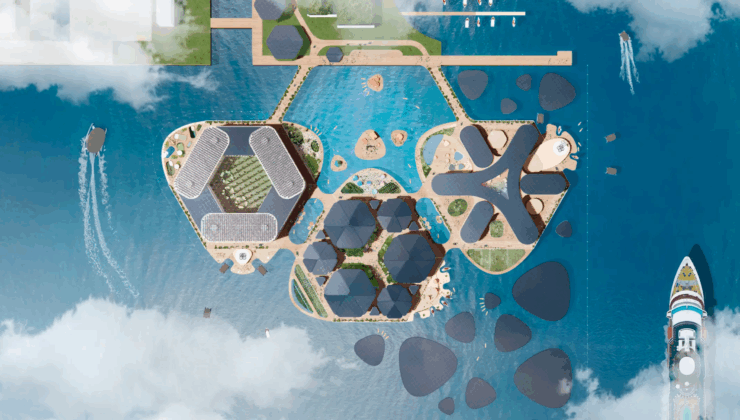
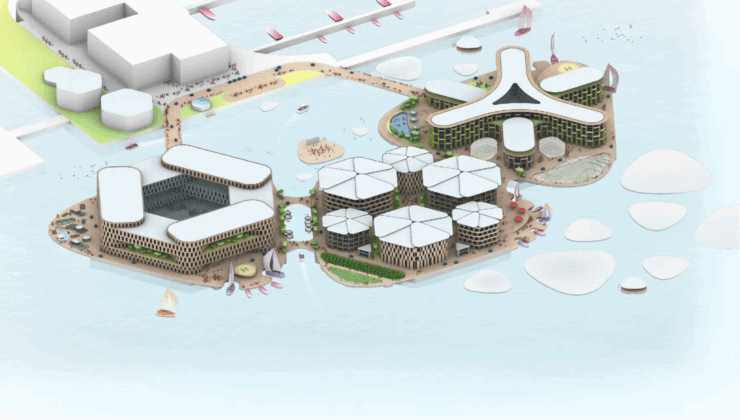
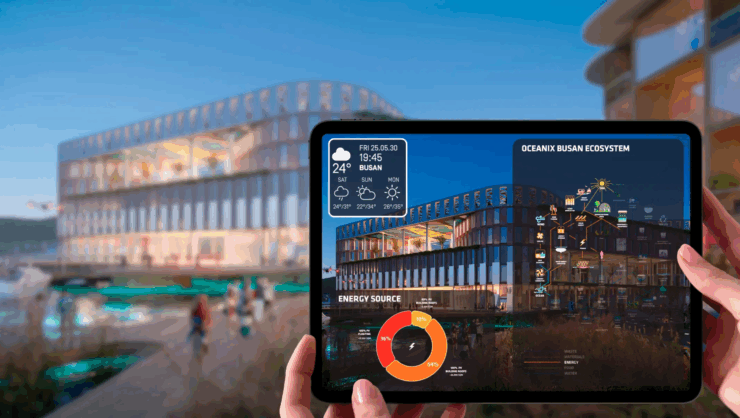
With reference to the project’s resilience and sustainability, the platforms will feature six integrated systems: zero waste and circular systems, closed-loop water systems, food, net zero energy, innovative mobility, and coastal habitat regeneration. The project will use, therefore, closed-loop systems that collect, filter, and reuse both source and rainwater. Organic waste will be reused as fertilizer and transformed into environmentally friendly energy sources. The solar and wind power generated on-site will ensure that the floating city will be self-sufficient and carbon-neutral, although the platforms will be connected to the local power grid as a backup.
The buildings located on each platform will feature soft lines and low heights; each will contain terraces that will allow for both indoor and outdoor living through a vibrant system of public spaces.
OCEANIX will organically transform and adapt over time according to Busan’s needs as sea levels rise. Starting with a community of 12,000 residents and visitors, it has the potential to expand to accommodate more than 100,000 people on a total of 20 platforms due to its modularity.
“OCEANIX’s modular maritime neighborhood will be a prototype for sustainable and resilient cities. As our first manifestation of this new form of waterborne urbanism, OCEANIX Busan will expand the city’s unique character and culture from dryland into the water around it. We believe OCEANIX’s floating platforms can be developed at scale to serve as the foundations for future resilient communities in the most vulnerable coastal locations on the frontlines of climate change.”
BJARKE INGELS – FOUNDER & CREATIVE DIRECTOR, BIG
OCEANIX Sustainability.
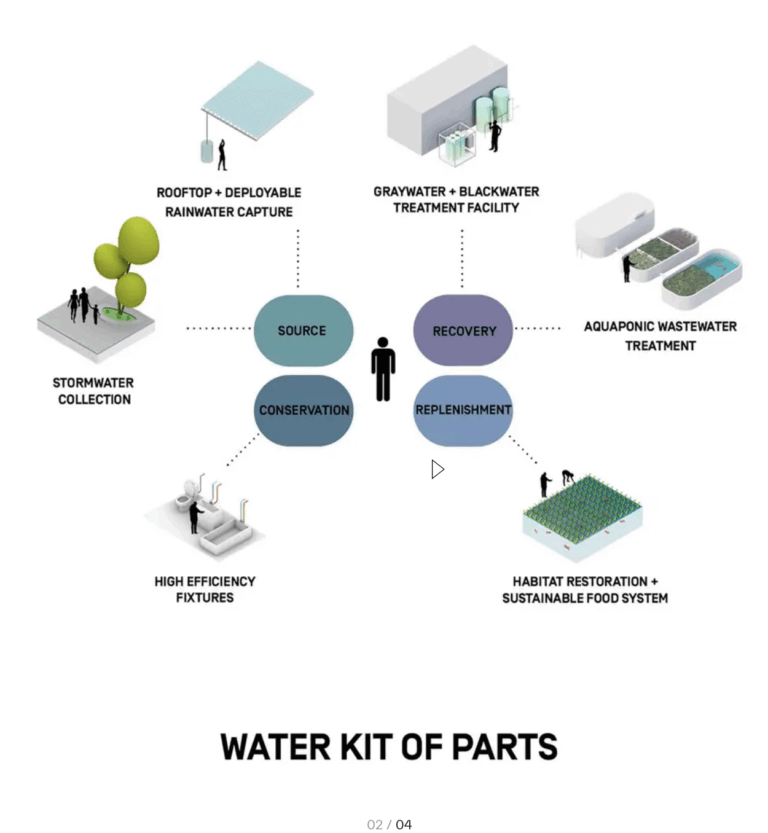
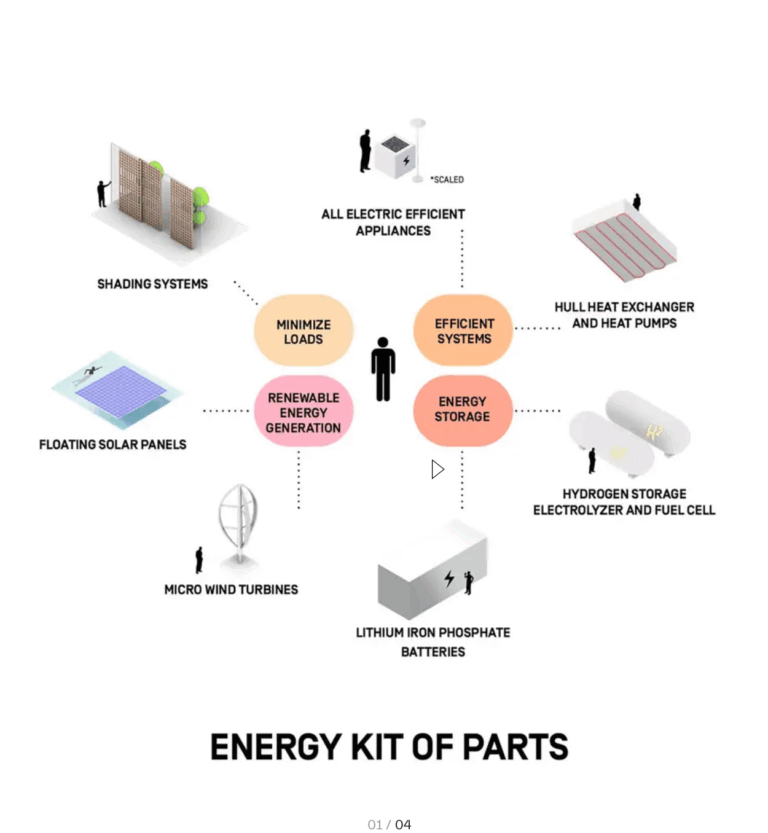
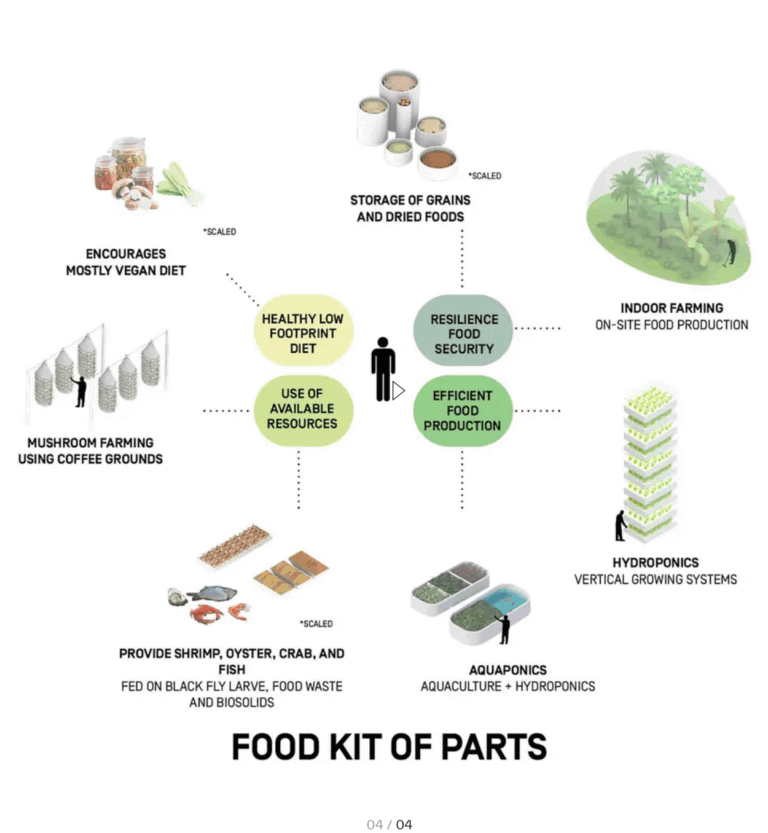
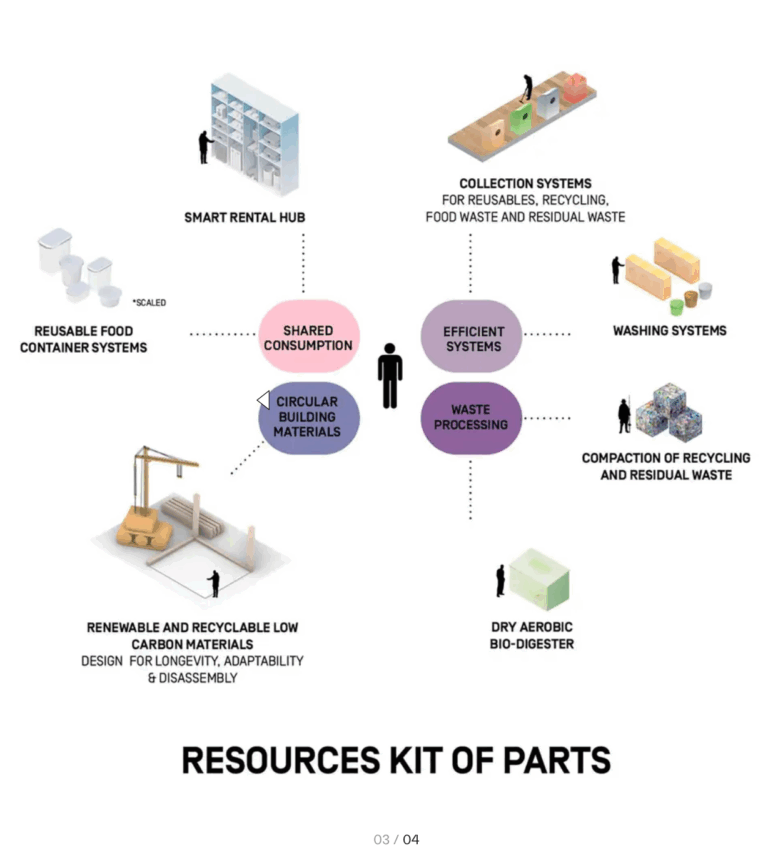
Even more exciting and science fiction bordering is the Biorock, an artificial material conceived by Australian engineer Jack Cousteau, consisting of calcium carbonate. This futuristic material is already being used today to enhance aquatic ecosystems through the construction of artificial reefs that can repair and protect natural ones. Biorock is formed naturally by immersing a wire mesh in seawater and causing calcium to precipitate. It therefore absorbs minerals from the seawater to naturally form a limestone coating that is not only much stronger than classic concrete used under the same conditions, but is also self-sustaining and self-repairing over time. In addition, a not secondary factor, Biorock has the ability to absorb carbon dioxide from water, a culprit in ocean acidification and the degradation of many marine habitats. Durability, corrosion resistance, and biocompatibility with marine environments make this a major game-changer in the creation of zero-impact aquatic structures. Given this, it is easy to understand why this material plays an essential role in the project.
OCEANIX is just one of many experiments being developed around the world in a global effort to futureproof cities and countries at risk from rising seas. Examples of floating structures can be found in Rotterdam, the Netherlands, where the Powerhouse Company recently completed a floating office, or in the Maldivian archipelago, where a floating city similar to the one envisioned for Busan is being planned. However, as of today, OCEANIX Busan is the first large-scale project to see the light of day at the construction site. With construction started during 2023 at an estimated cost of $627 million, the first prototype platforms are expected to be finished by the end of 2025.
Personally, I can’t wait to be able to visit this work worthy of a Dystopian and Utopian movie. Fortunately, 2025 will come well before 2500 and the mutant Martin.
OCEANIX: glimpses from the future
Key project information and renderings are taken from BIG’s website at this link.