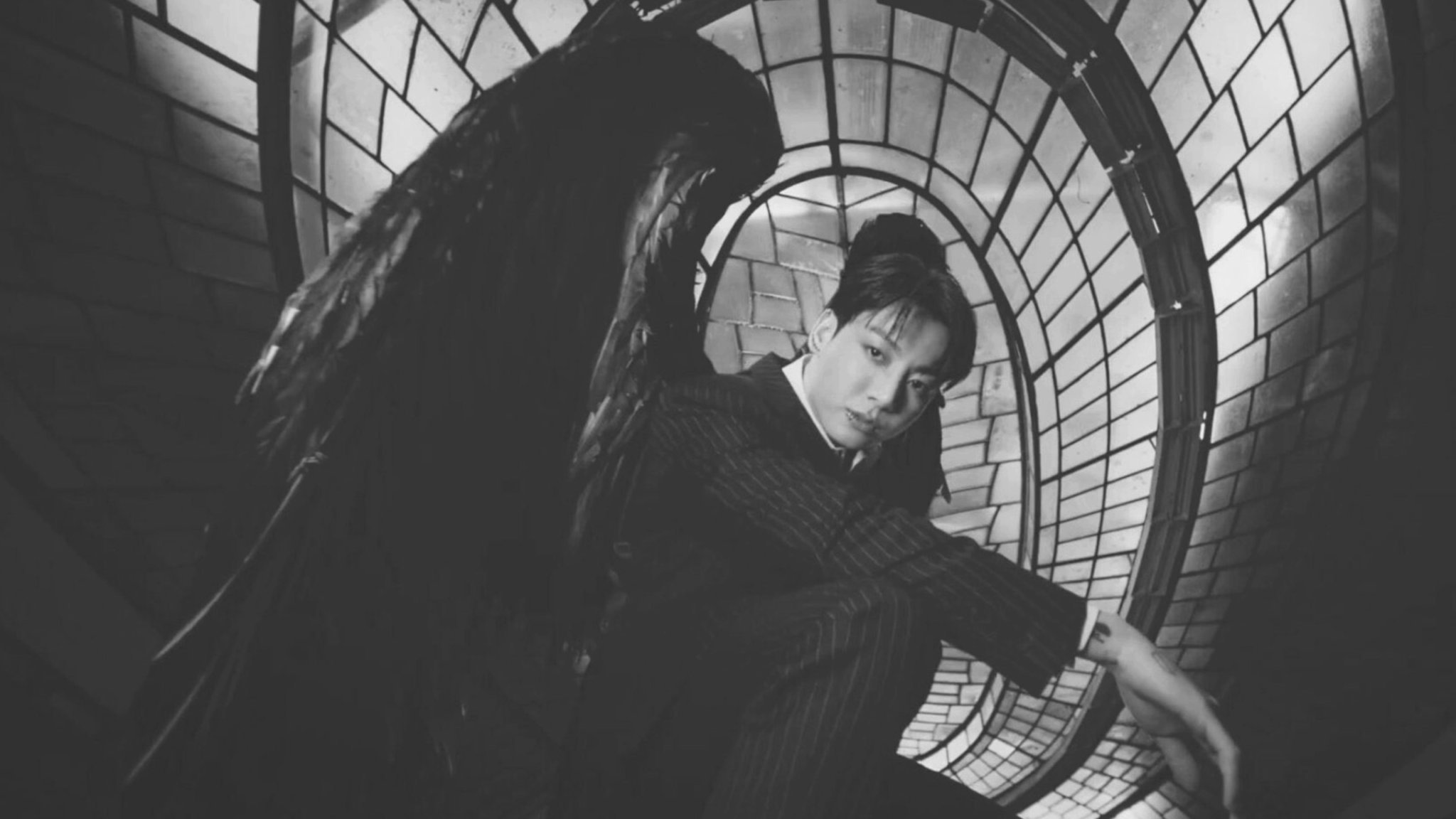

The music video for “Standing Next To You”, the title track of GOLDEN BTS’ Jeon Jungkook’s first solo album, offers us a chance to discover an Art Deco masterpiece hidden in the neighborhoods of Hungary’s capital Budapest, more specifically at No. 60 Hengermalom, along the banks of Danube River: Kelenföld Power Station.
At the dawn of the era dominated by the coming of electricity, the power stations devoted to its production were more than just utilitarian buildings, assuming the role of temples where the “magic substance” that appeared to possess the power to change the world was almost venerated.
Over the same period, the world of art was conceiving what became known as “Art Deco,” an architectural and decorative style characterized by clean lines, geometric shapes and floral motifs. This style was often used for public and commercial buildings, such as train stations, hotels, and skyscrapers.
Art Deco was a short-lived art movement, but it had a significant impact on Budapest’s architecture and design. Modern and innovative in style, it represented the progress and optimism of the time; and it is still popular in the Hungarian capital, among whose streets it is still possible to find styled elements. It can rightfully be said that Art Deco is an important cultural heritage for the city of Budapest, and contributes to its uniqueness.
The Kelenföld Power Station is a noteworthy example of Art Deco-style industrial architecture, as it perfectly combines functionality and aesthetics. The power station was a symbol of the technological progress of that time, and the style chosen for its construction was meant to reflect its nature. When Kelenföld Power Station started generating electricity in 1914, the installation was one of the most technologically advanced in Europe at the time.
The construction of this power plant was due to the genius of two major Hungarian architects, Kálmán Reichl (1876-1953) and Virgil Borbíró (1893 – 1956). Kálmán Reichl was one of the most important Hungarian architects of the 20th century, known for his designs of public and commercial buildings. The project of the power plant, commissioned to him in 1914, was an ambitious project for Reichl, who wished to design a building that was at once visually beautiful and functional, responding to the precepts of Art Deco. He was joined by Virgil Borbíró, a Hungarian architect, engineer, architectural historian and journalist who is considered one of the leading exponents of modernism in Hungary. His work has contributed to the diffusion of Rationalism and Functionalism concepts in the country, and he played an important part in developing Hungary’s modern architecture.
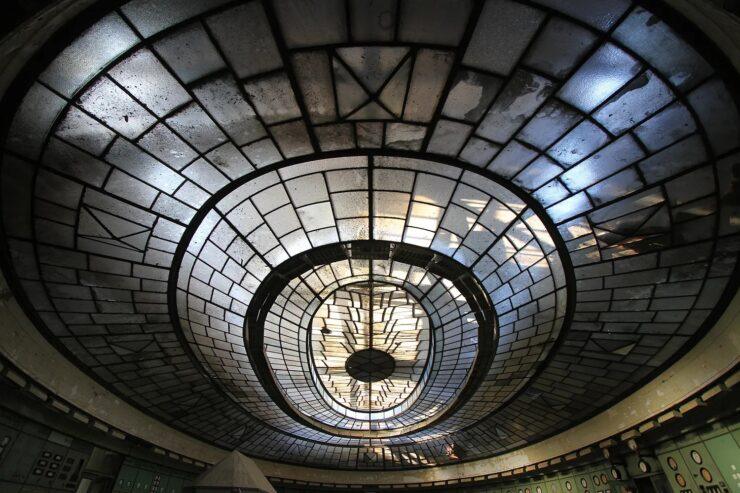
The impressiveness of the early industrial buildings, the Kelenföld Power Station is an example of it, reflects the optimism of the early 20th century. Today, the brutally beautiful machinery, the creepy corridors, and the silent rooms seem to echo with the buzz of the now silent Bauhaus-era transforming house. Its spaces create a sanctuary of electricity, reflecting a vision that seems to come straight from the fantasy world of Jules Verne. From the stunning Art Deco glass ceiling of the control room, to the intricate switches, handgrips and manometers, to the splendid tension of the coils, everything converges to create an atmosphere that has something magical and mysterious to it.
Since its construction, the power plant has been modernized and expanded several times to satisfy changing energy demands of the surrounding neighborhoods. The buildings, which were designed and constructed by Kálmán Reichl and Virgil Borbíró (Bierbauer), are protected by the Hungarian Law for the Preservation of Works of Art, which means they can never be demolished. Unfortunately, however, like often happens with heritage-protected property, because of the huge costs the buildings of the Kelenföld Power Station are not being touched at all, not even for basic maintenance, which is why they have gradually fallen into a state of disrepair. Only production companies benefit from this state of perpetual decay: several apocalyptic movie scenes and music videos have been filmed at Kelenföld, including precisely the MV of “Standing Next To You.”
However, the wing that conserves the building’s orginal features of the period is not entirely abandoned, since it is now under private ownership. Since the facility’s shutdown in 2007, the current owners occasionally open the doors of the space for tourist visits. The old machinery are still intact, and visitors can see the 100-year-old turbines, as well as the control room with its retro-style banks of dials, indicators and buttons, covered in a fascinating layer of dust. The highlight of the visit is the Control Room’s large Art Deco glass ceiling, which gives a strangely elegant atmosphere to the entire site. The two major attractions-the legendary control room and the old transformer cabin, considered masterpieces of early 20th-century industrial design-are only opened during guided tours organized by enthusiastic nongovernmental organizations a few times a year. Although guided tours are conducted intermittently, the Kelenföld power station is well worth a visit, even if just to admire one of the rare cases of collision between public industry and design architecture.
The future of the Kelenföld Power Station is uncertain. Despite private acquisition, as mentioned, the building has been in a state of abandonment for several years and would need significant restoration work.
In 2019, the Hungarian government announced that it would implement a master plan to requalify the power station, including the construction of a museum and a cultural center.
However, the renovation work has not yet begun and it is unclear if and when it will see the light of the day.
Regardless of the building’s future, the Kelenföld Power Station is an important piece of Hungarian history and culture. It is rightfully recognized as an Art Deco architectural monument and a symbol of 20th-century technological progress.