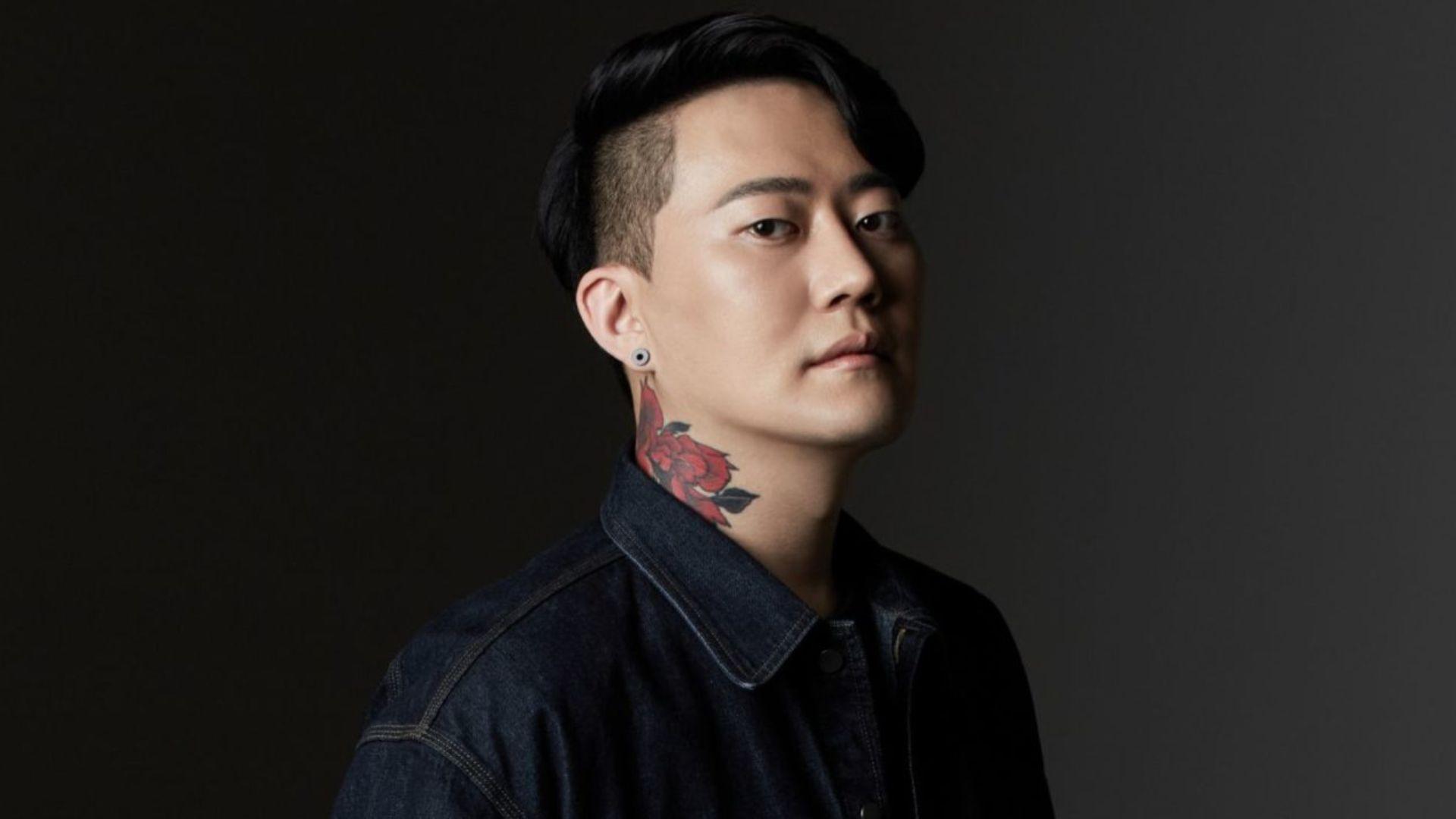

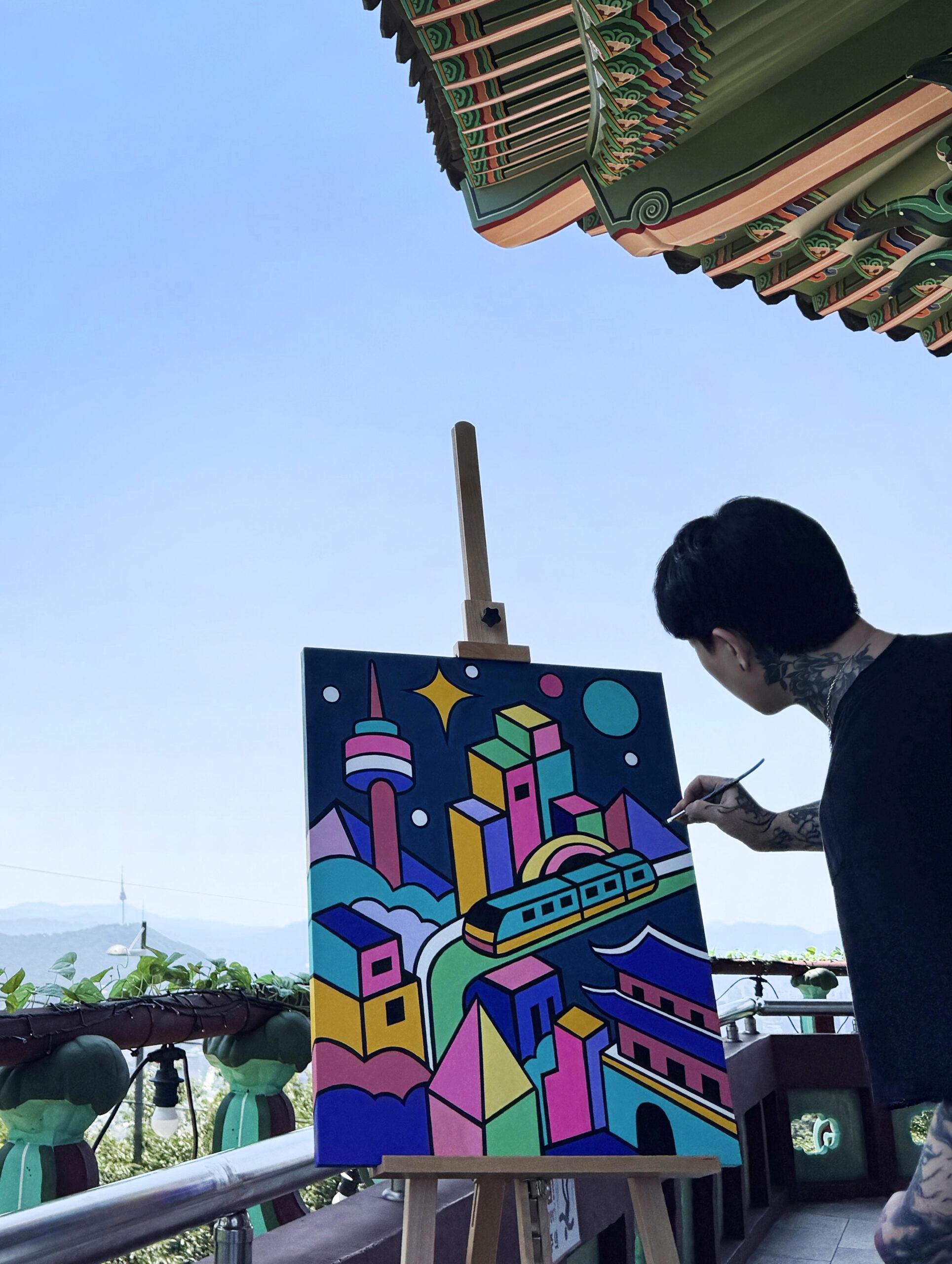
Defining Sang-jin Lee in a single word is impossible. And perhaps, he wouldn’t even like it. Known as Polyc, this Korean visual artist and tattooist has spent years building a language that evades rigid definitions.
With a nine-year career behind him and a global presence built from Robin Egg Studio in Seoul, his artistic practice moves between geometry and the human body, digital art and living matter, transforming skin into a three-dimensional space where light, color, and movement find a constant balance.
Before tattooing, Polyc trained in 3D art and digital modeling, a path that profoundly influenced how he observes the human body. To him, skin is never a static surface to draw upon, but a living space that changes alongside movement, posture, and time.
I approach the body almost as an architectural space, adapting lines so they come alive through movement. In the end, the body is not just a surface that hosts the artwork, but part of what completes it
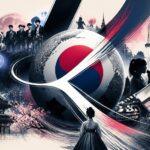
In his works, fragmentation and reconstruction continuously coexist. Images are deconstructed, traversed by multiple perspectives, and then reassembled into new visual structures. It is a balance that, as he explains, also reflects contemporary Korea, a country in constant transformation, caught between speed, modernity, and traditional sensibility.
Over the years, his style has become one of the most recognizable in the Korean art scene, leading him to collaborate with globally renowned artists, including BTS. From the group’s friendship tattoos to the intricate work created on Jung Kook’s arm, Polyc has helped redefine contemporary tattooing, pushing it beyond mere aesthetics.
I see tattooing less as decoration and more as a trace that preserves a person’s time and emotions
Yet, all of this takes shape within a still-complex context. In South Korea, tattooing exists in a gray area between legal restrictions and social stigma, even though younger generations are slowly changing this perception.
Today, Polyc expands his research far beyond skin: painting, installation, media art, performance. Every medium becomes a natural extension of the same artistic vision.
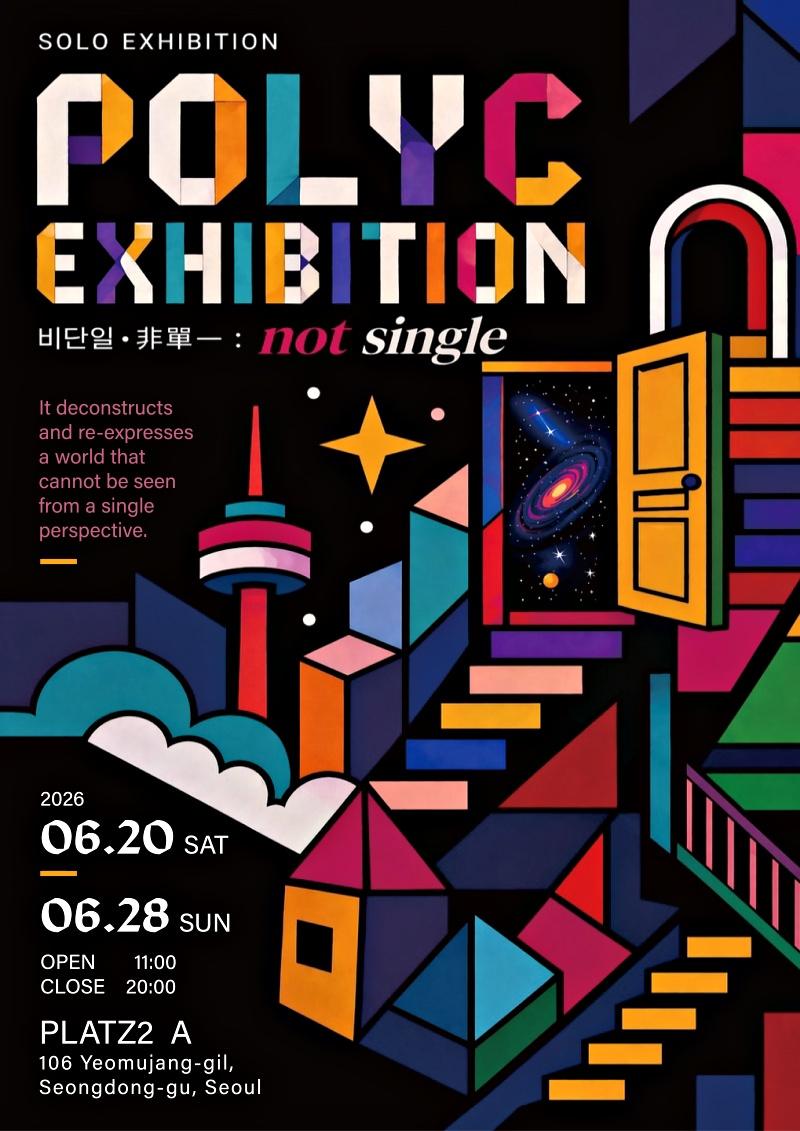
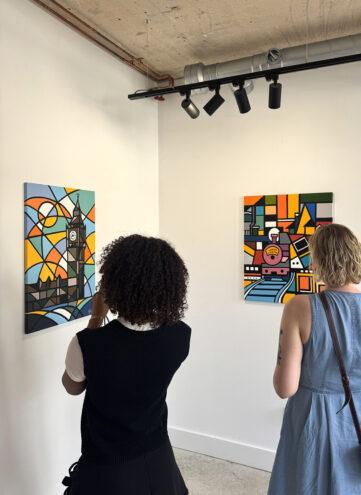
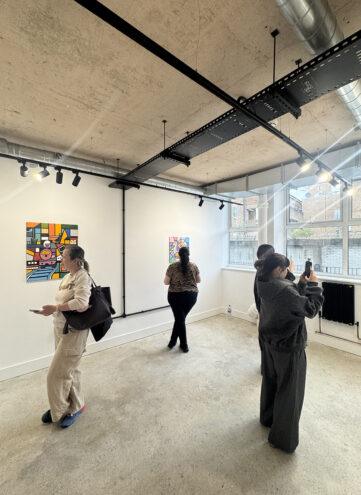
This philosophy also comes to life in his first solo exhibition, Not Single — 비단일, 非單一, scheduled from June 19 to 27, 2026, at Platz2 in the Seongsu district of Seoul. A project revolving around a question that is only seemingly simple: can we truly understand the world through a single perspective?
For Polyc, the answer is no. And it is precisely from this idea that the entire exhibition is born, a space designed to be perceived differently depending on the movement, distance, and gaze of whoever walks through it.
Not Single doesn’t aim to offer a single answer, but rather to show the possibility that multiple interpretations and perspectives can exist simultaneously
After getting in touch with him, Polyc agreed to answer our questions, guiding us into his creative universe across identity, transformation, memory, and movement. A conversation that begins on skin, but reaches much far beyond it.

K: Your artist name, Polyc, comes from the combination of Polygon and Cubism. When did you realize that this wasn’t just an aesthetic choice, but something that truly defined your artistic identity?
P: The name “POLYC” initially came from combining Polygon and Cubism, but over time it became much more than a mere visual style. It represents the way I view the world. I have always felt that reality cannot be explained through a single perspective or a single shape, and through the process of deconstructing and reconstructing images, my artistic identity developed naturally. In this sense, POLYC is not just an aesthetic choice, but a language deeply connected to the very philosophy of my exhibition, Not Single.
K: Your visual language seems to stem from two opposite directions: Cubism, which fragments reality, and polygonal geometry, which reconstructs it in an almost architectural way. How do these two elements coexist in your creative process? And how much of your Korean identity is reflected in this balance?
P: If Cubism is about the fragmentation of reality, polygonal structures are about bringing those fragments back together into a new order. In my creative process, deconstruction and reconstruction always exist together. I break down emotions, memories, and movement into multiple perspectives, and then rebuild them into a structured form. I believe my Korean identity also exists within this balance. Korean society changes very rapidly, yet at the same time, it preserves a very strong traditional sensibility. I feel that this tension and coexistence naturally surface in my work as well.
K: Your background in 3D art is highly evident in your pieces. What was the biggest challenge in transitioning from a controlled digital environment to the organic, unpredictable nature of human skin?
P: In a digital environment, everything can be controlled. Human skin is completely different. Every person has a different skin texture, different movements, and changes over time. The biggest challenge was learning to stop chasing a perfectly controlled structure and instead accept the organic movement of the human body as part of the artwork itself. Eventually, I realized that skin is not simply a canvas, but a living space.
K: Your style requires almost architectural precision. When working on the body, how much does the original design change based on a person’s anatomy and movement?
P: My work is designed with the body in mind right from the very beginning. Because of this, the design is not a fixed image, but rather a structure. The exact same design can create a completely different impression depending on a person’s muscles, movement, and posture. I approach the body almost as an architectural space, adapting lines so they come alive through movement. In the end, the body is not just a surface that carries the artwork, but part of what completes it.
K: In your eyes, what makes a tattoo truly successful? Are you primarily looking to create an image, a memory, or a personal transformation?
P: To me, a truly successful tattoo is not simply a beautiful image. It is something that continues to hold meaning for the person over time. For some, it becomes a memory. For others, a testament to transformation. I see tattooing less as decoration and more as a trace that preserves a person’s time and emotions.
K: You worked on BTS’s friendship tattoos, a project that became deeply symbolic for millions of people. What was it like to translate such a strong human bond into something visual and permanent?
P: Working on BTS’s friendship tattoos was much more than just a design project. It meant translating a profound human bond into something visual and permanent. Seeing different people share a single symbolic image carried a very powerful emotional meaning. Through that experience, I realized once again that tattoos can become a medium capable of connecting relationships, memories, and time, rather than existing solely as visual objects.
K: The work on Jungkook’s arm drew a lot of attention for its technical complexity. How do you approach such a delicate cover-up without completely erasing the history already present on the skin?
P: In cover-up work, the most important thing for me is not erasing the past, but carrying it forward into a new form. The marks already present on skin are part of a person’s history and life. In Jungkook’s case, I approached the work by reconnecting the existing elements into a new structure and flow, rather than removing them entirely. I don’t see cover-ups as a way to hide the past, but as the transformation of previous stories into a new visual language.
K: In South Korea, tattoo art still exists amidst social stigma and legal limitations, yet your work has reached a global audience. Do you feel you are part of a broader change in how tattooing is perceived?
P: In South Korea, tattoo art does still exist between social stigma and legal limitations. At the same time, I feel that younger generations are changing the way self-expression and art are perceived. If my work could contribute to this shift, it would hold a profound meaning for me. I hope that tattooing continues to evolve, moving beyond a purely consumerism mindset, to be increasingly recognized as a visual language and a true art form.
K: In recent years, you have expanded your creative universe through painting, fashion, and international collaborations. Do you feel the need to cross into different artistic fields to keep evolving as an artist?
P: I don’t want to remain confined to a single medium. Tattooing was my starting point, but what truly interests me is the way images and feelings are conveyed to people. This is why painting, media art, installation, and performance connect naturally within my artistic practice. Even my exhibition, Not Single, is an extension of lines that were born on skin and then expanded into space and structure.
K: Your work seems to move continuously between precision and fluidity. In your daily life, do you seek more control or more freedom?
P: In my work, I pursue precision with great seriousness, but in life, I value flow and unpredictability more. I believe that completely controlled situations rarely create new sensations or new perspectives. Because of this, I always want my work to exist in an intermediate space between structure and freedom.
K: In June, you will present a new solo exhibition in Seoul. What does it mean to you to showcase your work outside of the skin and within an exhibition space?
P: Showing my work outside of skin and within an exhibition space represents a very important turning point for me. Tattooing is usually experienced intimately through a person’s body, whereas exhibitions allow those ideas to expand into a shared sensory experience. Not Single is not simply about displaying finished works, but about how I view and structure the world through an entire space.
K: Your pieces seem to construct multiple perspectives and fragmented spaces. Is there a specific theme or question that you feel is particularly important in this June exhibition?
P: The most important question behind this exhibition was: “Can we truly understand the world through a single perspective?” I have always questioned fixed meanings and single interpretations. For this reason, the exhibition space was designed so that viewers can experience different sensations based on their movement, distance, and viewpoint. Ultimately, Not Single doesn’t aim to offer a single answer, but rather to show the possibility that multiple interpretations and perspectives can exist simultaneously.