
This piece was written in collaboration with Matilde Baldissara.
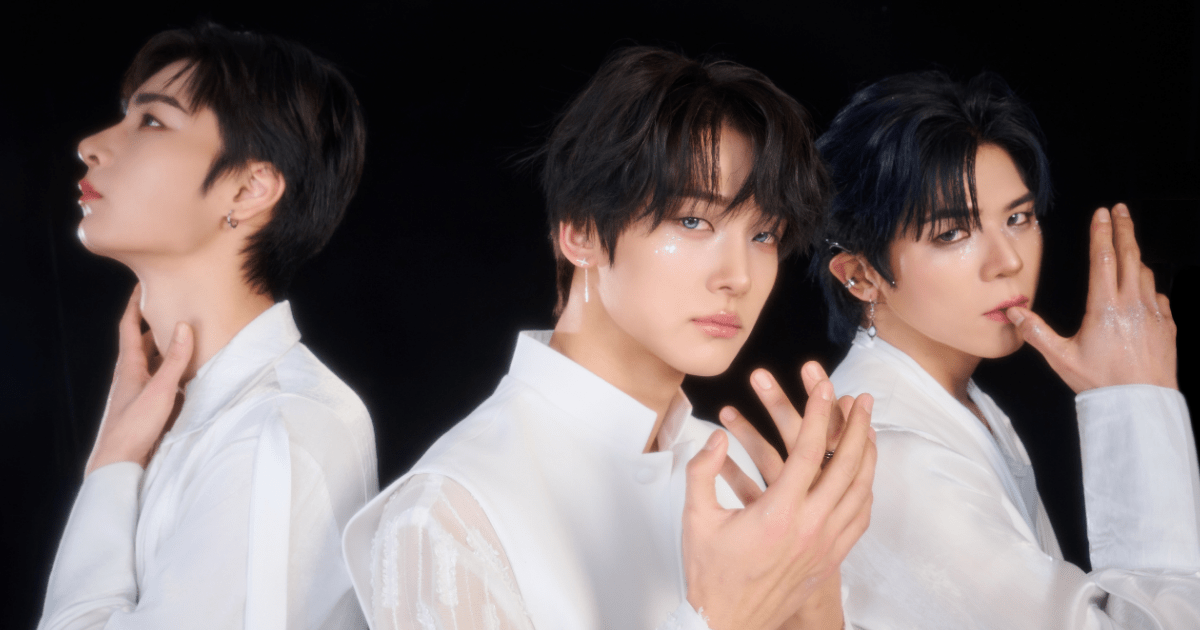
The link-up was locked in for May 3rd in Munich. Everything was ready to catch one of the most interesting projects on the scene live, but a local promoter logistics fail forced Parastar Entertainment to scrap the European leg of the tour. But if there’s one thing Big Ocean have mastered since their April 20, 2024 debut, it’s turning unexpected plot twists into major flexes.
Chanyeon, PJ, and Jiseok came from backgrounds that had basically nothing to do with music: an audiologist, a YouTuber, and a skier. Yet, they became the first K-Pop group with hearing impairments, baking sign language straight into their choreos and serving an R&B and synth-pop mix that is completely hitting different with a global audience.
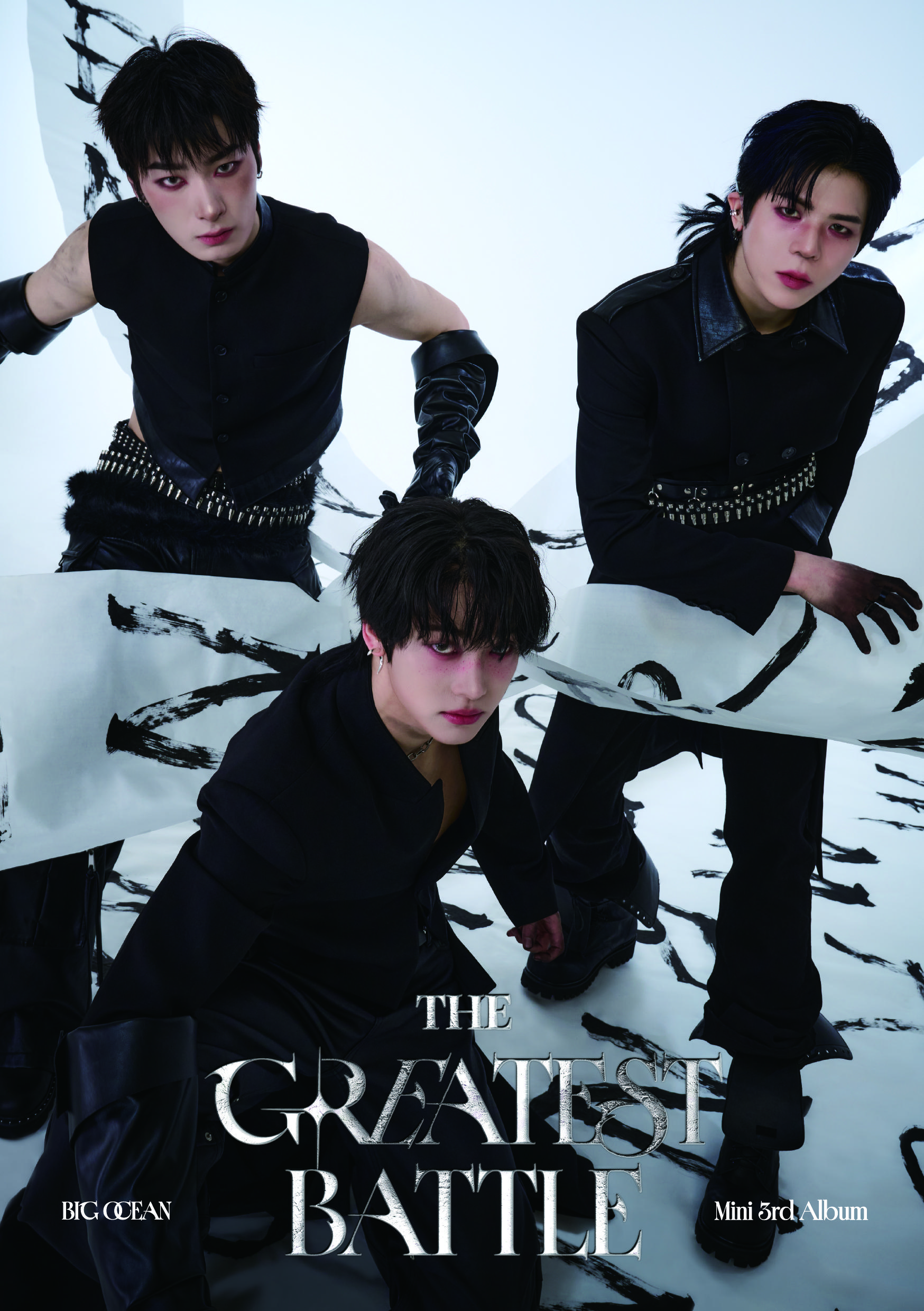
While the agency is busy looking for a new member through global auditions, they dropped their third EP, The Greatest Battle, on March 3rd. It’s a project that’s all about survival and pushing through challenges—fighting the world’s limits and their own doubts. We caught up with Chanyeon, PJ, and Jiseok, unfortunately only virtually, to chat about this new era and see what it’s like when their fans, called PADO, literally start learning sign language just to be closer to them.
The EP The Greatest Battle draws on the imagery of historic Korean battles to talk about resilience. Was there a moment when you thought you couldn’t make it? And when did you realize that this record would truly change something in your career?
Chanyeon: This album pushed us into completely new territory—a way fiercer concept, choreography built to feel like actual combat, sharper sign language tutting, and a scale we hadn’t even attempted before. So yeah, there were definitely moments of uncertainty along the way. But honestly, thinking about giving up or not making it wasn’t even an option for us. We have a team that believes in us unconditionally, and that completely changes the game.
What we did know for sure is that this album could only happen right now. A year ago, we weren’t ready to stand on stage and actually mean it when singing “I’m alive,” “I’m back,” or “’cause I’ve always been beaten, but never defeated”. Those words carry real weight only because we’ve actually lived through the past two years to say them.
What's Tutting
Tutting is a dance style all about sharp lines and geometric angles made with your arms and hands. For Big Ocean, tutting elements are woven straight into sign language (KSL/ASL) to sync up not just the rhythm, but the actual meaning. When they talk about "synchronizing meaning," they mean that the exact same sign has to drop, clean and readable, at the exact same millisecond for every single performer on stage.
One Man Army and Cold Moon feel like two opposite poles—one explosive, the other introspective and lunar. How do they reflect your daily highs and lows, and what side of your voices did you want to highlight this time?
Jiseok: That’s exactly why we couldn’t let go of either track. Honestly, Cold Moon wasn’t even supposed to be a title track at first; One Man Army was the one we locked in first. But when we listened back to everything together, both songs were just too good to drop.
So we started thinking about the different kinds of battles we face daily. One Man Army is the external fight—standing up to the world, something real and tangible. Cold Moon is what happens inside—the inner conflict, that quiet growth taking place beneath the surface. They’re two sides of the same war. In terms of how they vibe together, Cold Moon acts as the doorway—it’s softer, easier to ease into—and once you’re through, One Man Army brings you all the way in. Both states are 100% real for us, sometimes even on the same day, and we needed both to tell the full story.
Your performances always look flawless, but we know there’s incredible precision behind them. What’s the technical detail or synchronization challenge that the audience never gets to see?
Chanyeon: Probably the sign language tutting with all twenty dancers. Every single person on that stage has to be signing in complete sync—not just moving together, but actually meaning the same thing at the exact same time. Then there’s the crane-wing formation, which looks insane on screen, but the coordination behind it is just as brutal. On top of that, because of our hearing, hitting the timing perfectly right at the start of each song is a massive challenge. Once we lock in, though, everything that follows comes from what we’ve drilled so deeply it literally lives in our bodies. It takes a ton of hours to get a rhythm from your ears into your body when your ears don’t fully cooperate.
K-pop lives through imagery, yet not everything can be captured in a photo. What’s something that only comes through during a live performance—something the promo pictures just can’t convey?
PJ: The energy in the room is something photos just can’t fully hold. But I think what new listeners would least expect from a single photo of us is the signing. Sign language is a continuous flow of movement, where each gesture connects to the next to carry the full meaning of a lyric, so a still image only catches one frozen moment of it. You have to see it in motion to actually understand what’s being said. And of course, the moment when PADOs sign along with us—that’s something we truly treasure every single time.
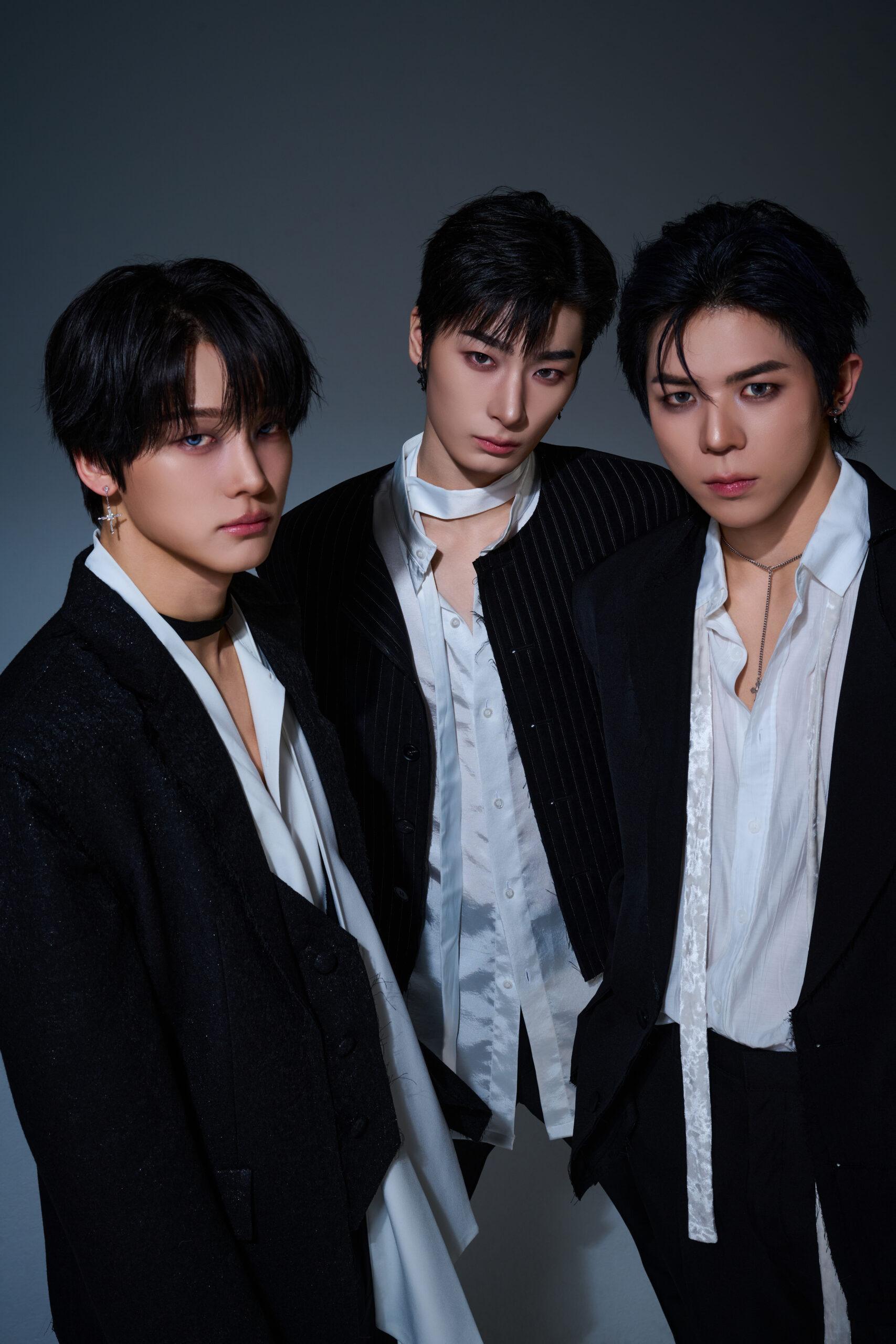
If you had full creative control over the next project’s concept and visuals, what kind of aesthetic or story would you want to explore to show a new side of Chanyeon, PJ, and Jiseok? Maybe something completely different, like cyberpunk or fantasy?
Jiseok: Definitely something completely fresh! We always want to explore new concepts to keep surprising and moving PADOs in ways they don’t see coming. That’s just our DNA as a group. And honestly, we’re already cooking up new projects, so all we can say for now is stay tuned. We’ll be bringing something to everyone very soon.
More and more fans, even in the West, are learning sign language to communicate with you. How does it feel to see your music inspiring an international community to embrace a new language?
Chanyeon: It genuinely hits us deep every single time. Sign language has always been our language—the way we communicate, perform, and tell our stories. Seeing people from completely different countries learning it, not because they have to but because they genuinely want to connect with us on a deeper level, is something we’re incredibly grateful for. It means our music is doing something way beyond the music itself. And honestly, every person who learns even a few signs is making the world a little more accessible for the deaf community. That matters far beyond just us.
You’ve built a strong bond as a trio, but the global auditions will soon bring a new member. How are you preparing to welcome someone with a different background and rebuild your group dynamic?
PJ: With open arms. The three of us all came from completely different worlds before Big Ocean—a skier, a YouTuber, and an audiologist—and somehow we found each other and built something real. So we already know that different backgrounds aren’t a setback; they’re actually what makes a group interesting. Whoever joins us next will bring something none of us have, and we want to give them the exact same space we were given to figure out where they fit.
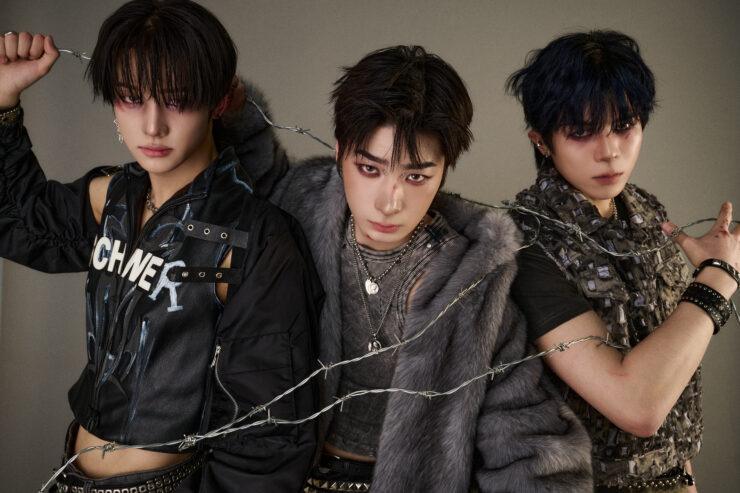
Between flights, rehearsals, and world tours, is there an item or accessory you always carry with you—something that makes you feel at home, even when you’re halfway across the world?
Jiseok: My hearing device, honestly. It’s something I’ve carried with me for a long time and it’s become a natural part of who I am. More than anything, it gives me confidence when connecting with people around me and supports us so much in our work. Wherever I am in the world, having it with me is what lets me show up fully as myself.
Their movement proves that inclusion in K-Pop isn’t just some token label slapped on at the end, but a literal creative blueprint to reframe the whole performance: choreos that talk, structures designed to be read as much as seen, and a sound that uses the body as its own metronome. When Chanyeon talks about the “real weight” of words, he’s pointing to a practice that weaves together lived experience, technique, and community. Every single gesture has meaning, and every shift in dynamic becomes part of the storyline.
For PADO, learning sign language is a shared aesthetic vibe that completely closes the gap between the artist and the crowd, making the music accessible without losing any of its complexity. In a market that’s getting more global by the day, Big Ocean’s biggest flex is exactly this: turning communication into an act of co-creation, where inclusion doesn’t just add a chapter to K-Pop history—it upgrades the entire alphabet.