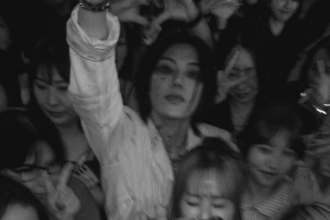

I’m sure if you’re a fan of Stray Kids or gravitate to the k-pop universe you already know: Il Giorno, a local newspaper with a circulation of roughly 50k copies per diem, has churned out, through the enlightened pen of Andrea Spinelli, a couple of pieces about Stray Kids’ participation in the i-Days in Milan on July 12.
I consider the two pieces one more questionable than the other, so you can imagine how little I would like to give them visibility and views; however, what I am about to write takes its cue from those articles, so for the sake of the record I must tell you that you can find them here and here.
The episode involving this regional media outlet was not the only questionable one to arise from the concert on the 12th, unfortunately. Some radio broadcasts (one on RTL 102.5) and other newspapers (read: La Stampa, a newspaper with a national circulation) were also at their best in terms of superficiality and disrespect. I decided to take the Il Giorno article as my inspiration for this piece because I believe it represents the sum total of all the worst that can be offered.
Point by point? Yes. Point by point. Because I believe that snootiness can only be beaten with more snootiness.
Let’s start with the first piece: it is entitled The Stray Kids’ k-pop conquest of Milan: ‘Never done such a big show’ and was published on 12 July.
1. ‘Plastic Factory’.
Here I immediately call for help.
The period is as follows:
And the first day of this high-density weekend for the inhabitants of San Siro is gone. It went in the rain, on the night of La Maura, with the Italian debut of those Stray Kids clamoured for by 67,000 adoring fans (52,000 Italians and 15,000 foreigners, says the pre-sales) who remained crowded under the stage to wait for them in defiance of the downpour. A plastic factory. Made in Korea. But highly acclaimed.
… What do ‘plastic factory’, ‘Made in Korea’, ‘highly acclaimed’ refer to? The subject is…? The day? The rain? The music of the Stray Kids? The experience? K-pop as a whole? I’m a bit lost here.
In general, by exclusion, it is likely that the attributes refer to Stray Kids phenomenon representing k-pop and their music. Calling them ‘plastic’ shows a superficial understanding of their work and of k-pop in general. Stray Kids, like many other pop groups in South Korea, invest an enormous amount of time and effort in the creation of their music. They actively participate in the writing and production of their songs, an aspect that is often ignored by critics and journalists, to whom I would advise, however, to open Google and type in ‘3-racha’ or ‘BTS rap line’, to name just the most unhelpful.
Moreover, the music of a great many of these groups is characterised by a unique musical versatility and artistic sophistication: I urge Dr Spinelli, who is keen to let us know that he reads many essays and informs himself, to akwnowledge that many treatises, including scientific ones, have been written on this topic too. Clearly this aspect, which I would classify as of primary importance if one wants to talk about music in a professional manner, does deserve no or little attention and respect.
2. ‘Griffed looks and retouched features’.
Now we’re talking about important things! Ah, no. Adorable then is the thin veil of macho judgement that cloaks this aside. Memebers wear make-up, and they’re also well-dressed… whoa! Shame on them.
3. ‘(…) in the press meeting with the Italian journalists they admitted they had never had an audience like this’.
Be careful, because ‘never having had an audience like that’ (almost 67k people, so much for the detractors) is an offence that must be admitted, confessed, made public amends for, and sprinkled heads with ashes. Poor words’ choice, come on.
4. “(…) only pre-approved questions asked by a k-pop expert in English, translated for the band into Korean, and answers translated instead into Italian.”
Uh, that is weird. Italian journalists need not only English-Korean translation, but also English-Italian translation!!! … 2024, folks.
The fact that the questions were pre-approved I’d say might have been a shrewd choice on the artists management side, since they are treated with the degree of ease evidenced by the articles we are talking about, am I right? Who knows how many petty, vaguely offensive, inappropriate questions they have been asked in their careers. But even here – zero thoroughness.
Let us now move on to the second article, published as a ‘note’ on the first one two days later, on 14 July, titled ‘The Stray Kids, the “plastic music” and the “surreal” press conference: analysis of the k-pop phenomenon’ – subtitle: Milan, the response to the Korean band’s fans after the letters to ‘Il Giorno’. The piece starts with an erroneous assumption, namely that the criticism made may express ‘attachment to the band but also to the newspaper that talks about it’. Well, no. I had never read an article in Il Giorno before and I don’t plan to do so later.
Dr. Spinelli, I’ll explain, it works like this: it’s called ‘word of mouth’, and in the world of k-pop and its fandom, especially western fandoms, it’s a phenomenon super-powered by the fact that there’s so much junk spread about the bands. Fans are very keen on cultural debunking, if you want to call it to avoid the hateful word ‘racism’. They really care about debunking the false beliefs and prejudices surrounding these boys, and encouraging correct information about them.
Secondly, Spinelli explains, Zeus gratias, what he was referring to in the first sentence above:
When I used the term ‘plastic factory’ (…) the term (…) refers not so much to the Korean group’s songs as to the pop world around them.
I repeat the steps, therefore, to start dismantling his factory starting from the pillar, the music: Google – type “3-racha/BTS rap line” – read the lyrics – let yourself be transported to another world.
For the other topics, ‘military training’, ‘icy perfection’, ‘high amount of anxiety’, ‘mental and suicidal problems’, I’m sure Spinelli has read a wealth of literature on why Koreans are the way they are. He therefore knows that the problem is not just about k-pop but Korean society as a whole and the mentality of its citizens as a result of their social history, well before the Japanese invasion at the beginning of the last century. We can get into an examination of the deteriorating aspects of Korean society and culture if we want, or, as outsiders that we are, we can observe it with curiosity and an absence of prejudice (but shouldn’t that be a prerequisite for a journalist covering culture?). In any case, there is a whole wide world behind this ‘plastic’ that at least deserves to be mentioned, even in passing.
5. ‘The dark side of k-pop’.
True. K-pop, child of a culture that is problematic in many respects, has a very obvious dark side, of which, I fear, only the famous tip of the iceberg has been seen so far. It is an issue that fandoms are aware of, and one that gives one pause for thought. There is much debate online about what individual and collective behaviour should be adopted to mitigate the effects of the subhuman methods imposed by the Korean star system, or to suggest changes of course through commercial choices. But what does the dark side of k-pop have to do with it? The article was a review of the Stray Kids concert, wasn’t it?
6. The interview.
There is no question that the overall experience may not have been enjoyable, or canonical. Neither would I have enjoyed it or felt that I was spending my time well in such a situation: ten minutes, journalists sat four metres away from the artists without being able to say anything or take photos, questions strictly agreed upon in advance with the management, formulated during the conference by a journalist-speaker authorised by the band (thank you Marianna Baroli), laconic answers. What amazes me, given that we are talking about a professional with 30 years of experience, as he himself wants us to know, is that instead of asking himself why, and trying to understand and maybe report to his audience whether it is actually a cultural gap or whether there are other reasons behind it, what emerges from his words are only his discontent and a series of entirely personal observations that do not change a thing.
The treatment given to Stray Kids and the k-pop phenomenon by some Italian publications on this occasion not only denotes a worrying superficiality, but also reveals an inadequate cultural and musical understanding. Describing k-pop as a ‘plastic factory’ and reducing artists and fans to banal stereotypes is not only unfair, but perpetuates a narrow and prejudiced narrative.
It is time to tear down the wall of banality and prejudice that surrounds global phenomena like k-pop. The Stray Kids, like so many other artists of their calibre, are the result of years of dedication, hard work, sacrifice. Their success is not a plastic illusion, but a manifestation of genuine talent and tireless commitment.
I incourage media and critics to look beyond the surface and adopt a more respectful and informed approach. Artists deserve to be judged for their real worth and not for the image that has been built around them.
For readers and fans, it is time to challenge the pre-packaged narratives and seek a deeper understanding. The next time you come across a piece of music criticism that seems to breed prejudice, ask yourself if it is not time to stick your neck out and demand a fairer, more informed view. It is only by confronting reality in its complexity that we can truly appreciate and respect art and culture in their fullness.
K-pop has come down to us with all its energy, enthusiasm and messages. The time has come for Italian journalism to take a step forward and embrace reality with honesty and open-mindedness, unafraid to step out of its comfort zone. Which, incidentally and luckly, someone does: her.