
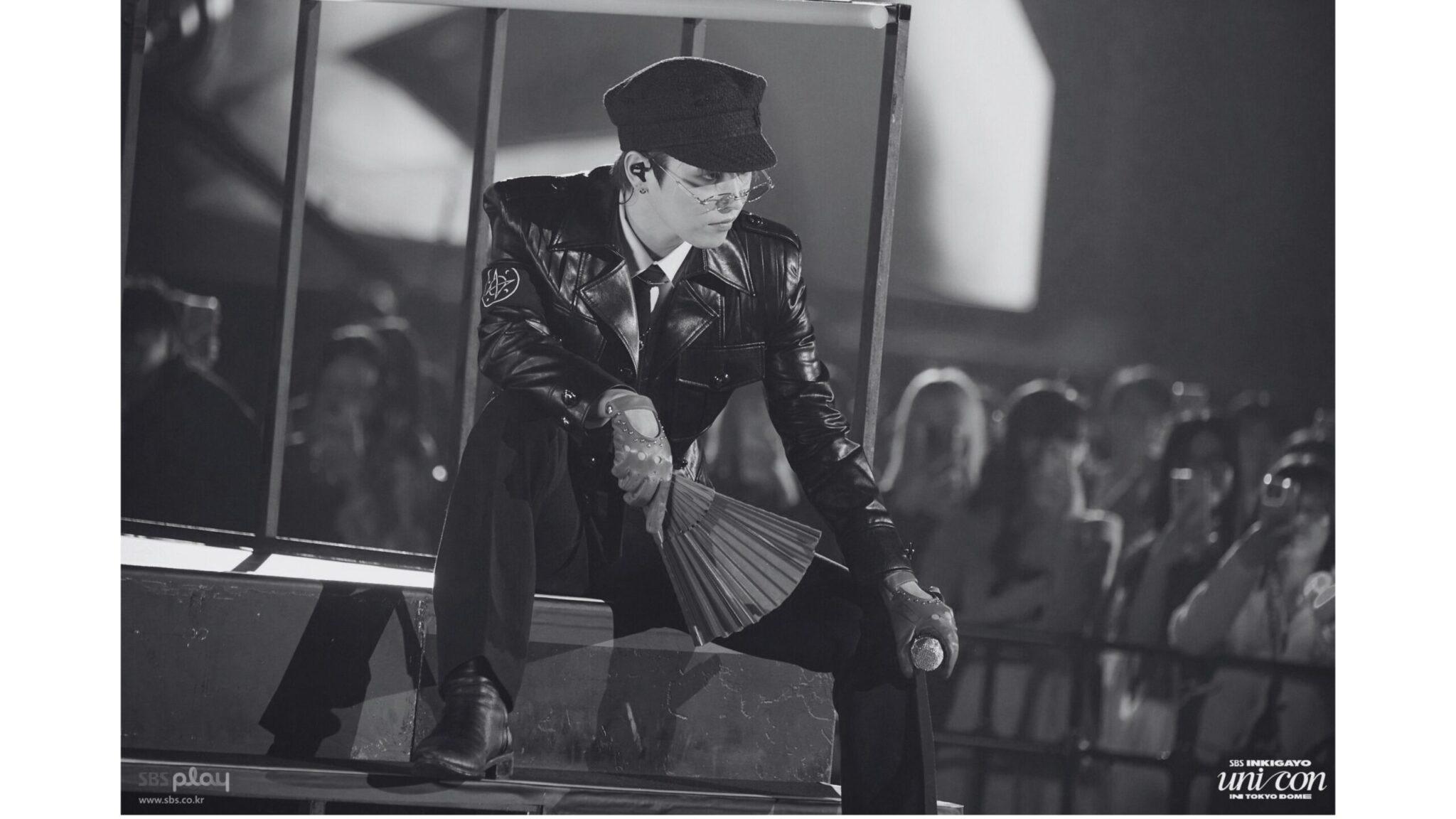

At the “Ingalive Unicorn” event held at the Tokyo Dome few days ago, ATEEZ’s Hongjoong unveiled The Glory, a raw and emotional rap piece that traces their path as outsiders in the K-pop industry. Blending Korean cultural references with declarations of personal and artistic pride, the leader celebrates integrity, hard work, and an unbreakable bond with their fans.
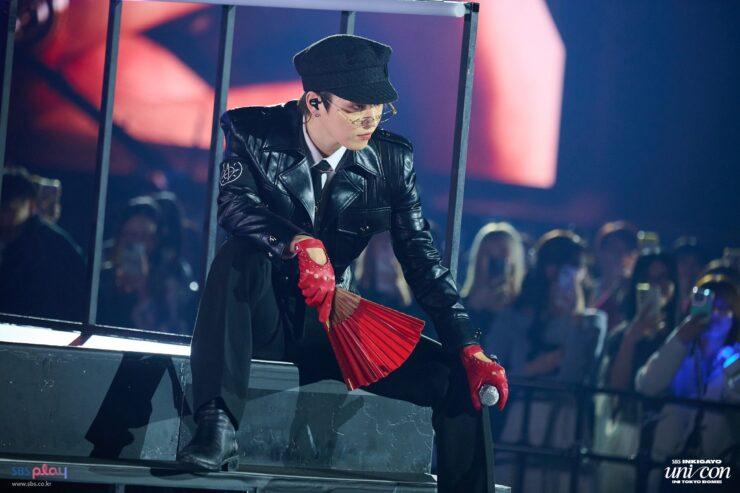
A surprise under the lights of Tokyo Dome
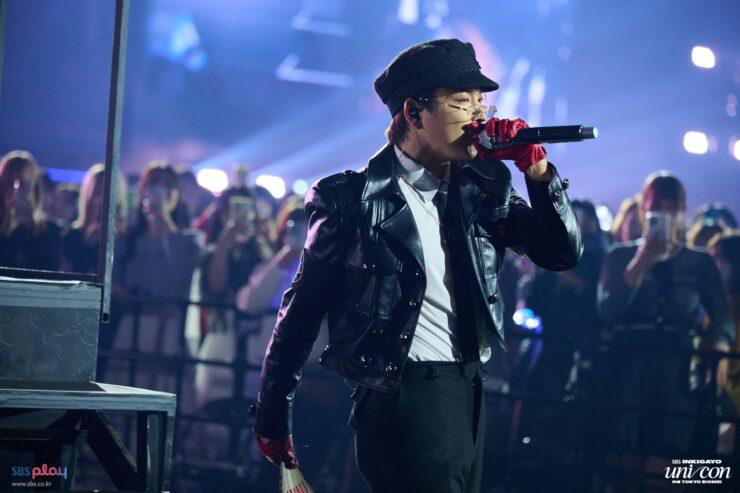
On April 12, 2025, during the recording of the special “Ingalive Unicorn” event for SBS’s Inkigayo, Hongjoong — ATEEZ’s charismatic leader — delivered a performance that left the Tokyo Dome crowd speechless. Stepping onto the stage holding a red fan — a sure sign among ATINYs (ATEEZ’s fandom) that a spoiler is imminent — he introduced The Glory for the very first time: a previously unreleased rap dense with personal meaning and rich symbolism.
This is my pride
he proclaimed with fierce emotion, opening a performance that would immediately become one for the history books.
The mangnani metaphor: pride, struggle, survival
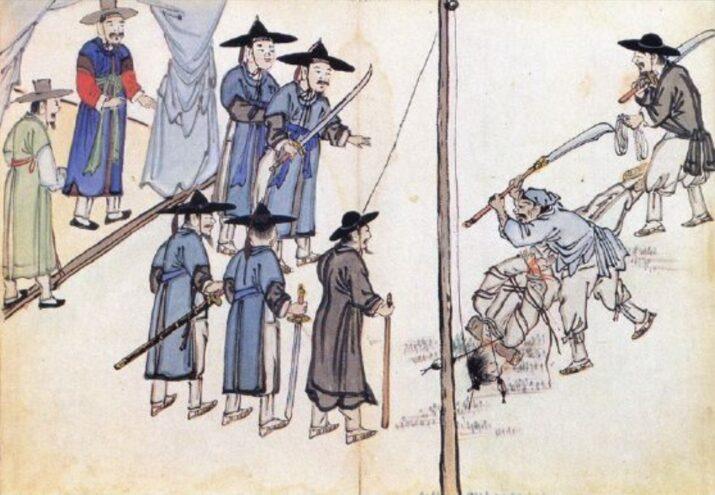
In The Glory, Hongjoong reflects on his own journey and that of his bandmates, weaving together their personal and artistic battles within the often brutal landscape of the k-pop industry. He draws a striking comparison between their story and that of a 망나니 (mangnani), the official executioner in ancient Korea: a figure both feared and shunned, carrying out necessary duties yet belonging to the lowest social caste.
Despite the essential role they played in society, mangnani were stigmatized, seen as outcasts, and relegated to the margins. The word itself, stemming from manghada (망하다) — meaning “to fail” or “to be ruined” — underscores the deep-seated prejudice they endured. Before executions, the mangnani would often perform an elaborate, intimidating sword dance — a ritualized display meant to unsettle the condemned and captivate onlookers.
Hongjoong resurrects this powerful imagery to define the spirit of ATEEZ: fiercely aggressive, proudly chaotic, refusing to conform to the system’s expectations. Through the mangnani metaphor, he tells a story not of defeat, but of transformation — turning exclusion into strength, and marginalization into a badge of honor.
For ATEEZ, being outsiders isn’t a weakness — it’s the purest form of authenticity.
Not about money or fame: the true meaning of success
Throughout the track, Hongjoong firmly rejects the notion that ATEEZ’s journey has been motivated by wealth, fame, trophies, or luxury.
In sharp, bullet-like verses (“Ain’t about bills / Ain’t about fame / Ain’t about trophies / Ain’t about gold chains”), he makes it crystal clear: they never set out to chase superficial accolades or conventional measures of success.
Instead, the heart of their mission lies in authenticity, creative honesty, and an unwavering commitment to their true selves — even in an industry often driven by commercial pressures and mass-market expectations.
Despite their soaring global fame, Hongjoong asserts that the real treasure is the human and artistic value of their path.
A particularly moving moment comes when he directly addresses ATINY — the fans who have stood by them since the beginning. All the glory and success they’ve achieved is affectionately dubbed “A tiny thing” — a brilliant play on words combining a tiny and ATINY. Through this phrase, Hongjoong conveys a powerful message: no matter how high they climb, nothing will ever surpass the importance of the love, loyalty, and belief their fandom has given them. It’s a declaration of humility and gratitude, underscoring the sacred bond between ATEEZ and their ATINY — a bond that transcends material rewards.
An introduction crafted with the heart: Hongjoong’s vision
Hongjoong’s sincerity and thoughtfulness shine even brighter when considering how he crafted The Glory for the stage.
During the live session he held on the TOKTOQ platform on April 28, 2025, he shared behind-the-scenes details about the creative process — and the deep care that went into every moment of the performance.
When asked to prepare the intro for the Ingalive Unicorn stage, he was told exactly when the other members would join him.
Knowing this, Hongjoong deliberately structured his rap to leave a spotlight open for them, placing the line “This is my pride” just before their entrance — allowing the camera and audience’s focus to shift onto the group.
It was a powerful, selfless gesture: a reminder that his pride wasn’t about standing alone, but about standing together.
Speaking about the song’s deeper meaning, Hongjoong explained:
As for the content of the lyrics, it wasn’t about something else. While working on albums like Work and Ice on My Teeth, we had a lot of different thoughts and conversations. But ultimately, the story we wanted to tell wasn’t about luxury — it was about our values.
He went on to add:
There’s still so much I want to do, and so many paths I want to take. When I think about everything that lies ahead with ATINY, what we’ve achieved so far feels small. But every success we’ve had belongs to ATINY.
These words illuminate The Glory with even greater resonance: it’s not just a tribute to their past, but a heartfelt promise for the future — rooted in love, trust, and the shared dreams between ATEEZ and their fans.
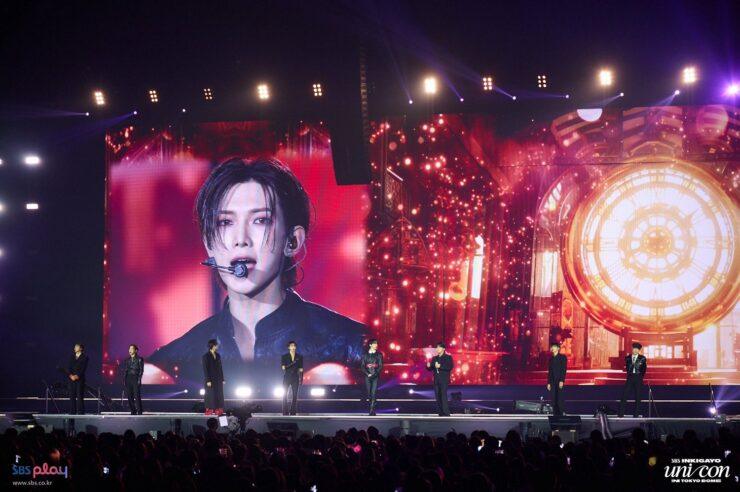
A raw rap, a sword dance of words
Musically, The Glory strips things down to the essentials: no elaborate arrangements, no excessive production — just Hongjoong’s voice, his flow, and his emotions laid bare. This minimalist choice is anything but accidental: it forces the spotlight onto his delivery, making every syllable hit with maximum impact.
The rap swings between rapid-fire flows — with words slicing through the beat like blades — and pregnant pauses that make key words like pride, glory, and A tiny thing land even heavier. The flow is intentionally jagged, restless, uneven: each break, each burst of speed feels like the steps of a fighter — evoking the mangnani once again, dancing precariously between strength and vulnerability. The constant push-and-pull tension hooks the listener in, refusing to let go.
The visual of Hongjoong brandishing the red fan during the performance adds an even deeper layer of symbolism: like an ancient warrior or a ritual executioner, he wields not a sword, but his art and his pride — conquering the stage through sheer presence and meaning.
The interplay between English and Korean lyrics also plays a vital role: English phrases deliver swift, universal punches, while the Korean lines dive deeper into layers of cultural meaning. This dual identity — global yet deeply Korean — is ATEEZ’s signature, and The Glory is one of its most powerful expressions to date.
From underground to the top: the manifesto of a journey
The emotional weight of The Glory becomes even more profound when considering ATEEZ’s origins.
Coming from a small, independent label — without the colossal backing of the k-pop “Big 4” — they had to fight their way up from the very bottom, true underdogs in a world dominated by giants.
Ignored and underestimated for years, they won over a global audience with nothing but their music, their explosive energy, and their unbreakable bond.
In this context, The Glory isn’t just a song — it’s a manifesto.
In a world where surface often outweighs substance, ATEEZ chooses the harder road: to stay true to themselves, no matter the cost.
The Glory doesn’t merely celebrate a milestone — it renews a vow: to keep fighting, to keep creating, and to keep shining without ever betraying the essence of who they are. For ATEEZ, glory isn’t measured in numbers or trophies: true glory is walking hand in hand with your dreams — and with those who believed in you from the very beginning.
It’s the anthem of those who understand that the journey itself is the greatest prize.
It’s the anthem of ATEEZ.
Images source here