
[This is a spoiler free article]
Weak Hero Class is by far the most brutal Korean horror I have ever seen. And yet, it’s not even a horror, strictly speaking! A series, with two seasons available on Netflix, which, despite lacking supernatural elements, evokes a palpable terror deeply rooted in social dynamics. There are no monsters under the bed or ghosts in the corridors of Byeoksan High School; the horror here is purely human, generated by cruelty, systemic pressure, and the psychological scars inflicted upon its young protagonists. It is a social horror that doesn’t stem from the fear of the unknown, but from the chilling recognition of a suffering that echoes in the darkest corners of contemporary reality.
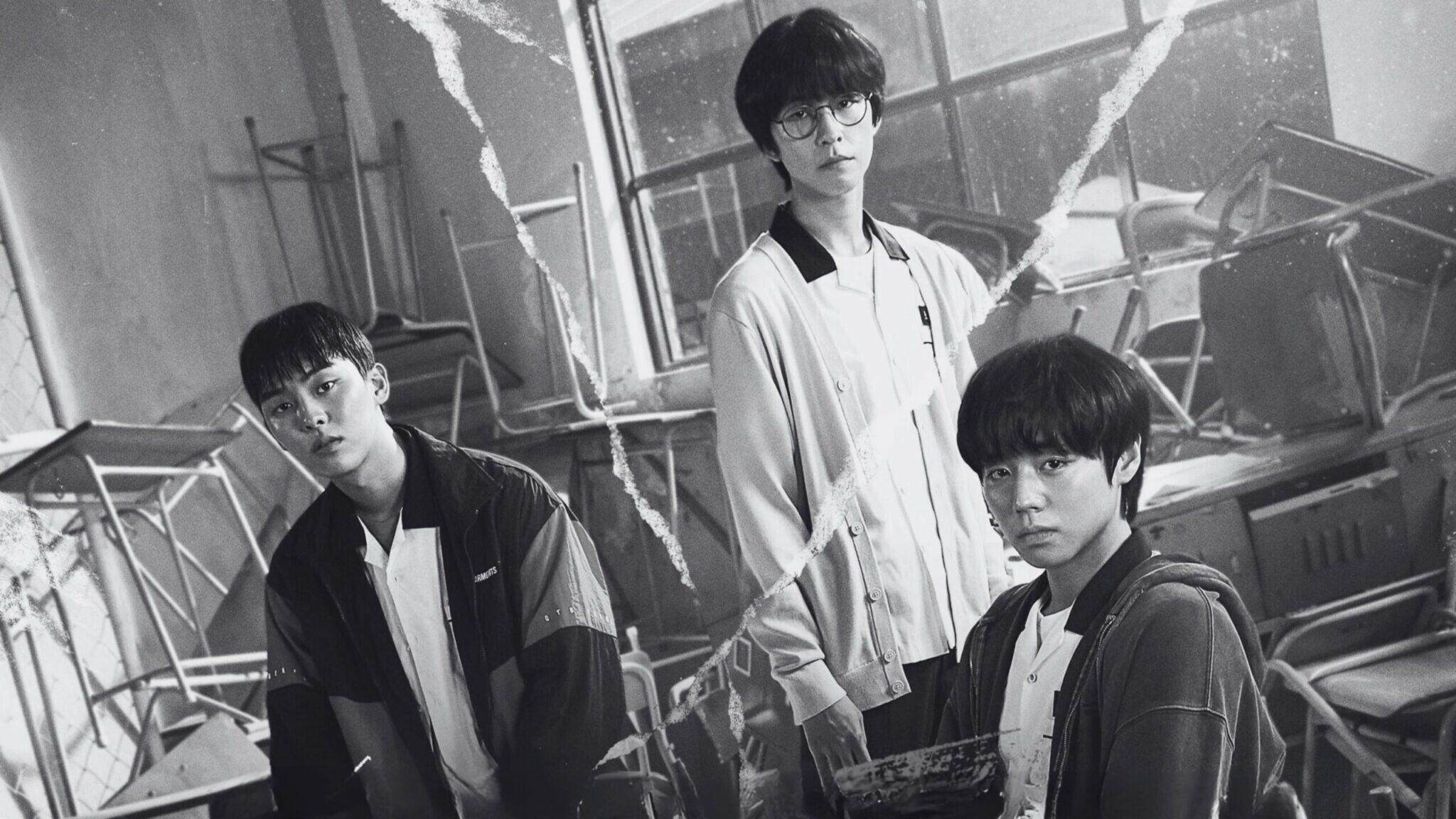
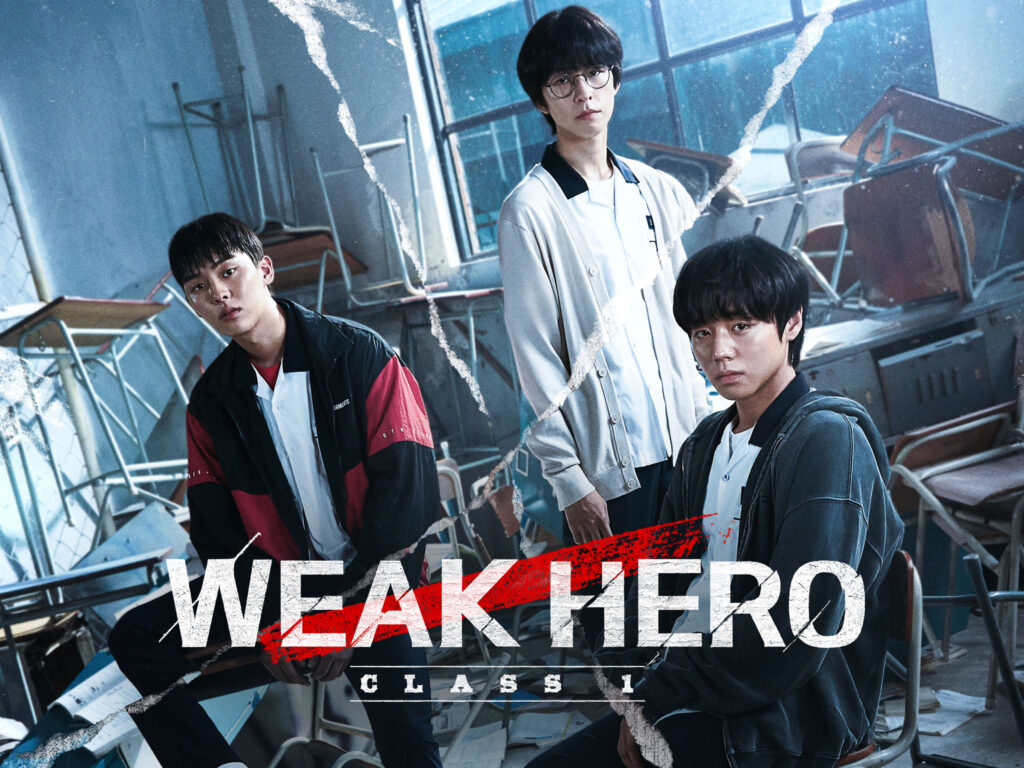
At the heart of the first season’s narrative is Yeon Si-eun (played by Park Ji Hoon), a physically small and fragile model student. His existence, dedicated to study, is interrupted when he becomes the target of bullies. Contrary to expectations, Si-eun reacts using his sharp intelligence, psychology, and everyday objects as weapons, triggering an escalation of violence. Alongside him are Ahn Su-ho (Choi Hyun Wook), a charismatic and loyal MMA fighter, and Oh Beom-seok (Hong Kyung), a transfer student with a troubled past and a desperate need for acceptance, the son of an influential and abusive politician. Their friendship is forged in the fight against bullying, but Beom-seok’s internal traumas and insecurities, stemming from a toxic family environment, act as a catalyst for the group’s eventual fracture. The escalation leads them to confront dangerous figures. The season concludes with dramatic events involving Su-ho, leading to difficult choices for Beom-seok, and deeply scarring Si-eun.
The second season picks up with Yeon Si-eun deeply affected by the past events. Having transferred to the violent Eunjang High, Si-eun initially attempts to isolate himself. His past, however, inevitably draws him back into the center of conflict. He forms new friendships with Park Hu-min (Ryeoun), leader of the basketball club; Seo Jun-tae (Choi Min-young), a student who finds the courage to fight back; and Go Hyun-tak (Lee Min-jae), Hu-min’s loyal friend. The forging of new bonds highlights Si-eun’s hard-won resilience. The central conflict revolves around “The Union,” a vast and structured organization of student delinquents led by Na Baek-jin (Bae Na-ra) and Geum Sung-jae (Lee Jun-young). Si-eun’s motivation shifts towards protecting his new friends. The narrative explores themes of survival and personal growth in the face of increasingly widespread and organized violence. The introduction of “The Union” represents an escalation of the threat, although some critics have noted a risk of diluting the social horror in favor of action.
Weak Hero Class functions as a distorted, yet painfully accurate, mirror of some of the most deeply rooted issues in contemporary South Korean society. It draws on documented social ills, amplifying the horror through the chilling awareness that the suffering depicted echoes in statistically significant realities.
The Scourge of School Bullying
School bullying (학교폭력, Hakgyo Poknyeok) is the genesis of trauma. The series depicts it with disarming rawness, showing both physical and psychological aggression and the disconcerting indifference of adult figures. This portrayal finds a disturbing correspondence in real-world data. A national survey (Korean Ministry of Education, 2024) revealed that the prevalence of bullying in 2024 reached 2.1%, marking the fourth consecutive year of increase, and is particularly high among elementary school students (4.2%). Among the forms of bullying, verbal abuse is the most common (39.4%), followed by physical abuse and social exclusion; cyberbullying is also growing (10.4% among high school students). Actual reported cases of school violence in 2023 totaled 61,445, a 6% increase compared to 2022.
Table 1: Statistics on School Bullying in South Korea (Snapshot 2023-2024)
| Indicator | Data (Source: Korean Ministry of Education, 2024) |
| Overall prevalence of bullying (2024) | 2,10% |
| Prevalence in elementary schools (2024) | 4,20% |
| Prevalence in middle schools (2024) | 1,60% |
| Prevalence in high schools (2024) | 0,50% |
| Most common form: verbal abuse (2024) | 39,40% |
| Cyberbullying (High Schools, 2024) | 10,40% |
| Reported incidents of school violence (2023) | 61.445 (up 6% from 2022) |
The psychological impact on victims of bullying, as depicted in the series, is scientifically corroborated by its connection to anxiety, depression, and suicidal ideation. The rising statistics on bullying, especially among young people, make the social horror portrayed in Weak Hero Class all the more potent; it is not an exaggeration but a reflection of a worsening social problem that leaves deep and lasting scars. The second season delves deeper into these consequences, showing how trauma persists and influences the protagonists’ choices and relationships.
Child Abuse and Dysfunctional Families
The character of Oh Beom-seok’s father introduces the harrowing theme of child abuse (아동 학대, Adong Hakdae). In 2023, 25,739 cases of child abuse were confirmed, and in 85.9% of these cases, the perpetrators were the parents themselves. The abuse suffered by Beom-seok is a tragic depiction of this reality, where the home becomes a source of terror. The series links this domestic trauma to the character’s descent into violence, illustrating the devastating long-term consequences. This highlights a critical cycle: trauma at home can fuel aggression and dysfunction in other contexts, suggesting that addressing school violence requires an approach that includes family dynamics.
The Shadow of Patriarchy and Toxic Masculinity
Although the series does not explicitly focus on female struggles, patriarchal structures (가부장제, Gabujangje) permeate the dynamics of power and male violence. South Korea still ranks low in global gender equality indexes (World Economic Forum’s Global Gender Gap Report 2024, 94th out of 146 – as discussed here). A significant wage gap persists (OECD data). Social pressures related to marriage and procreation have led to movements like 4B (as discussed here). This context can foster a culture of toxic masculinity. The male-dominated world of the series, where violence is the primary currency of power, is a microcosm of these structures. The power struggles and status seeking among bullies and the authoritarianism of Beom-seok’s father are reflections of these norms, perpetuating the cycle of violence, which is reinforced in Season 2.
The Crucible of “Ruthless Education”
The South Korean education system is known for its extreme competitiveness, the pressure of exams (Suneung), and the reliance on hagwons (evening cram schools). This so-called “ruthless education” (Gyeongjigdoen Gyoyuk – 경쟁적 교육 – “competitive education”) has a significant impact on students’ mental health, with high rates of stress, anxiety, and depression. Tragically, South Korea has the highest youth suicide rate among OECD countries, a figure to which academic stress significantly contributes. Spending on private education has reached record highs. This pressure for academic success, which becomes the sole measure of worth, contributes to social stratification and despair that fuel bullying. Si-eun’s initial obsession with studying reflects this high-pressure environment. Even in the second season, academic pressure remains a background element, a constant reminder of how this competitive system can contribute to a stressful climate that indirectly fuels negative dynamics. The high youth suicide rate represents the most tragic outcome of this system.
Intersectional Trauma
These issues – bullying, domestic abuse, patriarchal pressures, and a ruthless education system – do not act in isolation but intertwine, creating an ecosystem of suffering. The series illustrates how these pressures converge on individuals, especially the most vulnerable. Intersectionality is crucial to understanding the depth of the drama: a character like Oh Beom-seok is the product of the convergence of all these forces. His downfall is the result of the intersection of multiple traumas. This makes solutions, both narrative and real-world, much more complex. The second season amplifies this perspective, showing how past wounds continue to influence the present and how the search for a different future is fraught with obstacles stemming from these deeply rooted social dynamics. The social horror is, therefore, systemic and layered.
K-Drama as Social Critique: Veracity, Adaptation, and Impact
The series Weak Hero Class fits into a growing trend of K-dramas (such as the equally anxiety-inducing The Glory) that openly address uncomfortable social realities. The popularity of these works indicates an interest in more mature stories willing to confront uncomfortable truths, acting as catalysts for public debate. The second season confirms this trend, exploring themes such as vigilante justice and survivor’s guilt. As an adaptation of the popular Naver webtoon created by Seopass and illustrated by Kim Jin-seok (Razen), the series balances a faithful reflection of society with the dramatic exaggeration typical of K-dramaland and webtoons themselves. The heightened reality of webtoons allows for the exploration of extreme situations to highlight social ills, but it risks being perceived as unrealistic or exploitative of suffering. Its effectiveness lies in balancing the rawness of its portrayal with emotional depth.
The certain thing is: Weak Hero Class stands out for its ability to generate a profound sense of unease and anguish through a raw and realistic depiction of youth violence and psychological trauma, rather than relying on clichés. It is a ruthless and brutal production, and this lies in the raw honesty with which it addresses the cycle of violence, the consequences of abuse, and the struggle for survival in a hyper-competitive and often indifferent society. It is a viewing experience that forces confrontation with uncomfortable truths, leaving a profound mark and a lingering sense of disquiet, much like the most effective horror.