
Whether here in the Western world we live in a more or less secularized world does not matter, we hear very little about shamanism. This is why, when I read about Min Hee-Jin, CEO of ADOR and a key figure in the world of k-pop music and her relationshi with a shaman, all I thought was
…what?
The series of events surrounding this episode certainly offers a unique opportunity to understand the relevance of this religious phenomenon in South Korea.
Let’s briefly review the current events: accused by HYBE of consulting a shaman (or a shamaness, it’s unclear) to make strategic decisions regarding the management of the label she heads and even – it seems – the fate of BTS members on military conscription, these days Min finds herself at the center of a debate that highlights the everlasting conflict between modernity and tradition, which is particularly felt in South Korea.
According to reports in the Korean press, shamanism appears to have had a significant influence on Hee-jin’s career: it has emerged that over the past 3 years she allegedly spent about 40 million won (approx. 26,500 euros) on shamanic consultations. The case of Min Hee-jin and HYBE is just one example of how shamanism is influencing Korean popular culture. To bring up another example, the film “Exhuma,” which was released a few months ago, also became a hit because of its depiction of young shamans.
I think the situation involving Min is particularly fascinating: not only does it highlight how shamanic practices can influence even the highest echelons of contemporary business, but it also reflects a renewed interest in spiritual traditions in an increasingly globalized cultural context. To examine her story is, therefore, to explore the sociocultural dynamics that make shamanism a still relevant and significant phenomenon in South Korean society, revealing the tensions between ancestral beliefs and the challenges of the modern world, beyond the purely legal and strictly managerial aspects of the affair.
Korean shamanism: the basics
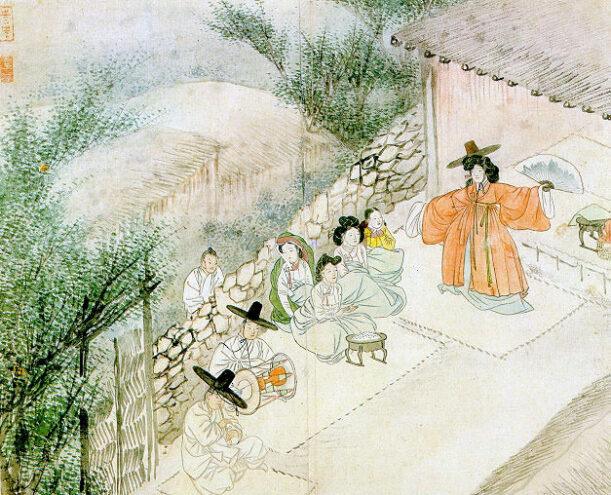
Korean shamanism has deep roots dating back more than 2,000 years. It is the oldest religion on the peninsula and was the dominant religion until the breaking through of Buddhism in the 7th century AD.
Theologically speaking, Korean shamanism is based on a disorganized pantheon of about a million gods, spirits, and ghosts. Each element of nature has its own spirit of reference, and shamans act as intermediaries between the human and spiritual worlds.
Purely as a matter of curiosoty, it should be known that there are two types of shaman in South Korea:
1. The Gangshinmu (or Possessed Shaman)
- experiences trance states and possessions during rituals
- are often male individuals [male shaman: mudang (무당)]
- flashy and various clothing and costumes
- use of energetic music and dance
- individual and personalized approach
- widespread mainly in rural areas
2. The Seseupmu (or Succession Shaman)
- does not experience trance states during rituals
- hereditary transmission of shamanic tradition, usually from mother to daughter [female shaman: baksu (박수)]
- more institutionalized role within the community
- generally more sober and standardized clothing
- more codified and ritualistic approach
- greater presence in urban areas
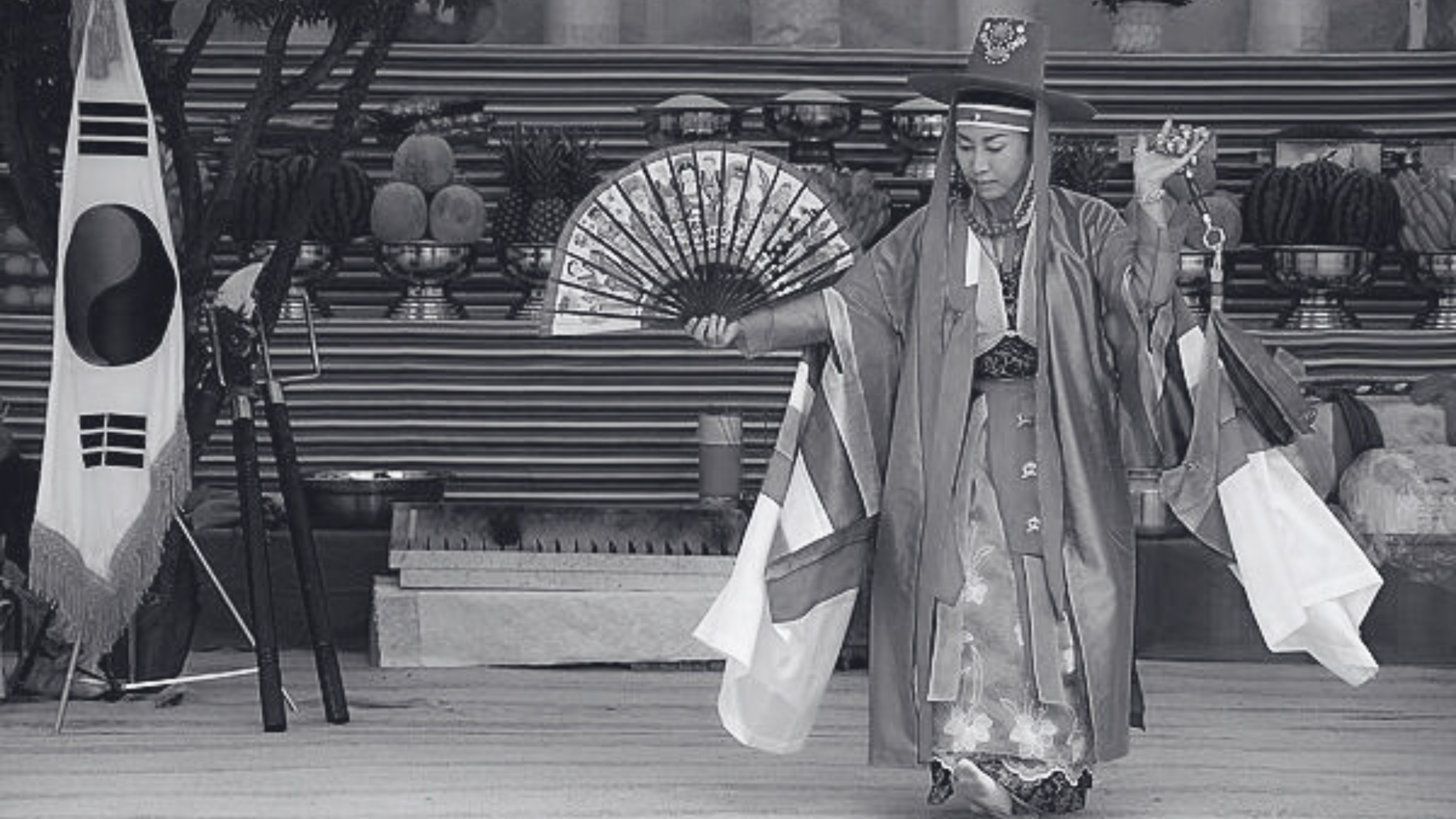
Shamanic rituals, called gut, are complex and spectacular events officiated by a shaman who serves as a medium between the human and spirit worlds and are aimed purely at obtaining benefits: preserving the well-being of the family, exorcising evil spirits, healing the sick. How? By caring for the spirits of one’s ancestors or other deceased persons, pleasing them and “distracting” them from their blues and dumps with ritual dances and chants.
It is precisely its practical nature, focused on quickly solving everyday problems, that makes shamanism so appealing and fashinating to people. Moreover, compared to the more institutionalized and widespread Confucianism, shamanism has one important feature: the worship of the dead. Indeed, it emphasizes direct communication with spirits and the constant presence of ancestors in daily life, unlike the Confucian tradition, which emphasizes veneration and respect for ancestors through formal rituals on specific occasions, but does not believe in life after death, for example. Once deceased, people become something to be venerated, inaccessible and immobile like photographs.
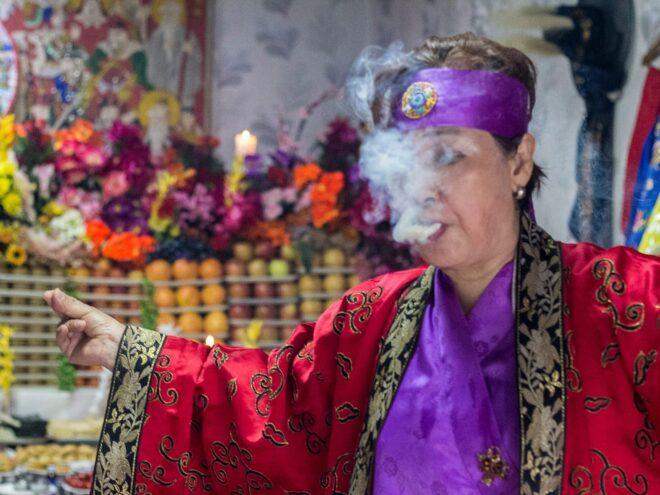
Transition into modernity
Over the centuries, shamanism has faced a long history of marginalization, particularly during the Joseon period (1392-1897), dominated by Confucianism. Considered a popular and inferior practice, shamanism was relegated to the margins of society, tolerated only among the lower classes and women. Indeed, women in particular have assumed- and still maintain -a central role in Korean shamanic practice, finding in it a space for expression and freedom denied to them by the highly patriarchal Confucian society. Excluded from official religious practices, women have for many decades identified shamanism as an opportunity to connect with spirituality and play a prominent role in their community.
Korean shamanism has shown remarkable resilience, surviving and thriving in contemporary society. Today, although it does not enjoy official recognition (Korean government still considers it a “superstition” and discourages its practice), this religion continues to exert a significant influence on Korean culture and mentality, representing a symbol of resistance and cultural identity. It is estimated that more than 300,000 shamans are active in South Korea today, mostly in rural areas and among fishermen, but recently it has also returned to large cities, thanks to the emigration of the rural animist population and the use of social media to promote activities and reach a wider audience.
Shamanism, business, and Min Hee-jin
Despite the secularization and modernization of South Korean society, shamanism continues to provide an avenue for spiritual exploration. Many Koreans, especially young people, turn to shamans for advice and healing, and they offer a unique perspective on life, based on a deep respect for nature and spirits. Through the gut rituals, they help their clients navigate the challenges of modern life, providing a sense of connection with the past and the spiritual world. Many Koreans thus find in shamanic animism a way to express their connection with nature and ancestors.
In recent years there has been increasing attention to the application of shamanic principles in the business world in South Korea. This phenomenon, seemingly at odds with the rationality and efficiency typically associated with the business world and specifically the hyper-functional South Korean business world, may have several explanations: the need for unconventional solutions in an increasingly complex and competitive business landscape, the search for well-being and motivation through practices focused on energy balance, mindfulness, and connection with nature, or the need to develop conscious leadership models, with the emphasis on inner listening, connection with the self, and responsibility to the collective.

The Min Hee-jin case, being that controversial, offers an opportunity to reflect on the role of shamanism in today’s Korean society.
On one hand, understanding the phenomenon does not necessarily mean sharing its beliefs or practices, but rather recognizing its historical, cultural and social value without prejudice. In an age dominated by rationality and technology, shamanism reminds us of the importance of the spiritual dimension and connection to something greater than ourselves.
On the other hand, Min’s choice to consult a shaman reflects a search for spiritual and decision-making support in the highly competitive and stressful environment of the music industry. This story not only raises questions about the legitimacy of shamanic practices in the professional context, but also invites reflection on contemporary challenges related to mental health and well-being in a society that often stigmatizes seeking help outside traditional channels.
It’s a kind of therapy,” Yun said. “In Korea, people feel more comfortable going to shamans than to psychiatrists. If you go to a psychiatrist, that’s your problem. If you go to a shaman, it’s more of an ancestral problem and it’s not your fault.”
Bibliography:
– Lauren Kendall, Korean Shamans And The Spirits Of Capitalism, Article In American Anthropologist, October 2009
– Oh Kyong-Geun, Korean Shamanism – The Religion Of Women, International Journal Of Korean Humanities And Social Sciences Vol. 2/2016
– Arevik Chačatrjan, An Investigation On The History And Structure Of Korean Shamanism, Charles University In Prague, Department Of Ethnology, Prague, Czech Republic
– Christine Metz Howard, Professor explores economics of shamanism in popular South Korean island, https://news.ku.edu/