
When I took my first – fictional – steps toward Korea at the end of 2020, I wasn’t thinking about editorial projects or strategies. I wanted to listen to K-pop, watch dramas until three in the morning, and observe a universe capable of blending aesthetics, discipline, and collective madness.
At one point though, for Simona, the co-founder of Koreami, and me, that passion became a strong need to share. In Italy, there was no place that truly felt like ours. One day, scrolling through LinkedIn, I came across Carolina Steinert‘s profile; at that time, she was building an editorial project in Brazil born from the intersection of fandom, writing, and market intuition. In the lines of her CV, a possible direction for me was already visible: the idea that an interest could be transformed into a tangible structure. Three years later, that seed became Koreami.
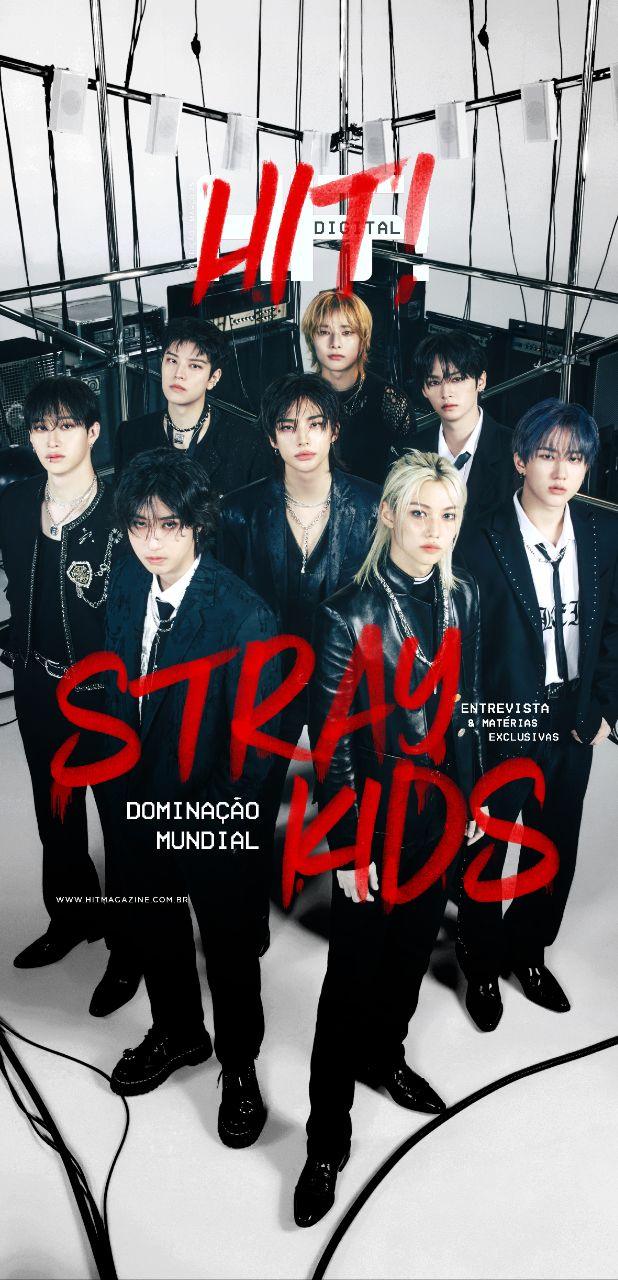
HIT! Magazine was also born from a concrete void. Carolina recounts that in Brazil, between 2008 and 2012, accessing official K-pop products was difficult, expensive, nearly impossible. From that difficulty emerged first the idea of a platform capable of building communities, then a more structured editorial project, designed not only to narrate a phenomenon but to give it a recognizable and stable space.
Over time, this intuition transformed into a true media infrastructure. HIT! paired its closeness to the fandom with a professionalization process involving training, networking, and dialogue with the industry, treating K-pop not as fleeting enthusiasm but as a full-fledged cultural and commercial sector. The numbers also help gauge the project’s reach: in an interview with the Korea Times in July 2024, Carolina speaks of over 4 million monthly social media accesses and more than 5,000 copies sold in the first few weeks for the February issue dedicated to TWICE.
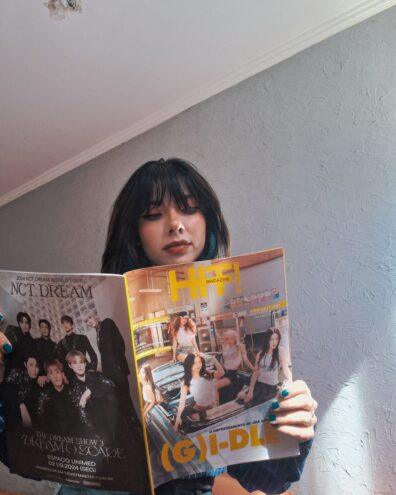
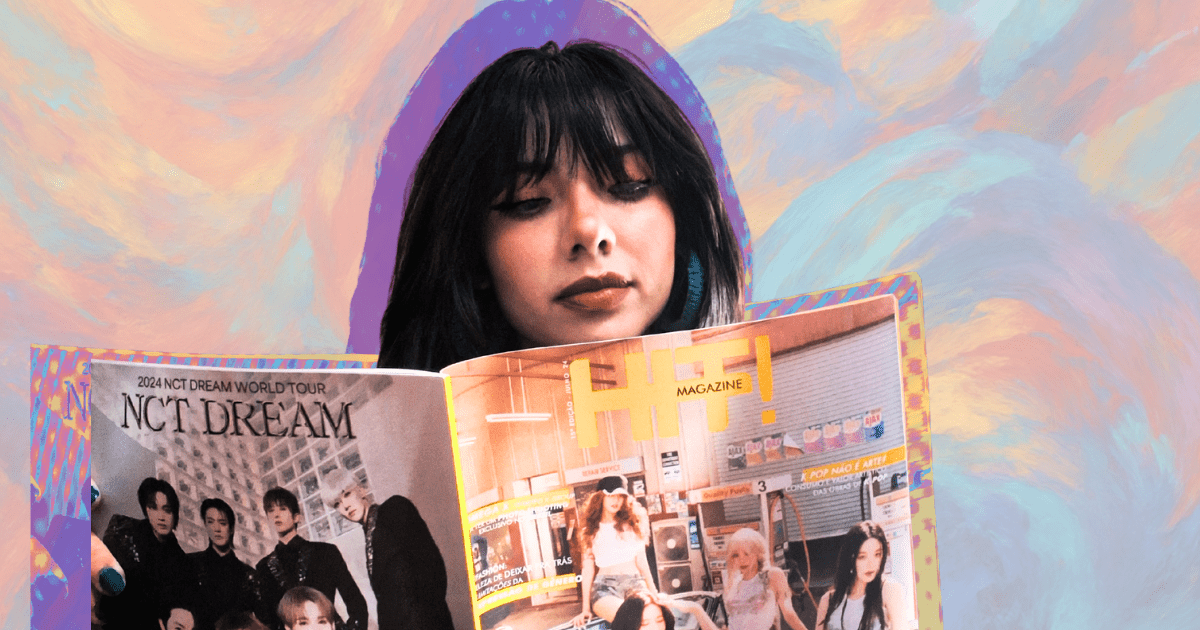
The choice of print fits into this trajectory. Not as a nostalgic gesture, but as a way to build a tangible, accessible, and official object in an ecosystem dominated by digital speed. In this sense, HIT! is not just a magazine about Korean and Asian culture: it is the attempt to transform a scattered demand into a legible, recognizable, and enduring project.
Let’s start from the beginning.
“When I started consuming k-pop, between 2008 and 2012, importing official products to Brazil was always very slow, expensive, and complicated. It was practically impossible to find official merchandise here,” says Carolina.
Out of that gap, HIT! Magazine took shape — not as an abstract intuition, but as a response to a concrete absence: the lack of stable, recognizable access to what was coming from Korea. And, together with it, the desire to tell those stories.
“I liked writing about k-pop and realized that creating a platform was the best way to start building a fan community,” she explains. Then came vinyl, the revival of print, and the will to give form to something lasting. The first issue featured B.I on the cover. “It worked; then we published KARD and later decided to follow an independent path.”
From there, the mission took on a different tone. For Carolina, proving that k-pop in Brazil could be a market and not just a passion became essential. That’s why HIT! adopted a professional approach, investing in training, courses, and workshops. The point was no longer just growth, but credibility — building a language that could be read both by fans and by the industry. A project born within the fandom, yet capable of engaging with editorial and commercial players without losing authenticity.
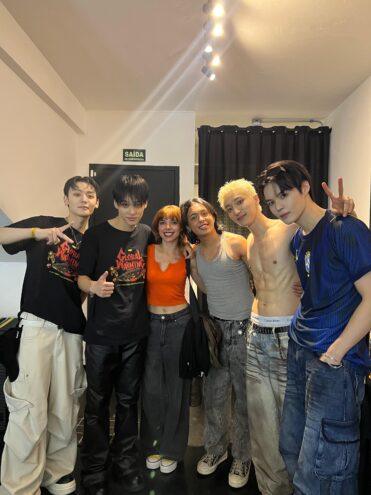
“Many people don’t understand that artists are human, so they end up treating them in an unnatural way,” Steinert says. “I approach them with respect and an understanding of Korean cultural norms, but I keep my tone informal and genuine.”
It’s an equilibrium that runs through all her work: knowing the context without becoming rigid, staying professional without losing human tact. From there, she built a network of relationships that allowed the magazine to grow. The moment that truly defined HIT!’s identity, however, came with a refusal.
“During a trip to Korea, I was offered a cover with an artist I greatly admired, but who at that time was involved in major controversies,” she recalls. “I had to say no, out of respect for the magazine’s values and my own.”
It was a complex decision: credibility is often tested in the act of turning down the easiest opportunity. In her words, there’s no disappointment — only clarity. “A lot of what’s reported about k-pop — beauty pressures, issues within agencies, psychological struggles — is true. Artists I’ve spoken to have confirmed it.”
HIT! aims to hold together storytelling and accountability. “When we talk, for example, about an idol who is dating someone, we accompany the news with an article or video featuring the psychologist Juliana Capel, who discusses parasocial relationships. Our goal is to promote something healthy for fans, even if that’s difficult.”
The magazine doesn’t use critical distance to cool down its relationship with readers, but to make it more conscious. Pop culture remains the focus, yet it’s never treated as a space free of real-world consequences.
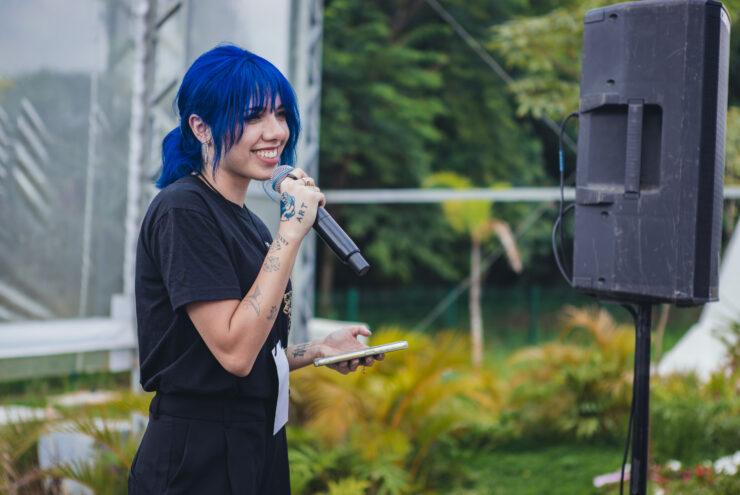
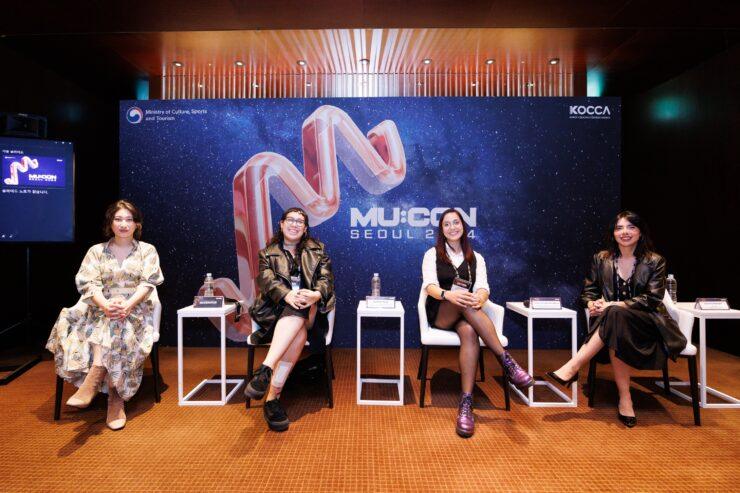
“Today we’re no longer just a magazine about Korean culture, but about Asian culture as a whole. K-pop is still our strong point, but we knew every niche has a ceiling — and to keep growing, we needed to expand,” she explains.
This expansion isn’t a rebranding exercise; it’s the way a project learns not to depend on a single axis, acknowledging its limits and moving beyond them without losing its identity.
Then there’s the somewhat countercurrent choice to print. “We’re seeing the return of vinyl records, cassette tapes, physical formats. People miss tangible products,” says Carolina. “Creating a physical magazine in 2022 was also a way to monetize writing and build an accessible, official product, with pre-order benefits and direct contact with artists — something unique in the Brazilian market.”
Print here doesn’t serve a nostalgic impulse but a sense of presence: an object that lasts in an ecosystem dominated by speed. “We can’t rely on a single cultural wave. That’s why we broadened our scope: k-pop is coming out of its bubble, but we must be ready, with a plan B to maintain the project’s consistency.”
It’s a pragmatic mindset — the threshold where passion becomes a kind of work capable of looking ahead. In her closing reflections, Carolina looks back on her path. “Over the years I’ve built many friendships in the industry that I still keep. But from a professional perspective, working with an artist I loved and had a fan club for in 2012 was a truly happy moment.”
This is where the circle closes. There’s a grounded, graceful intelligence in how she describes that shift: the fan doesn’t disappear, but finds a new place in the story.
Carolina has given shape to a world that moves fast — between emotion, passion, market rules, and the dignity of representation. A fragile yet vital balance — and perhaps for that very reason, a universal one.