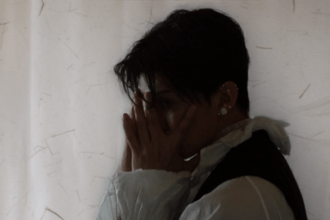
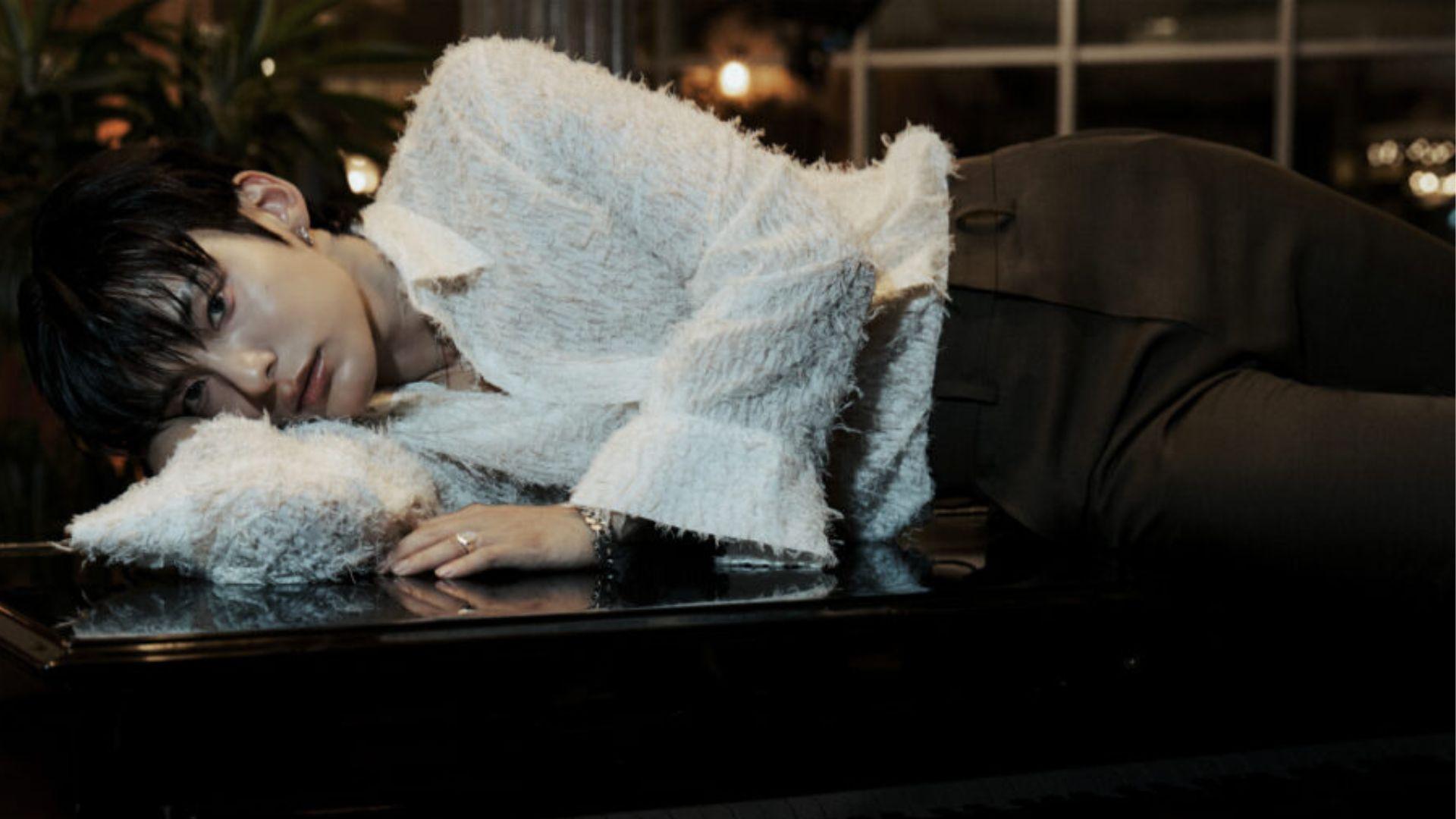

When he was very young, Park Junhee dreamed of “becoming a star big enough to appear on television.” A simple ambition, we could say almost universal, that transformed him into the charismatic leader of A.C.E. He made it. Then, at thirty, he realized that this dream that had come true was… a cage.
We saw him for years as the tireless leader of A.C.E, a role he took on at their debut in 2017. A charismatic leadership, his, without a doubt. But off stage, the reality was harsh: a physical and mental burnout overwhelmed him, forcing him to make a radical choice. Instead of a safe path, he chose a leap into the void: total autonomy.
Choosing to Molt
There is a moment in the career of every artist in the idol system when the predefined trajectory collides with the reality of personal growth. For Junhee, leader, singer, and main dancer of A.C.E , that moment wasn’t so much an epiphany as a rupture. The decision, made in 2024, not to renew his contract with his previous agency, BEAT Interactive, was described by Junhee himself in an interview with View of the Arts as “incredibly difficult and emotionally draining,” a direct result of accumulated “mental and emotional burnout.”
It is no coincidence that the first concept film for his solo debut is titled Molt. The metaphor is powerful and precise. Molting is not a simple change of clothes; it is a painful, necessary biological process in which an organism must literally destroy and abandon its own exoskeleton, which has become a prison preventing its growth. That exoskeleton was his identity, his contract, perhaps even the shortened name the world knew him by: Jun.
In order to grow, Junhee first had to let go. And from that process, he emerged no longer as Jun of A.C.E, but as JUNHEE. This change is not a stylistic whim. As he explained to GQ, releasing an album under his own name was “very meaningful” to him. An act of reappropriation. In many cases, the K-pop industry, for marketing efficiency, tends to contract. And so Park Junhee becomes Jun. In his first act of total freedom, JUNHEE re-expanded his name, forcing the public and the industry to recognize him in full. He rejects the logic of marketing in favor of personal integrity. The artist once again becomes an author to be respected in his entirety. “Now that I’m in my thirties,” he revealed, “I can no longer say I’m just young… I decided to pursue what I truly want to do, regardless of the outcome.“

“Without restrictions”: The Genesis and Harsh Reality of H&P Entertainment
The result of that decision was H&P Entertainment, the agency Park Junhee founded in June 2025. This move placed him in a rare category of idols who not only left the company they debuted with, but chose to build their own infrastructure from scratch. The motivation behind this entrepreneurial choice was not ego, but artistic necessity. It is the philosophical “why” guiding the entire project. In an interview with EnviMedia, JUNHEE distilled his mission into a single sentence: “The reason I decided to establish my own company was because I wanted to create musica exactly the way I envisioned it, without any restrictions.”
He explained that, as a member of a five-person group, the music, style, and direction had to be shaped by finding “common ground,” constantly facing “limitations.” Now, as CEO and the sole artist of his label, “everything comes entirely from my thoughts and the path I want to take.”
But absolute freedom comes at a brutal price. JUNHEE is now a divided man, balancing the dual roles of artist and CEO. The preparation for his debut, he admitted to Lifestyle Asia, was “lonely both physically and mentally,” having to think alone about everything he previously did with five people. The weight of this new structure rests entirely on his shoulders.
His honesty about the difficulties is disarming. “It’s not easy,” he declared to Kpopmap. “If I had known everything in advance, maybe I wouldn’t have started.s I think it’s because I didn’t know that I was able to start this journey.” He described a reality made of “physical fatigue, stress, and a lot of pressure.“

And this is where the truest, least glamorous proof of his freedom emerges. In the K-pop system, agencies handle logistics—finance, administration, accounting—providing a safety net that, while “restricting” the artist, frees them from daily banalities. To gain the creative freedom he needed, JUNHEE had to take on all the responsibilities of that safety net. The proof? Speaking of the new skills acquired as CEO, JUNHEE revealed he has become “quite skilled at issuing tax invoices,” managing “almost all of them by himself.” This detail is important. The act of “managing tax invoices” is the purest, most prosaic, and anti-glamour manifestation of his freedom. He traded the burden of artistic compromise for the burden of total responsibility. In a way, he chose his prison. H&P Entertainment is not a vanity project. It is a grueling enterprise, where the CEO learns accounting to protect the structure of his freedom.
The proof of Sound: How We Owe It All to K-Pop Demon Hunters
Before he could build, JUNHEE had to face his doubts. The anxiety preceding his debut was paralyzing. As he told Kpopmap: “I had a lot of worries… I wondered, ‘Can I really make music alone? There might not even be anyone expecting or waiting to see that side of me.‘” And again: “Honestly, I was worried, asking myself ‘Will people recognize me as a solista?‘” The answer to this question didn’t come from his team or a marketing strategy, but from his audience. In the summer of 2025, before his album announcement, JUNHEE released two covers from the OST of the Netflix film K-Pop Demon Hunters. The first, Your Idol by SAJA BOYS, exploded online, accumulating millions of views. It was followed by a powerful interpretation of Free in a duet with soloist AleXa. The most significant aspect of this viral success is its origin. As he revealed to Hellokpop, the idea for the Your Idol cover came from fans during a live stream, who noticed a similarity between his voice and the original singer’s. His motivation was purely relational. The overwhelming response was the validation he needed. It was the direct answer to his anxiety. “The response made me feel certain that I could really create something and succeed as a solo artist,” he told EnviMedia. “I still can’t believe how much love I received.” These covers served as a perfect bridge for the audience. The A.C.E audience was used to a hard EDM, rock, performance-driven sound. JUNHEE, meanwhile, wanted to move towards a softer, “easy-listening” musicality. How to bridge this gap? The covers provided the solution. Your Idol, with its fierce energy and cinematic choreography, satisfied performance fans, allowing him to play with the idol image even as he was deconstructing it. With Free, on the other hand, he showcased his pure vocal ability in a mature and powerful pop context. The covers warmed up the market, proving that an audience hungry for this new JUNHEE existed outside the context of A.C.E, and gave him the confidence and market data needed to invest in his most personal project: The First Day & Night.
The First Day & Night – the chronicle of a day, the portrait of an artist
Released on September 12, 2025, The First Day & Night is the expression of JUNHEE’s vision. The album is structured around a concept as simple as it is unexpected and elegant: a 24-hour cycle, with each track marking a specific moment.
As he explained to GQ, the concept is deeply personal: “The meaning behind the album is that I wanted to celebrate the day I debut as a solo artist for the first time. I thought, ‘What would it be like to make an album you could listen to all day long, on this particular day?‘”. The resulting album is a journey through genres, a deliberate demonstration of versatility designed to provoke an honest reaction of surprise, “But how is JUNHEE so good at EDM too? How does he manage it?“.
The Day: Vulnerability, Loyalty, Risk (10:00, 12:30, 15:00)
Umbrella (10:00), the title track, immediately sets the tone for the new era. Instead of an explosive and declarative debut, JUNHEE chooses vulnerability. Musically, it’s a “soft pop” and “cheerful” track, but the lyrics are decidedly bittersweet.s As he explained to Lifestyle Asia, the song is about a “foolish love” for someone who “only comes to me when they really need me.” It’s the feeling of continuing to wait, even knowing the other person doesn’t love you. It’s an anti-heroic debut choice, prioritizing complex emotional honesty over bravado.
… and the vocal performance? The whole album is A+, but here it’s enough to make you fly away, Mary Poppins style, umbrella and all.
Next is Tattoo (12:30). This track is the emotional and strategic masterpiece of the album. At the very moment he declares his independence, JUNHEE includes a track “with Jiham, Wow, BK, Yuchan” – that is, the entire A.C.E roster. Like an oath of loyalty. In an interview with Mido-Media, he described the recording experience as “perfect,” saying that “all the members were waiting for this moment and we worked together with great joy.” He spoke proudly of how he “divided the parts” and how BK “did an extraordinary job” on the intro, leaving him “really satisfied.“
This is JUNHEE still acting as a leader, but now in the role of collaborator and CEO. He is not using his new platform, his new freedom, to escape his family, but to include and celebrate it. It proves that the bond he spoke of to Hellokpop – “trust and respect… that bond is indissoluble” – is not just rhetoric for the fans.
Then, at 15:00, the album takes an unexpected turn with Too Bad (15:00). This is his declared challenge: a country-rock track. The industry is known for adhering to trends, the choice to include a track with a country vibe is… peculiar. He chose it simply because he loved the demo and felt it had a different charm. Too Bad is the clearest example of his “without restrictions” philosophy in action. He is a K-pop idol doing country-rock on his debut album, not because it’s trendy, but simply because he wants to, and he can.
Dusk: defining the sound (18:00, 21:00)
As the day fades, the album settles into the sound that is the true heart of JUNHEE’s solo vision. Sugar (18:00) is described as a “soothing R&B track“. This is the sound that justified the entire venture. It is the “Pop R&B” that he declared to EnviMedia to be his “personal taste,” in stark contrast to A.C.E’s music. This track, more than any other, is the why H&P Entertainment exists. It is “music meant for listening,” and its inclusion speaks to the artist’s entire philosophy. The transition into the night continues with You Should Come (21:00). Here, the pop vibes are etched with a “slightly more sensual impulse.” Together with Sugar, this track defines his new solo persona: mature, smooth, R&B, and confident.
Dead of Night: the “commercial” track and the confession (00:00, 02:00)
The album’s night section showcases his duality as CEO and artist. Supernova (00:00), the pre-release track, is a strategically brilliant move. It is a disco dance-pop track that blends retro and modern. As he explained to Kpopmap, its simplicity was deliberately chosen to attract attention and create a contrast with the album’s more personal tracks. Supernova is the commercial showcase: catchy, energetic, and perfectly produced. A perfect hook. But the album doesn’t end with a bang. It ends with a whisper. The last original track, Night (02:00), is the only song on the album where JUNHEE is accreditato as the sole composer and lyricist. It is, in his own words, the track “closest to his heart,” “full of personal emotions and reflections” and created “based on [his] personal experience.” Here, the analysis becomes a revelation. The entire, exhausting process of founding H&P Entertainment, managing stress, loneliness, and even learning accounting and issuing invoices, everything was undertaken for a single purpose: to protect the creation of this single honest moment. Night (02:00) is the artistic core that the entire corporate infrastructure was built to defend. The album thus ends with an acoustic, confessional ballad that plays on the radio at 2 AM. It seems to say: art before commerce, honesty before spectacle.
Happiness as the horizon: the future of Park Junhee
To fully understand the extent of Park Junhee’s transformation, we must remember that youthful dream of ‘becoming a star big enough to appear on television‘ we talked about at the beginning of this piece. That ambition, which we saw turn into a cage, was the starting point: a desire for external validation, the quintessential idol dream. Contrast that youthful ambition with his new definition of success, now that he is thirty. “These days,” he said in the same interview, “I feel that finding personal happiness is much more important than chasing success. And in that sense, I am happy right now.” Quoting the title he chose for his first solo album, JUNHEE’s “first day” is the beginning of a career in which the metric for success has been radically and courageously rewritten. His ambition has shifted from the external to the internal. Fame is fine, but just as important is sustainability. His ultimate goal, as he stated to Kpopmap, is not to be the most famous, but “to build my career step by step and become an irreplaceable artist.“
Park Junhee has completed his molt. He has emerged not just as a solo artist or CEO, but as the originator of his own freedom and therefore his own happiness. Through trivial acts like managing accounting and sacred acts like writing ballads at 2 AM, he is building a rare and precious model for a sustainable “second act” in the industry. A career founded not on the need to be seen, but on the need to be irreplaceable and, above all, on the audacity to simply be happy.

Sources (and thanks to)
- JUNHEE’s First Day & Night: Making Music His Way, EnVi Media, https://www.envimedia.co/junhees-first-day-night-making-music-his-way
- ‘The First Day & Night’ Reviewed: JUNHEE Is One of K-pop’s Most Ambitious Artists, The Bias Wrecker, https://www.thebiaswrecker.com/blog/the-first-day-amp-night-reviewed-junhee-is-one-of-k-pops-most-ambitious-artists-nbsp
- KPop Demon Hunters SAJA BOYS ‘YOUR IDOL’ Covered by JUNHEE, Official JUNHEE, https://www.youtube.com/watch?v=O74LFwPoWDI
- KPop Demon Hunters ‘Free’ Covered By JUNHEE x AleXa, Official JUNHEE, https://www.youtube.com/watch?v=MuNoEpD5rW4
- [INTERVIEW] JUNHEE Talks “Supernova” Solo Debut And Learning to Handle Tax Invoices, KAvenyou, https://kavenyou.com/junhee-supernova-interview/
- Interview] Junhee Talks About Finding His Voice In Solo Debut Album, “The First Day And Night”, Genius, https://genius.com/discussions/505126-Interview-junhee-talks-about-finding-his-voice-in-solo-debut-album-the-first-day-and-night
- Junhee Opens Up About His Solo Artist Endeavors, Starting A New Chapter, And What’s Ahead (Exclusive Interview), Kpopmap, https://www.kpopmap.com/junhee-opens-up-about-his-solo-artist-endeavors-starting-a-new-chapter-and-whats-ahead-exclusive-interview/
- More Than an Idol: JUNHEE of A.C.E on Growth, Grace, and Letting Go – Exclusive Interview, View of the Arts, https://viewofthearts.com/2025/07/13/more-than-an-idol-junhee-of-a-c-e-on-growth-grace-and-letting-go-exclusive-interview/