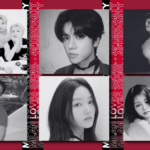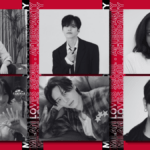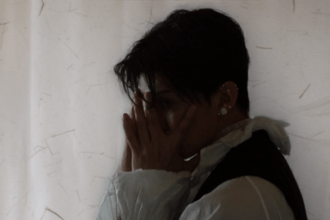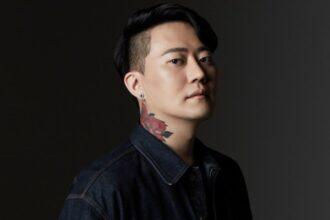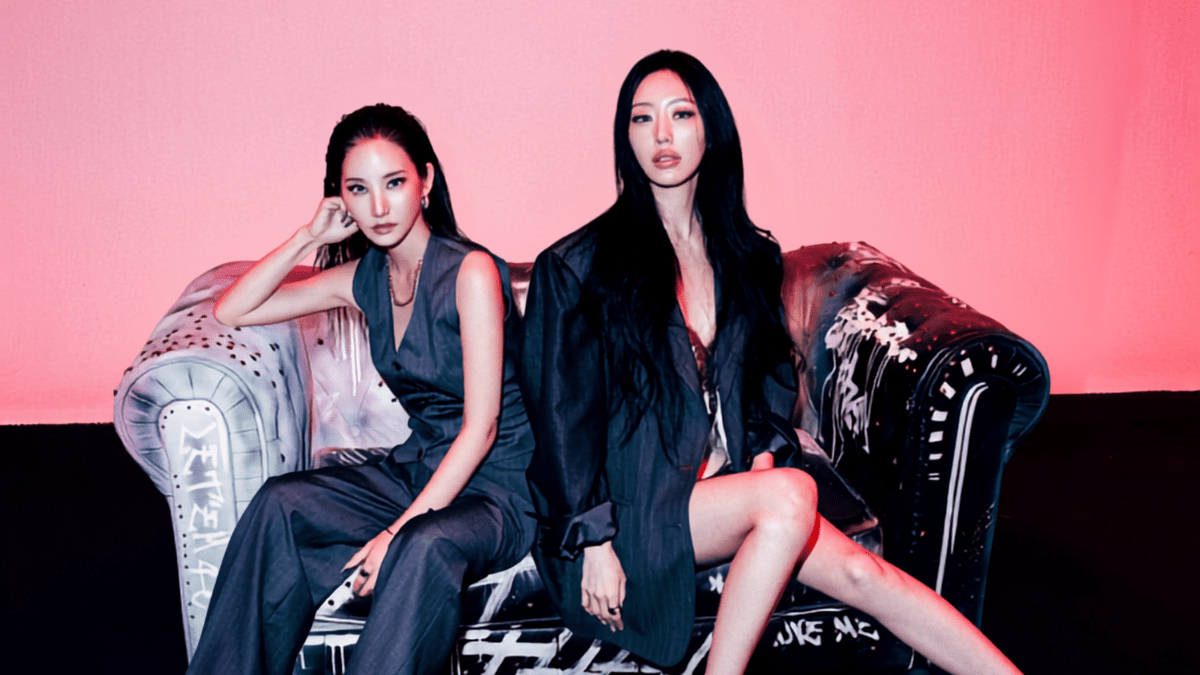

The second single from Girl’s Hood came out on September 12. An Afrobeats track about letting go of others’ judgment, with two artists who complement each other without erasing who they are.
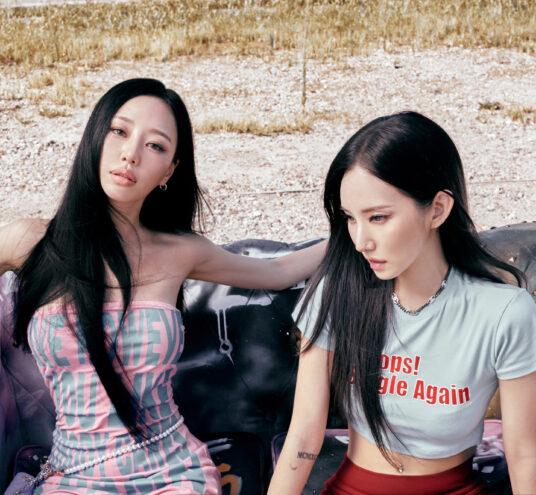
No official source connects the new single by Jiselle and SUMMER CAKE to Robbins’s book, but the mechanism that book describes (letting other people’s judgment pass by without engaging it, so you can focus on your own choices) is exactly what THE SSR builds LET THEM around, the second chapter of Girl’s Hood, the project that has held the two artists’ careers together since this past May. A starting point that sounds almost like a self-help manual, and one the song still manages to turn into something more layered: the story of two paths that arrived, by opposite routes, at the same need to stop explaining themselves.
Released on September 12 through THE SSR, a music collective that describes itself as rooted in genres of Black American origin, LET THEM arrives four months after Circle in Me, the single that had opened Girl’s Hood this past May 19. Where that first chapter looked for common ground in shared emotion, in that ability to recognize yourself in someone else’s vulnerability even coming from different experiences, LET THEM takes a further step: it takes that solidarity and turns it into a stance. The title, translated literally, means letting others say, think, and judge whatever they want. It’s an attitude that takes time to earn, and it comes, fittingly, from two artists who have built up that time, in the Korean R&B scene, in very different ways.
Two Roads towards the Same Mic
Jiselle debuts in February 2019 with Missed Call, feat. Chancellor, under the label Million Market, which at the time had only recently become a sub-label within the SM Entertainment universe. It’s a near-silent entrance into the market, without the fanfare that comes with idol debuts: from the start, hers is a singer-songwriter R&B/soul proposition, built on a calm, restrained tone and a writing style that favors suggestion over statement. In the years that follow, Jiselle expands her sonic vocabulary, moving from dreamy trap R&B toward funkier, more retro pop textures, and builds much of her identity through the vocal harmonies and pads she composes herself, the real tool through which her voice, already reserved by nature, still manages to take up space. Along the way come collaborations with CHANGMO, pH-1, BewhY, PENOMECO, BIG Naughty, and Seori, plus an EP, Therapy Session, released in September 2022. Nearly all of these are collaborations with male voices: looking at her entire discography, an encounter on equal footing with another female artist was simply a missing piece.
Critical recognition, for Jiselle, has come more from the margins than from the center of the charts: interviews with outlets like Rolling Stone Korea and Arena Korea, a cover shoot for Vogue Korea, appearances at festivals like the Ulsan Rock Festival and the Park Music Festival, and in 2023 a role as opening guest on pH-1’s Asian tour. All of it points to an artist the scene has learned to treat as a reference point for more intimate K-R&B, even while staying out of the main spotlight. Last year, Jiselle put herself to the test for the first time in an openly competitive setting, taking part as one of ten “untitled artists” on House of Girls, ENA’s music survival show that aired between May and July: an experience that, in a career built almost entirely in the studio up to that point, brought her face to face with the stage and with direct confrontation.
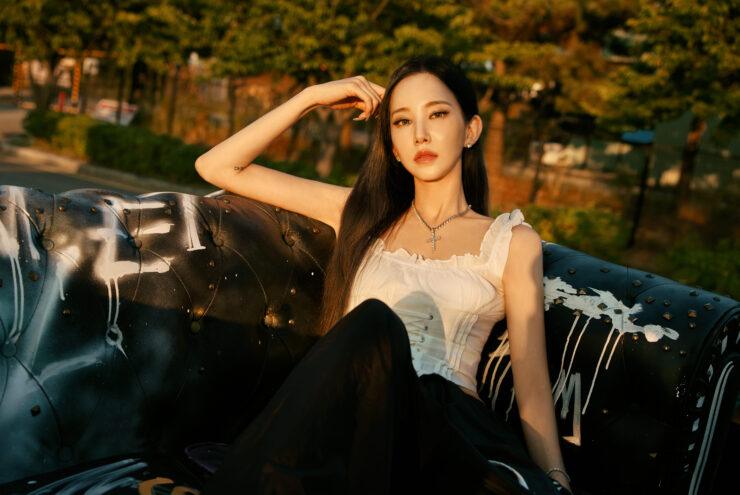
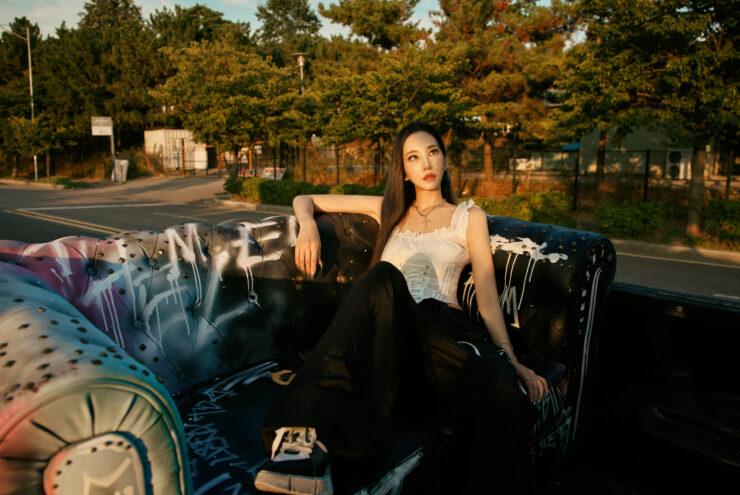
SUMMER CAKE arrives at that same mic by a far rockier road. Before becoming SUMMER CAKE, she is Kim Min-kyung, and it’s under that name that she takes part, in 2017, in Mixnine, JTBC’s survival show, and that same period sees an already-announced debut fall through: she was supposed to be part of HighColor, a four-member girl group with Heo Chan-mi, a project that collapses before it ever reaches the public. A solo debut attempt follows and sinks just as badly, before Kim Min-kyung shows up again in 2020, this time on The Voice of Korea, where, on Team Dynamic Duo, she makes it all the way to the final, placing among the top four contestants. Only at the end of this obstacle course, in December 2021, is SUMMER CAKE officially born, debuting with the single Love Villain under the label TSC. From that point on, her career changes register entirely: SUMMER CAKE writes, composes, and produces most of her own music, moving easily between alternative R&B, pop, and hip-hop, as shown by singles like Dirty My Clothes, Not In Public (which, by her own numbers, remains her most-streamed track to date), Squat, I Got U, and Bake, released in August 2025, alongside the EP LIMINAL, put out in February of that same year. It’s a catalog that has grown fast and steadily, the work of an artist who seems to have made up, in just a few years, for all the time lost between canceled projects and talent-show placements, asserting a personal, often ironic, almost never submissive voice with each new release.
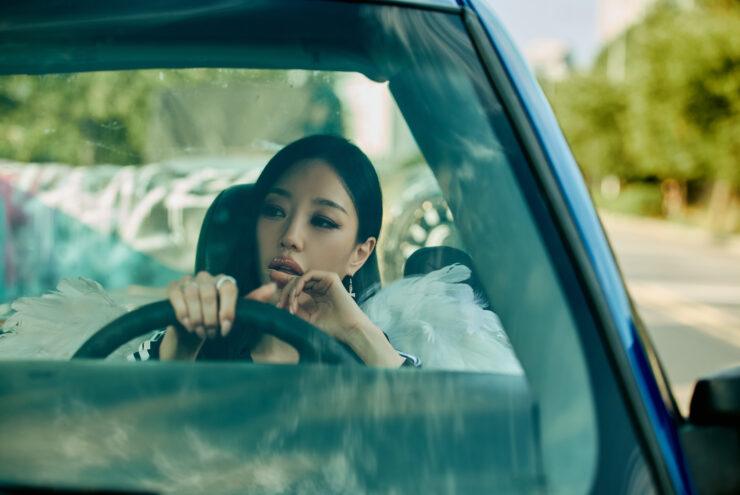
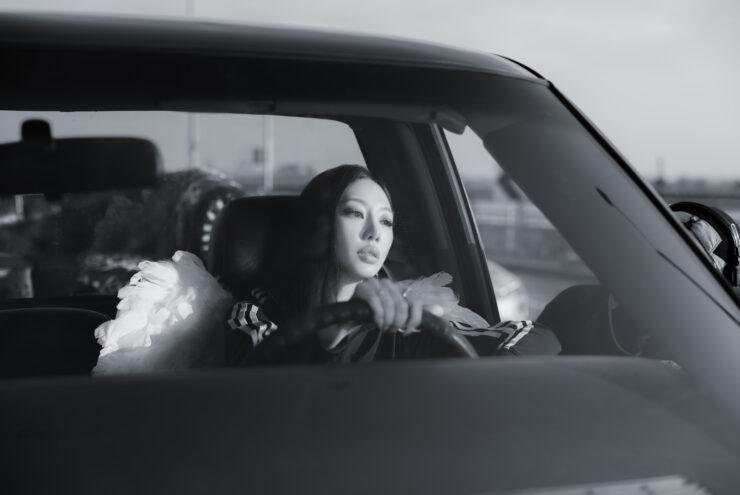
Placed side by side, the two careers tell a story that goes beyond either biography. Jiselle built her voice inside a structured system, that of a label, staying faithful to an intimate, understated register even as the context around her changed. SUMMER CAKE had to earn that same right to authorship by going through auditions, canceled projects, and eliminations on live television, only becoming a complete artist once she stopped depending on a panel’s judgment. These are two different forms of resistance to the same pressure: that of an industry which, as more than one voice in Korean R&B criticism has pointed out, remains an environment where female artists struggle harder than their male counterparts to assert a genuinely personal musical identity, even when talent is never in question. That the two of them now find themselves singing together about no longer having to justify themselves feels like the natural outcome of two paths that arrived, by opposite routes, at the same conclusion.
What Actually Happens Inside LET THEM
THE SSR describes the production of LET THEM as minimal, powerful, and shot through with an Afrobeats-rooted groove: a description that, once you actually hear the track, turns out to be anything but a promotional tagline. The song doesn’t chase immediate impact through accumulation, the way a title track built for music shows would; instead it builds its tension by subtracting elements, letting the rhythm breathe and letting the two voices find room next to each other without ever having to fight for the foreground. It’s a production choice consistent with the song’s stated theme: if LET THEM is about the freedom to stop reacting to other people’s judgment, the song’s structure itself rejects the anxiety of muscle-flexing, opting instead for a relaxed kind of control.
On the level of groove, that minimal choice translates into a rhythm section that works more through micro-variations in accent than through drastic shifts in intensity: the song isn’t building toward a chorus that explodes by contrast with the verses, but toward a more horizontal progression, where energy accumulates through controlled repetition rather than through layering. It’s a structure that demands patience from the listener, but rewards exactly the person who gives it: the further the track goes, the more that sense of ease between the two voices settles in, until it becomes the song’s one true distinguishing feature.
It’s in this stripped-back space that the real meeting between the two tones takes place. Jiselle’s warm, restrained register, the same one built over years on ambient R&B and whispered harmonies, doesn’t try to contain SUMMER CAKE’s more direct, rhythmically confident energy, and vice versa: the two vocal lines intertwine while staying distinct, trading the foreground with no clear hierarchy, in a call-and-response that feels more like a conversation between equals than a duet built to show off technical chops. It’s a balance that requires mutual trust as much as craft: both artists, it’s worth remembering, are seasoned live performers, used to carrying their voice outside the studio, and that shows in how naturally they handle the spaces the production leaves empty.
The hybridization of Korean R&B with Afrobeats sounds is one of the directions the scene has been pushing toward most insistently in recent years, helped along by the global influence the genre has come to hold well beyond its origins. In LET THEM this stylistic choice stays functional to the story being told, rather than purely aesthetic: the way the Afrobeats rhythm invites movement without ever forcing it, leaving it up to the listener to decide how much to give in to it, mirrors exactly the attitude the lyrics describe. The song’s form puts the concept into practice, instead of just illustrating it from the outside.
There’s one more layer, subtler still, that has to do with how THE SSR chose to sequence Girl’s Hood. On Circle in Me, the production left more room for a continuous vocal blend, almost trying to make the two voices coincide into a single sonic body; on LET THEM, that same blend loosens up, and the two tones become distinguishable from one another again even as they sing together. It’s a step back only in appearance: the first single was reaching for union, the second for co-existence, which is a harder target to hit and, musically speaking, a far more interesting one to listen to.
Girl’s Hood and Womens’ Place in Korean R&B
Girl’s Hood was created, in THE SSR‘s own words, to bring more attention to women in R&B and to contribute to new creative movements within the scene. On its own, that’s a mission statement that could sound like pure press-release rhetoric. It becomes a sturdier argument once you place it in context: that of a Korean R&B scene which in recent years has seen a steady emergence of strong female personalities, but which remains historically more permeable to male presence at the top, both in production and in songwriting. Finding female singers whose sound is partly shaped by male producers is far from rare; running into a project that brings together two artists who are already fully the authors of their own music, without subordinating one to the other and without turning them into a girl unit in the traditional sense of the term, is far rarer.
This is where Girl’s Hood sets itself apart: it isn’t a group, it has no fixed lineup beyond the two lead artists, it doesn’t offer a single identity meant to dissolve the differences between Jiselle and SUMMER CAKE. It’s more of a platform designed to let two voices talk to each other while staying, song after song, recognizably distinct. The first chapter, Circle in Me, worked on shared empathy; the second, LET THEM, shifts the focus to individual autonomy. They’re two sides of the same proposition: first you recognize yourself in the other person, then you claim the right to stay yourself even while keeping company. It’s a progression that gives the project a real narrative arc instead of a string of unrelated releases, and one that opens up the possibility (still to be confirmed in the coming months) that Girl’s Hood won’t end as an isolated episode but will become a recurring format, capable of hosting other pairs of artists down the line.
What makes the operation credible, setting aside its stated intentions, is that the two artists carrying it out have already earned that credibility elsewhere, each in her own way. Jiselle doesn’t need Girl’s Hood to prove she can write with emotional nuance; SUMMER CAKE doesn’t need the project to prove she can produce and sing with personality. The added value lies in the chance, rare in the K-R&B scene, to watch two already-mature sensibilities meet as equals, with neither one playing second fiddle to the other.
The audience this operation seems to be speaking to adds another layer to the reading. Listening data gathered by the two artists in recent years point to a following that reaches well beyond South Korea’s borders: for Jiselle, the sharpest growth on YouTube and Instagram comes from markets like Indonesia, the United States, and Southeast Asia; for SUMMER CAKE, the primary market on Spotify is actually the United States, followed by Indonesia. Girl’s Hood, then, seems to be speaking both to the Korean audience most devoted to the genre and to an international R&B listenership that in recent years has learned to follow the Korean scene with the same ease with which it follows the American or British ones, and that will likely find in LET THEM‘s Afrobeats groove a more immediate point of entry than more distinctly local productions.
LET THEM works on two levels that reinforce each other: that of the single track, where the minimal, Afrobeats-inspired production concretely stages the theme of freedom from other people’s judgment, and that of the broader project, where two careers arriving from opposite directions finally find common ground without having to give up anything of themselves. Compared to the publishing phenomenon from which the title unwittingly borrows two words, the difference lies right there: Jiselle and SUMMER CAKE aren’t selling a formula, they’re simply applying it to themselves, in front of a microphone, after years spent earning it the hard way.
The official video for LET THEM is available on YouTube.
Post correlati
-
 Colde is back! Here’s what he told us about his new EP, ICY BABY.
-
 Milan Loves Seoul Takes Over the Capital: The First Headliners for September’s Edition
-
 From Milan to Seoul: Made in Italy Returns to Korea with Milan Loves Seoul
-
 oceanfromtheblue: Refusing to Drift Away | Exclusive Interview
-
 How we’re building a global Korea: the myth of the “K”
-
 Milan Loves Seoul doubles down: here comes the second wave of guests in Seoul