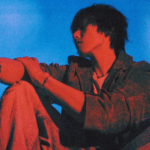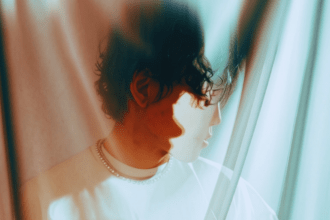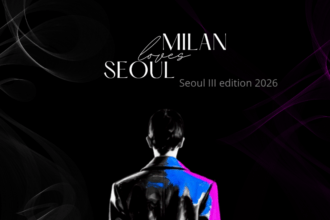

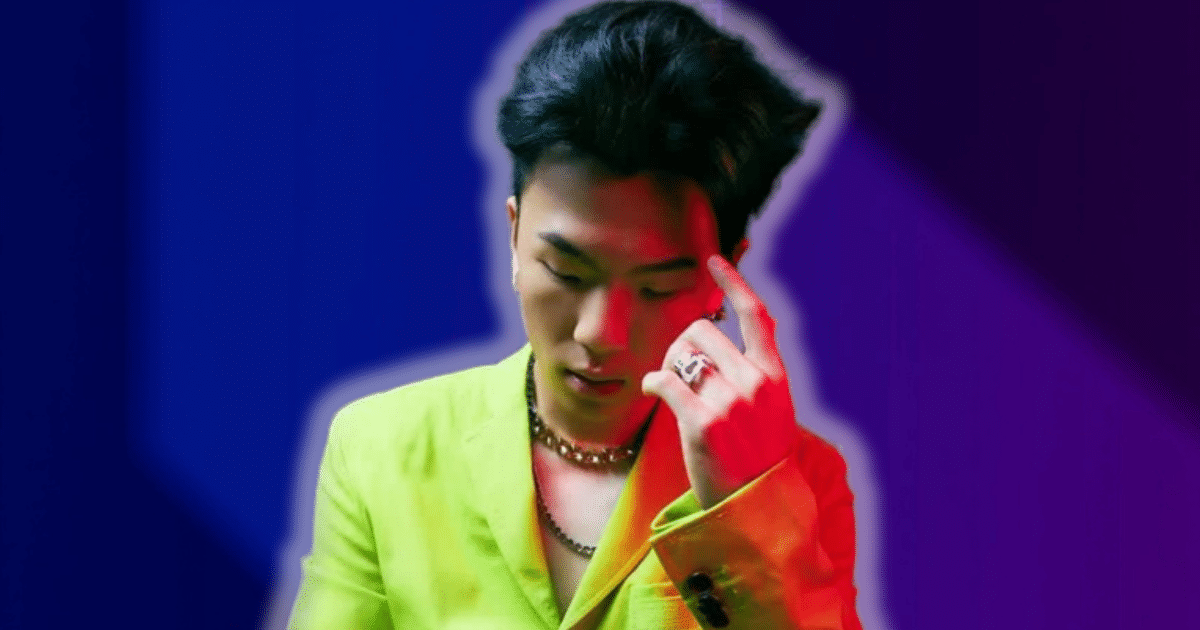
Hong Kong, Seoul, Bangkok, Paris. For many record labels these are four markets, with four offices and four strategies. For Sunny Lukas they are four cities where his project sounds just the same.
Takoyaki, as Sunny Lukas puts it when talking about himself and the way he sees things, is cooked over open flame in its mold and, despite this rough treatment, stays soft inside. Sunny Lukas built his latest visual project, TAKOYAKI, around this image, and its release on 2 October gave me the perfect pretext to start the conversation that follows with him.
I think it’s safe to say I moslty like to present interviews as profiles, telling the story together with the artist’s own words. With Sunny Lukas though, a different path imposed itself. He was born in 2000 and grew up in Hong Kong. Today he lives in Seoul and sings in six languages. He has already performed in Paris, in Milan, and at the Asia Revolution Festival in Germany. On 25 October he returned to France for The A Festival, at the Paris Convention Center. Maybe it’s because of his life as a globetrotter, maybe the direction the conversation took, or maybe it’s the maturity that gives him a precise narrative: he knows where he wants to go, and he speaks with the depth of someone who has already made peace with what he is saying. So I left him the microphone, and the question-and-answer format returns his thinking exactly as it is.
In this conversation we touch on five points: how real the barriers between markets still are, why for him fashion and music are built in the same way, what K-pop teaches those who produce music, and what it means to build a label that doesn’t impose a formula. Let him speak. Let’s listen.
Borderless
Koreami: Your music completely bypasses traditional geographic borders. You operate as an independent artist under TEAMSUNNY, singing in multiple languages and connecting Western R&B with the Asian scene. Looking at the global landscape today, do you see the traditional barriers between regional markets completely dissolving?
Honestly, I think the barriers are dissolving, but I wouldn’t say they’re completely gone yet. You can release a song from Seoul today and have someone in Paris, Bangkok, or Los Angeles connect with it immediately. The listeners are already very global—even if the industry sometimes still thinks in separate markets.
For me, I never really saw Asian and Western music as two different worlds. I grew up in Hong Kong listening to Cantopop and Mandopop alongside American R&B, hip-hop, and pop. Now I’m based in Seoul, I’ve performed across China, Europe, and the U.S., and I make music in different languages. That mixture isn’t something I’m forcing to sound “international”—it’s genuinely just who I am.
There are still barriers with language, playlists, media, touring, and how artists get categorized. Sometimes people still want to place you in one box: Asian artist, Western artist, C-pop, K-pop, R&B. But audiences care less about those labels now. If the song makes them feel something, they’ll listen.
That’s also why being independent under TEAMSUNNY is important to me. I don’t have to wait for someone else to decide which market I belong in—I can build my own world and connect with people wherever they are. I think the future will be less about geography and more about communities connected by taste, emotion, and culture.
Road to Europe
Koreami: You’ve been expanding your presence across Europe with performances in Paris, Milan, and at the Asia Revolution Festival in Germany. How do you envision the next chapter of your European expansion, and are there specific sonic or cultural dialogues you want to explore with European artists and audiences?
For me, the next chapter isn’t just about performing in more European cities—it’s about building a real relationship with the audiences there and giving them a reason to keep following the journey. Paris, Milan, and Germany all felt very different culturally, but the audiences were really open and curious. My next show is at The A Festival at the Paris Convention Center on October 25th, so I’m excited to continue that momentum and return to France.
Long term, I’d love to play more intimate headline shows, perform at more festivals, and eventually build toward a proper European tour. Creatively, Europe is exciting because every city has its own musical identity. I’m especially interested in exploring French R&B and hip-hop, UK garage and electronic music, and the more melodic, guitar-driven sounds you hear around Southern Europe. A song like “Laissez-moi faire,” where I mixed French and English with Spanish guitar and hip-hop rhythm, is already a small example of that.
I’d also love to create with European artists in their own cities, because the environment always changes the music. I don’t want to just send files back and forth and call it a collaboration—I want to experience the culture, understand where their sound comes from, and find the point where our worlds naturally connect. That’s what I want my European expansion to feel like: a genuine cultural conversation through the music.
From Fashion to K-pop
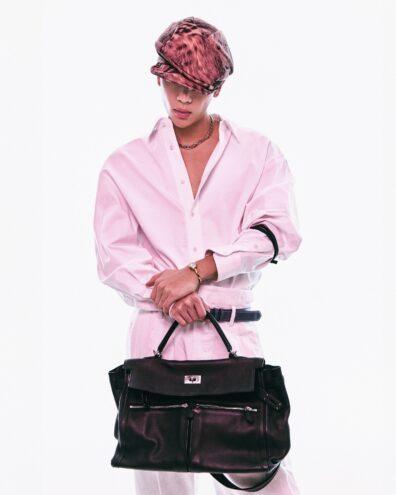
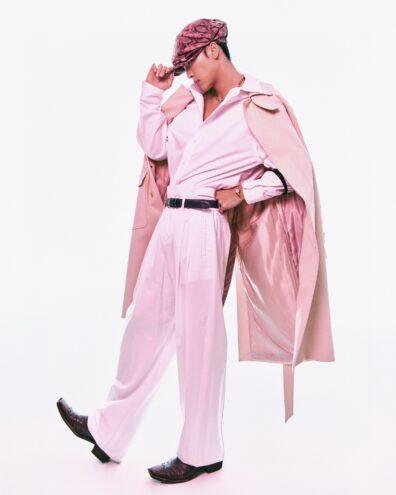
Koreami: Beyond music, fashion has become a major language for your self-expression, with collaborations with iconic luxury and global brands like Guerlain, Louis Vuitton, and Amiri. How do you balance your identity as a fashion-forward artist with your musical production? Do they inspire each other?
They definitely inspire each other. I don’t really see fashion and music as two separate identities—they’re both ways of expressing a feeling and building a world. The music usually comes first because the song has to be able to stand on its own, but once I understand its mood, fashion helps me give that sound a face.
I’m very detail-oriented with production, whether it’s the texture of a drum, a vocal layer, or a small sound in the background. Fashion has that same attention to detail through fabrics, proportions, and silhouettes. Working with brands like Guerlain, Louis Vuitton, and Amiri has shown me how much storytelling can exist beyond the product itself, and that inspires how I approach my own eras and visuals.
Sometimes it also works in reverse—a particular outfit, colour palette, or location can inspire a performance or even the direction of a song. With VOYAGE, for example, the nautical and European high-fashion imagery reflects the same ideas of movement, travel, and crossing cultures that exist in the music.
The balance is making sure the image never becomes louder than the art. I want fashion to extend the story, not distract from it. When everything aligns, people don’t just hear the music—they can see and step into the whole world around it.
Koreami: On your digital platforms, you often share brilliant, rearranged covers of major K-pop hits. From a producer’s perspective, what elements of K-pop production do you find most interesting, and how do you think it influences the broader Asian pop wave?
What I find most interesting about K-Pop is how fearless it is with arrangement. One song can move from an R&B verse into an electronic pre-chorus, open up into a huge pop hook, and then completely switch the beat in the bridge—but somehow it still feels like one record. There’s usually a lot of movement, and every few bars you’ll hear a new vocal layer, texture, or rhythmic detail keeping your attention.
K-Pop producers also think beyond the audio. They’re considering how a section will connect with choreography, visuals, and the overall performance. I really enjoy that kind of world-building because I approach my own music in a similar way.
Rearranging K-Pop covers is almost like studying the architecture of the song. I’ll strip everything down, change the chords or groove, and rebuild it through my own R&B style. It allows me to understand what makes the original work while still turning it into something that feels like me. If a song still connects after you completely change the production, that usually means there’s genuinely strong songwriting underneath it.
I think K-Pop has had a huge influence on the broader Asian pop wave because it proved that language doesn’t have to be a barrier and that Asian artists can lead global culture instead of simply following Western formulas. At the same time, I don’t think the future is every Asian market trying to copy K-Pop. The exciting part is seeing C-Pop, J-Pop, Thai pop, and other scenes learn from its global approach while bringing their own identities forward. K-Pop helped open the door—now everyone can walk through it in their own way.
Takoyaki, or On Softness
Koreami: You’ve said that your recent visual project TAKOYAKI brings your personal story to the stage, using cultural symbols like the takoyaki to represent resilience, hope, and your Asian heritage. Which chapters or moments of your journey are reflected in this narrative, and what does this message mean to you right now? Talking about the technology behind this project, where is the line, for you, between technology and genuine human emotion?
TAKOYAKI looks playful on the surface, but underneath that, it reflects a lot of moments when I’ve had to keep adapting—growing up in Hong Kong, leaving familiar environments, moving between different countries, and constantly entering new places where I had to introduce myself and prove myself again. Building an independent career also means there isn’t always a clear path, so a lot of the journey has been about continuing even when I wasn’t sure what would happen next.
I liked the takoyaki as a symbol because it’s shaped through heat and pressure, but it still has this warmth and softness inside. That felt very human to me. It also connects to the everyday Asian cultures I grew up around—food, shared experiences, and small things that can carry a lot of memory. It shows how culture can travel across borders and still bring people together.
Right now, the message is especially meaningful because I’m entering a new chapter and bringing my music to more places around the world. To me, resilience doesn’t mean becoming hard or losing your sensitivity. It means protecting that softer, hopeful part of yourself even while everything around you keeps changing.
With technology, I think the line comes down to intention. Technology can expand your imagination and allow an independent artist like me to create worlds that might previously have required a huge budget. But it can’t create the reason behind the story. With TAKOYAKI, the technology helped us bring the visual world to life, but the memories, emotions, and message still came from real human experiences.
If people only notice the technology, then I think you’ve lost the emotional center. The goal isn’t to show off what a tool can do—it’s to use that tool to make people feel something genuine.
A Label That Makes Room
Koreami: As an artist who is building a model for independent and modern Asian talent on a global level, what is the ultimate milestone or vision you want to achieve with TEAMSUNNY Entertainment in the coming years?
The ultimate goal is bigger than having one global hit or selling out one arena—although I definitely want those things too. I want TEAMSUNNY to prove that an independent Asian artist can build a sustainable global career, maintain ownership, and stay true to their cultural identity without having to fit into one market or system.
Right now, I’m building that blueprint through my own career: releasing music independently, touring across Asia, Europe, and the U.S., and connecting music with fashion, visuals, and culture. In the future, I want TEAMSUNNY to become a creative home for other artists, producers, and songwriters who also think beyond borders. I don’t want it to feel like a traditional label that gives everyone the same formula. The purpose should be to understand what makes each artist unique and then give them the global infrastructure to expand it.
I’d love for us to connect talent across cities like Hong Kong, Seoul, Bangkok, Paris, London, and Los Angeles—creating collaborations and opportunities that might not happen through the traditional industry. If a young Asian artist can look at what we’ve built and realize they don’t need to give up their identity or ownership to reach the world, that would be the real milestone for me.
Ultimately, I want TEAMSUNNY to stand for freedom, quality, and cultural connection—and to help create a future where Asian artists aren’t treated as a trend or category. We’re simply global artists.
Heat & Pressure
The takoyaki returns at the end to close the circle. In that shape is the Weltanschauung of Sunny Lukas. Heat and pressure are part of the world as he knows it: cities that change, a language that has to earn acceptance each time, an industry that asks you to choose a box, a label, a container. Softness is what remains despite a world that presses. Lukas speaks of protecting that most sensitive part while everything around changes, and this has consequences for how he works: keeping ownership of his music, changing language according to the song, letting the image stay in the service of the art.
The same balance runs through all his answers. He hopes a language will not become a label or a box, and that fashion remains a detail that accompanies the music without taking its spotlight. He wants K-pop to be studied for how it is built, in its structure and arrangements, and not only listened to as an effect. And he imagines a label that helps the people in it grow, not a formula to apply to everyone.
Hong Kong, Seoul, Bangkok, Paris, London, Los Angeles: in his project these cities belong to the same conversation. On 25 October, in Paris, he added another stage to this path.
We’ll wait for you to be back in Italy soon, Lukas!