
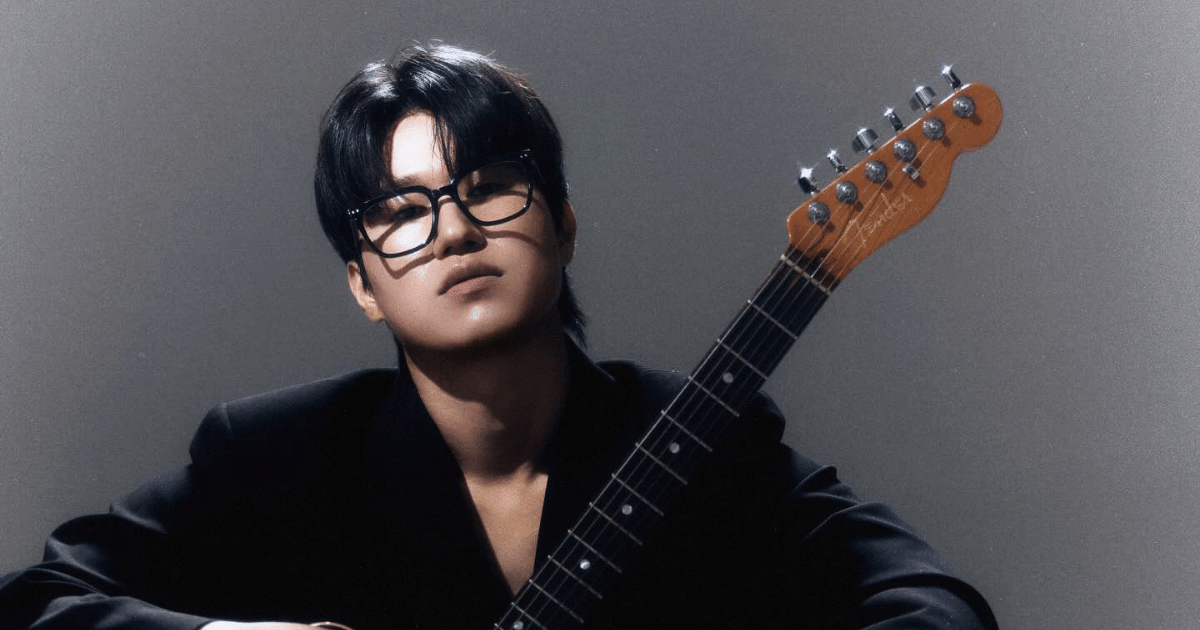
JOJE profile pic

«On the street, they can simply walk away» “JOJE” and the art of _making people stay_ | Interview

Elisa
By Elisa
17 Min Read

The South Korean guitarist splits his time between the UK and Korea. In September he was in Genoa: he tells Koreami about his name, life on the road and the new single on the way.

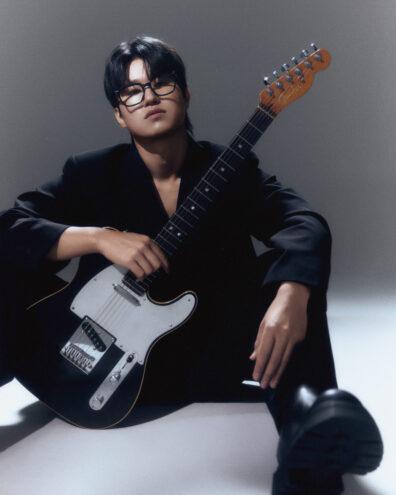
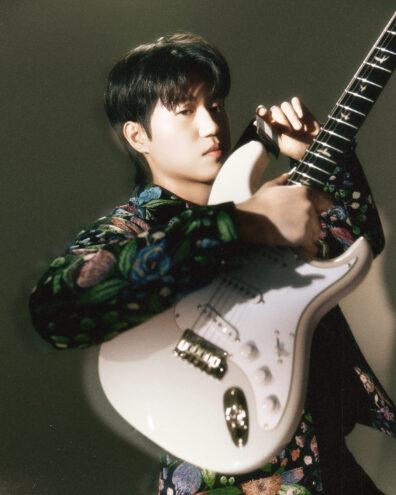
Open any of JOJE’s videos on Instagram. You’ll almost always find him in the middle of a crowd, an electric guitar slung over his shoulder and phones raised all around him. He plays a chord progression, presses a button, and the progression keeps playing on its own. On top of it he adds a second guitar, then keyboard, then a solo. By the end there’s a whole track, built right there, in front of everyone, with nothing but his hands.

Live looping is the name of this technique. A loop station records a fragment and repeats it endlessly, so a solo performer can layer one part on top of another until they sound like a full band.

JOJE is South Korean, splits his time between the UK and Korea and has been releasing singles since 2021. This year he took his guitar to Korean culture festivals across Europe: in August to Switzerland, at the JINJJA Korea Festival in Gland, and in September to Genoa, for Korea On. He had already been to Italy last year, for a show in Milan. Two visits here, and still very few of us know who he is.

In the name of Josée

To Korean ears, JOJE is a familiar name. 조제 is Josée, the protagonist of Josée, the Tiger and the Fish, the Japanese short story by Seiko Tanabe that became a film in 2003 and, in 2020, both an animated film and a Korean remake. Joje is how the name sounds in Korean. I asked him whether the connection was intentional.

There actually is a connection. I took the name JOJE from Josée, the main character in Josée, the Tiger and the Fish.

What stayed with me about her character was her attitude toward life. She lives with a disability and has very clear limitations in her life, and there is also a sadness in knowing that the story doesn’t necessarily lead to a happy ending. But even with that reality, she still tries to find happiness in the present and enjoy the moments she has.

That attitude really moved me. I liked the idea of finding happiness in the present even when you know that life isn’t always going to be easy or turn out exactly the way you want
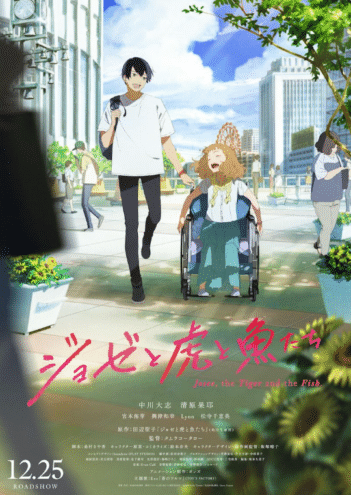
La locandina di "Josè, la tigre e i pesci"

Over time, the name became much more than just a reference to a character. It became the name through which I have built my life and identity as an artist.


A guitar to look stylish

The beginning is far less poetic, and he’s the first to laugh about it. He told a Brazilian page dedicated to Korean music that he picked up the electric guitar because a friend looked stylish playing it, and because he hoped it might work with girls too.

From there, music slowly became something serious.

I don’t think there was one specific moment when I suddenly decided that music would be my life. It happened gradually. Music became something I kept returning to, and over time I realized that I wanted to spend my life creating and performing it rather than simply listening to it.

The guitarists who shaped him all come from outside Korea.

I’ve always been drawn to blues-based guitarists and artists such as Stevie Ray Vaughan, John Mayer and B.B. King. I listened to them a lot, and I think their influence can still be felt in the way I approach the guitar.

For a while, John Mayer was his hero. If he had to play us just one song, he’d pick Gravity: “It represents a lot of what I love about guitar playing — it doesn’t have to be overly complicated to be expressive and powerful.”

He’s the one who points out the paradox.

Interestingly, though, the music I’m making today feels quite different from John Mayer’s music. I think there is a certain irony in that. His music had a big influence on me, but perhaps because I was always conscious of not wanting to simply become a copy of an artist I admired, I gradually developed my own way of making music.

Looking back, I think that desire not to be a copycat may actually have been one of the things that helped me develop my own identity as an artist.

On the street

In his Linktree bio, JOJE describes himself as a singer-songwriter, busker, traveler and food fighter. I asked him to explain them one by one.

“Busker” comes from the fact that street performance has been an important part of my journey. It taught me how to communicate directly with people, including people who had never heard my music before.

“Traveler” is almost unavoidable at this point. A big part of my life is moving between countries, performing, meeting people and discovering new places through music.

The street taught him the hardest lesson any performer can learn.

Busking teaches you very quickly whether people are actually interested in what you’re doing. On a normal stage, people have already decided to come and watch a performance. On the street, they can simply walk away. You have to catch their attention, communicate with them and make them want to stay.

It also taught me not to be afraid of imperfect moments. Sometimes something unexpected happens, someone talks to you, the environment changes or the sound isn’t perfect. You learn to react and keep going.

On the street he also understood something that counts double for someone who plays without singing: “a performance isn’t only about playing the right notes — it’s about creating a connection with the people in front of you.”

The last word in his bio is the most personal.

And “food fighter” is probably the most personal one. I really love food. When I travel, discovering what people eat locally is almost as important to me as discovering the place itself. I can be surprisingly competitive when it comes to food.

joje

A band in two hands

On stage he brings an electric guitar, a keyboard and a loop station, and every instrument has a specific job.

Yes. Each instrument has its own role, and I don’t use them simply because they sound different.

The guitar is at the center of my performance because it can carry harmony, rhythm and melody at the same time. The keyboard and other sounds allow me to expand the arrangement and create different textures.

Where there would usually be a voice, in his live shows it’s the guitar that carries the melody. Everything else he builds one piece at a time.

The main idea behind my live-looping show is that I build the music live on stage. Rather than simply playing along to a finished backing track, I create and layer the different parts myself, so the audience can actually see the song being built in front of them.

That also means that every show can be slightly different. I have a structure for the performance, but I always leave some room for the atmosphere of the venue and the reaction of the audience.

There it is again, Josée’s present: a track that doesn’t exist until he plays it, and that will sound slightly different the next night. Live looping is also where he has changed the most.

I think the biggest change is that I gradually became much more focused on the live experience.

Live looping became a very important part of that evolution. It allowed me to take the idea of a solo performance and turn it into something much bigger without needing a full band on stage.

Doing it all alone

As an independent artist, a lot of the work happens behind the scenes. I handle communication with organizers, booking, travel planning, equipment, promotion and the performance itself.

It can definitely be exhausting sometimes, but I also enjoy the independence. I can build my own path and decide what kind of artist I want to become rather than waiting for someone else to decide where I should go.

When I ask him what this path has taught him, he answers frankly.

At the same time, being independent has also taught me the other side of that freedom. Sometimes I wonder what my journey might have looked like if I had had someone around me to guide me more closely, help shape my ideas, or push me to refine certain things. There is a strange contrast there: having complete freedom is valuable, but having the right guidance can also help you grow in ways that you might not discover alone.

Still, I don’t regret the path I’ve taken. It has made me who I am today, and for now, I just want to do my best with the choices I’ve made and keep moving forward.

joje

An audience that comes for K-Pop

The festivals JOJE plays bring different worlds together. In Gland, in August, the live night belonged to him, KISU, the former voice of 24K, and DJ JINUUU. In Genoa, a month later, the line-up mixed K-Pop, choreographers, taekwondo and hanbok.

What makes these events particularly interesting to me is that they aren’t only about music. They bring together people who are interested in Korea, K-pop, Korean culture and Asian pop culture, so I get to meet very different audiences.

People who come for K-Pop often don’t know what to expect.

Many people first discover me through Korean culture or K-pop-related events, so they may not necessarily expect to see a singer-songwriter performing with an electric guitar and a loop station. But once they see the music being built live, the reaction can change very quickly.

It also encourages me to keep the performance interactive. I don’t want people to feel like they’re simply watching someone play songs. I want them to feel that they are part of what is happening on stage.

At the same time, I don’t want to change my music just to fit a particular audience.

Music without words, played for crowds who speak different languages, has an advantage, and he said as much to his Brazilian fans: his experiences have shown him “that music can connect people even when we don’t speak the same language.”

For a Korean musician who doesn’t make K-Pop, these festivals are now one of the most concrete ways into Europe: a stage, an audience already curious about Korea, and the chance to win it over one show at a time. They are young events, though. Korea On was only in its second edition, and they depend on local associations and organizers. If the circuit grows, JOJE’s path could become a road other musicians of his generation follow too. If it stays small, his European career will keep being built gig by gig, street corner by street corner.

Two visits to Italy

The first was Milan, last year. The second was Genoa, in September.

I was really happy to come back to Italy and experience another city and another audience. What I remember most is the energy of the people and the feeling of being able to connect with an Italian audience through music.

I also really enjoyed experiencing Genoa itself. As an artist who travels a lot, I always try to experience a place beyond just the venue and the hotel.

His go-to meal after a show: “Something with plenty of protein and carbs. After a long show, I’m usually extremely hungry.” I asked him to choose between pesto and focaccia. “Focaccia. But honestly, why choose only one?”

What’s next

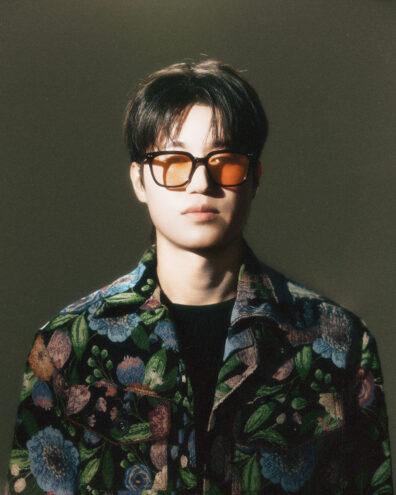
Since 2021, JOJE has released a series of singles: I Don’t Know You, Take Me to You, I Wish, It Was a Good Time, Lie, We’re and, in 2024, Shimmer. Lie starts from an idea he explained to his Brazilian fans like this: “I think sometimes the easiest person to deceive is ourselves.”

He’s now working on a new track.

I’m currently working on a new song called Lonely [Echo of Silence], and my goal is to release it before the end of this year.

I’m taking my time with it because I want the song to reflect where I am now, both personally and musically.

The word he chooses to describe himself today is evolving.

I don’t think I’ve reached a final version of JOJE yet. I’m still learning, travelling, creating and finding new ways to connect with people through music.

He leaves Koreami’s readers with an invitation:

And to the Italian readers discovering me through this interview: thank you for being curious about my music. I hope you can come and see a JOJE live show someday. I’d love to meet you, whether that’s at a festival, on a stage, or even somewhere unexpected.


Three doors

Shimmer, the latest single · Lie, and the lies we tell ourselves · I Wish, one of his first singles

Share This Article
Follow:
Sociologist by training, corporate girl by trade. My music obsession started early (picture a kid with big yellow headphones, listening to Simple Minds and Tears for Fears). I could survive solely on kimchi. Other key stats: INTJ-T. And a Cancer sun with a Virgo rising—which, let's be honest, is the same thing. From 2026, Korea.net Honorary Reporter.