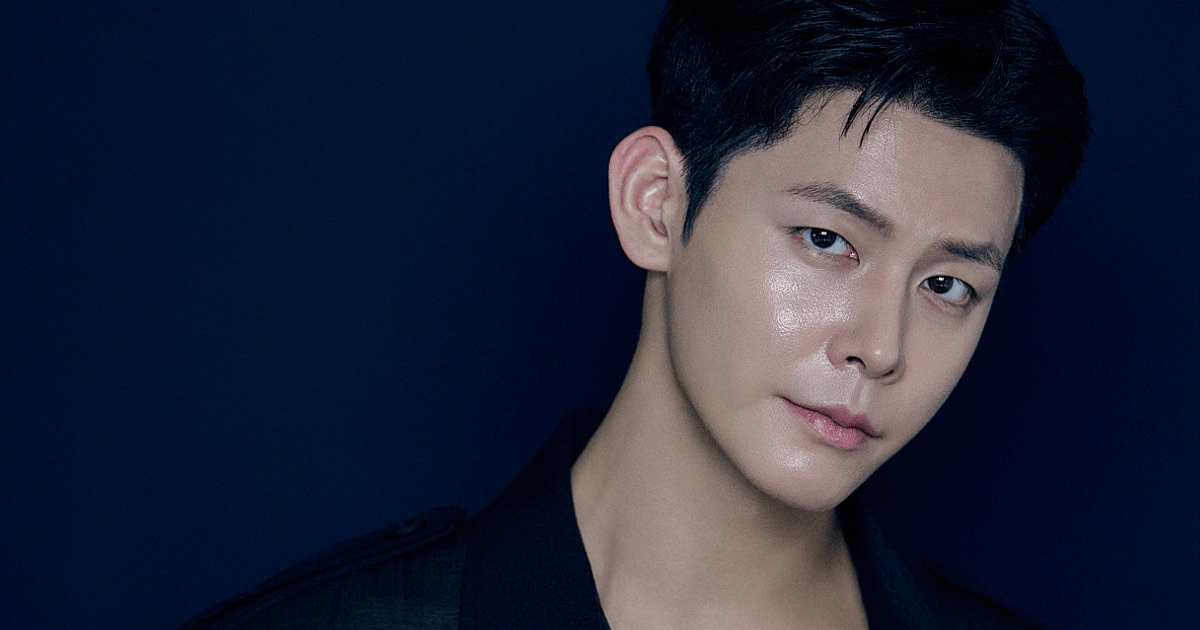

If it is true that an artist’s identity is revealed more through their actions than their declarations, Jang Theo has chosen to make his professional strategy manifest. There is no other explanation for the decision to christen his social media handle @tachyonproject—an erudite and unequivocal reference to tachyons, theoretical particles that, by exceeding the speed of light, alter the perception of temporal progression.
We had the pleasure of meeting Theo in Milan last February during Milan Loves Seoul, just as the fourth season of Single’s Inferno, in which he starred, was concluding. In a period when his fame was in full acceleration, what struck us immediately was not an ego inflated by media popularity, but rather his gentle manners, his affability, and his passion for the piano—an instrument which, we later discovered, he plays magnificently.
Since that moment, his career has taken off with a progression as unexpected as it was predestined. His commitment to cinema, far from the logic of gossip, suggests that the karma of his personal integrity has translated into a successful professional path.
At 29, the actor—whose face was made familiar by Single’s Inferno on Netflix—is carrying out an interesting maneuver to acquire credibility, meticulously investing in projects of thematic depth and transnational scope. Jang Theo embodies agility, demonstrating how notoriety can be a springboard for authoritativeness, provided one makes unconventional choices.

From Seriality to Critical Validation
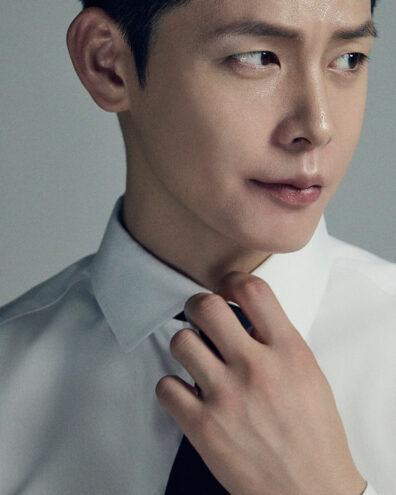
The solidity of Theo’s talent was not born from television fame. Before the global exposure of Single’s Inferno, the actor was already active in K-dramas (A Man in a Veil, The King of Tears, Lee Bang Won) and had completed a significant role in the Malaysian thriller Oppa (2024).
It was precisely for his complex and dark portrayal of a scammer in the film Oppa that Jang Theo earned a crucial recognition for his credibility: winning the Best Foreign Language Film Actor award at the Asia International Film Festival (AIFF) 2024 in Macau. Theo revealed that he chose this film—as well as the subsequent Finding Santos—for its message: to help prevent scams (referring to online romance scammers, Ed. Note) and raise awareness.
This victory, achieved before his image was cemented by the reality show, is not a mere detail; rather, it legitimizes his “tachyonic leap”—his positioning as an artist of substance who used virality (he has over 1.7 million followers on IG) as a lever to amplify an already promising career.
The Map of Vulnerability
The uniqueness of Theo’s path lies in his predilection for a complex dramatic texture. His nascent portfolio unfolds along two distinct narrative axes, covering high-visibility market segments:
- The historical-cultural drama: Finding Santos (Releasing today, November 19 2025)
- The psychological tale: Pillow Armor (Releasing – USA, 2026)

This deliberate diversification is actually an act of coherence. Theo has explicitly correlated his choices with a desire to confront human “toughness” and resilience, a drive that detaches him from the easy typecasting of the generic leading man: he seeks the authenticity that resides in emotional nuances, and his sole concern is the message he wishes to convey to the audience.
Finding Santos: The Catalyst for Cultural Dialogue
Today, November 19th, Theo and the rest of the cast are attending the Finding Santos premiere in Manila. This co-production between the Philippines and Korea is a work of clear historical-cultural significance, conceived to honor diplomatic relations and the heroism of Filipino soldiers in the Korean War.
In the film, Theo plays Woojin, a “forgotten” K-pop star searching for the war veteran who saved his grandmother. He explained that he did not prepare with a “specific emotional weight” or consult history manuals, preferring to trust his feelings on set after learning the basic facts. This choice—to focus on emotion and the persistence of memory—serves to prevent the film from feeling like a “history book.” The experience was transformative for him: he stated he had never felt such a strong connection with the actors and crew, a profound sense of “belonging” that has marked him professionally.
The pre-launch interest has been resounding: a reel featuring a scene from the film surpassed 40 million views, demonstrating the commercial effectiveness of his presence in Southeast Asia, further consolidated by his appointment as a Global BENCH Setter for the Filipino brand BENCH/.
Pillow Armor: The USA Debut
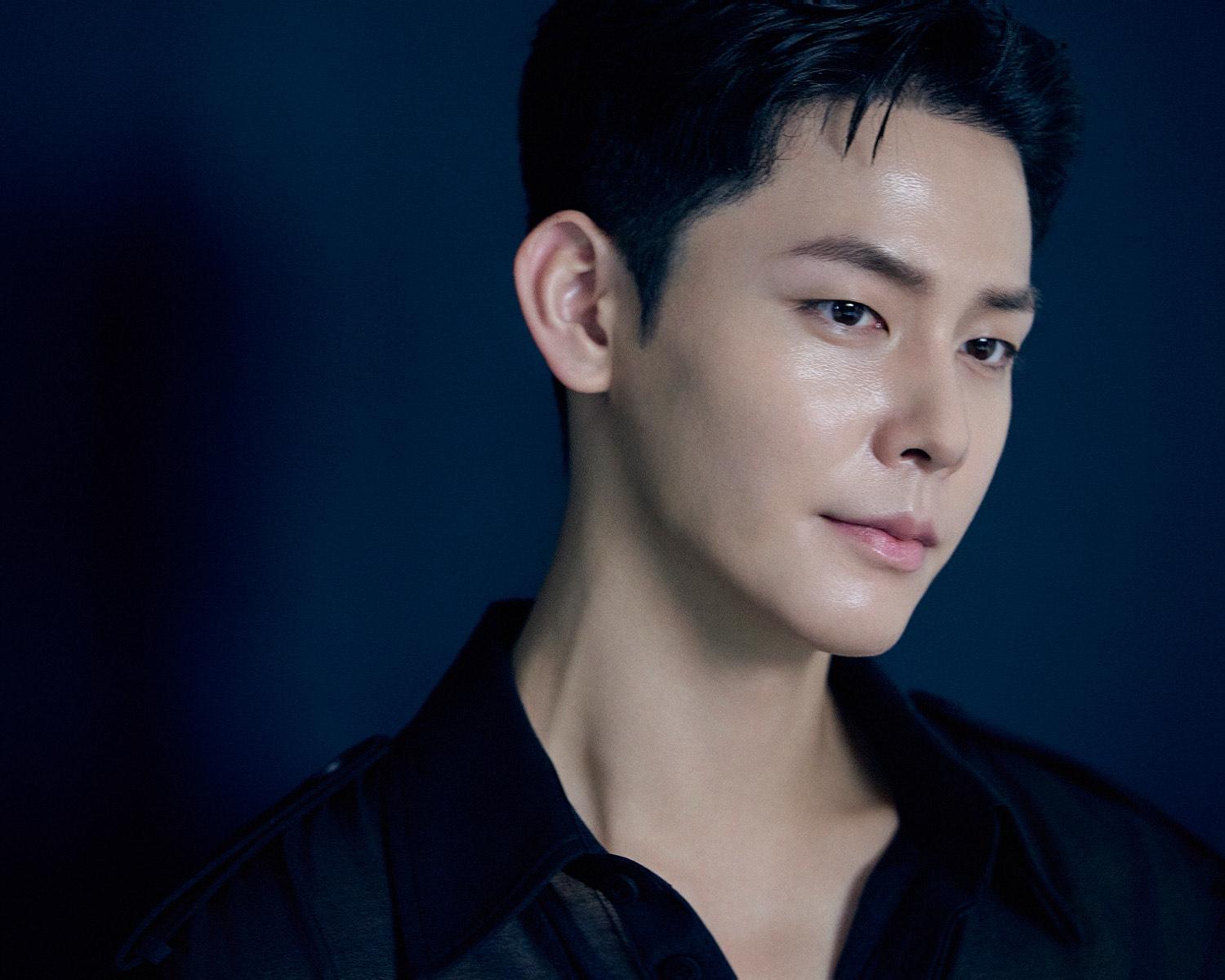
Just as Finding Santos establishes his role in emerging Asian cinema, Pillow Armor: The Movie marks his entry into independent US cinema. Filmed in Oklahoma and expected in 2026, the film utilizes the rom-com format to tackle a psychological core of profound relevance: the evolution of a man struggling with agoraphobia.
Opting for such a vulnerability-focused role for his English-language debut speaks volumes. Pillow Armor frames him as a serious performer, eager to probe the emotional dimension, attuning himself to the ever-increasing global demand for narratives that explore mental health.
Horizon 2026
The planning for 2026 reinforces the identity of an artist aiming for validation on multiple fronts.
This unconventional succession—from historical drama to psychological film—is definitive proof that Jang Theo is not content with a single niche. His philosophy, that of focusing fully on his scene partner or the scene itself, in order to “forget oneself and not be an actor in front of the camera,” is the method he applies to both cinema and reality shows. Projecting himself between Asian markets and US independent film, Theo demonstrates that his tachyonic acceleration is the winning model for his ambition: a ductile talent whose singular versatility makes him an essential asset for the future of transnational cinema.
When writing about entertainment, I realize a bit of disenchantment might be appropriate. But when it comes to someone like Theo, who has made fame not an end but a tool, that cynicism wavers a little. Because the real truth is that the most calculated strategy is not the opposite of purity, but simply intelligence placed at the service of a talent that refuses to waste even a fragment of its opportunity.