In South Korea, as those who follow the events of Hallyu know well, not even those working in the entertainment industry are exempt from military service. But when, how, and under what conditions must one enlist? The rules are strict, exceptions are extremely rare, and aligning schedules with the law is no small feat. The South Korean system is more complex than one might think. In this article, we will analyze in detail the legal framework, the emblematic cases, and the nuances that are often ignored or misreported online. Without simplifications, but with clarity.
Two stars, two paths: The 2025 of Cha Eun-woo and Rowoon
Mandatory military service represents an unavoidable milestone for all male South Korean citizens, including the most famous idols and actors. Throughout 2025, two of the most well-known faces in the world of Korean entertainment have shown, in different ways, how this transition intersects with the public trajectories of those who work in the spotlight.
Today, July 28, 2025, Cha Eun-woo, a member of ASTRO and an established actor, has begun his active-duty military service. Born on March 30, 1997, Eun-woo (real name Lee Dong-min) enlisted nearly four months after turning 28. According to current regulations, all citizens who receive a fitness-for-duty grade between 1 and 3 must begin their service by their 28th international birthday (that is, calculated according to the international age and not the former Korean system, which added a year at birth), unless an approved postponement is granted. Cha Eun-woo’s case therefore suggests that at least one formal postponement was submitted and approved, likely motivated by work commitments or preparation for the military transition.

The path for Rowoon, a former member of SF9, a rapidly rising actor, and a face beloved by international audiences, has been different. His enlistment was scheduled for July 21, 2025, but just days before his service was to begin, he was assigned a Grade 7 fitness for duty during his final physical evaluation. According to regulations, this grade does not result in an exemption but requires a more thorough medical re-evaluation, temporarily blocking entry into service. At present, Rowoon is awaiting a new classification from the Military Manpower Administration (MMA), which is expected by August.

Rowoon per Rimowa su W Korea – credits to the owners.
These two cases should not be seen in opposition to one another, but rather as complementary examples for understanding the regulatory framework, its possibilities, and its constraints. In the following paragraphs, we will delve into the details of this legal structure, precisely reconstructing how the enlistment system applies to idols and actors.
Who Must Go and When: Korean Law Explained in Plain Terms
Mandatory military service in South Korea is governed by the Military Service Act (병역법), a law that establishes the timelines, fitness categories, and conditions for the fulfillment of military duty by all male citizens. Idols and actors do not receive an automatic exemption; they fall fully within the regulatory system like any other citizen, with the exception of some specifically regulated possibilities for postponement.
The enlistment obligation formally begins at age 18 with registration in the military registry and the mandatory medical examination that assigns a physical grade between 1 and 7. The entire system revolves around this classification, which determines the types of service one can be assigned to.
In summary: Individuals who receive a Grade 1, 2, or 3 are considered fully fit for active-duty military service (현역). They are enlisted in the conventional armed forces, with varying durations depending on the chosen military branch:
Army: 18 months
Navy: 20 months
Air Force: 21 months
Marines (Marine Corps): 18 months
KATUSA (Korean Augmentation to the U.S. Army): 18 months (by selection only)
Technical or specialized units: 18–21 months

Taeyong, leader degli NCT, si è arruolato in Marina ad aprile del 2024 – dal suo profilo IG
Those with a Grade 4 are considered fit for supplementary service (사회복무요원). This type of service is less physical and better suited for temporary health conditions or frailties; it includes:
Social Service Personnel: Service in public institutions, hospitals, schools, or city halls – 21 months of service + 3 months of training.
Industrial Technical Personnel: Service in certified companies – 34 months.
Research Personnel: Service in research institutions or high-tech companies – 36 months.
Public Health Service (Doctor, Veterinarian, Pharmacist): For those with a specialized degree and license – 36 months.
Those with a Grade 5 are considered unfit for active duty but can still be mobilized in the event of war or a national emergency (civilian reservists). For them, training lasts only 3 days; they will never be called to perform active military functions, but only logistical, civil, or administrative support.
A Grade 6 equates to a permanent disqualification: the individual is completely exempt from military service.
A Grade 7 is assigned when the medical examination does not allow for a definitive evaluation (e.g., in the presence of diseases being diagnosed or evolving conditions). In this case, a new assessment is scheduled within 6 months.
Active duty service (현역) must begin no later than the citizen’s 28th international birthday, unless at least one approved postponement has been granted.

Wonwoo dei Seventeen – si è arruolato ad aprile 2025 – credits to the owners

Jeahyun degli NCT si è arruolato novembre 2024 – credits to the owners
La Military Manpower Administration (MMA) è responsabile della gestione delle convocazioni e può inviare la lettera in qualsiasi momento tra i 18 e i 28 anni. Alcuni ricevono la chiamata precocemente, altri a ridosso della scadenza. In tutti i casi, la convocazione non è su iniziativa del cittadino, ma è competenza esclusiva dell’amministrazione militare.
Nel caso in cui un soggetto idoneo al servizio attivo non abbia ricevuto alcuna convocazione entro il compimento dei 28 anni, non potrà più essere arruolato nelle forze attive (esercito, marina, aeronautica ecc.). Per poter conservare l’idoneità a tale servizio, dovrà aver richiesto e ottenuto almeno un rinvio formale prima della scadenza. In mancanza di ciò, l’accesso al servizio attivo decade automaticamente, anche se il soggetto ha un grado 1, 2 o 3.
Questo non significa che venga meno l’obbligo militare. Il cittadino verrà in questo caso riformato dal servizio attivo e potrà essere assegnato a forme alternative di servizio, compatibili con il grado, l’età e il contesto. Le sanzioni amministrative o penali possono applicarsi solo in caso di negligenza personale, come l’inosservanza di una convocazione o la mancata richiesta di rinvio quando previsto.

A causa di un problema al braccio, SUGA dei BTS ha fatto il servizio alternativo, ed è stato congedato a giugno 2025 – credits to the owner

Taemin degli SHInee è stato congedato in aprile 2023. Inizialmente ha prestato servizio nella banda dell’esercito, ma in seguito è stato trasferito alle forze di riserva a causa dell’aggravarsi dei sintomi dell’ansia.
Medical Exam, Grade, Re-examination: The Body Decides Everything
One of the fundamental aspects of military service in South Korea is the assessment of physical fitness, which is always managed by the Military Manpower Administration (MMA). All male South Korean citizens must undergo this examination, typically in the year of their 19th birthday (Korean age), unless a postponement is authorized for educational or health reasons.
The exam, called 병역판정검사 (byeongyeok panjeong geomsa), determines which type of service an individual will be assigned to. At the end of the visit, a fitness grade is assigned, among the following:
Grade 1, 2, or 3 → fit for active-duty military service: 18 months for the army, 20 for the navy, 21 for the air force.
Grade 4 → fit only for supplementary service (social service), due to physical, psychological, or manageable medical conditions.
Grade 5 → exempt from service in peacetime, but can be deployed in case of war.
Grade 6 → completely exempt from service for serious medical reasons.
Grade 7 → temporarily unclassifiable; requires subsequent assessments.
This classification is not necessarily final. With an increasing number of cases where health status can change between the initial examination and the time of actual enlistment, the MMA has made the practice of re-examination near the enlistment date more frequent, especially in cases where new clinical information or doubts about previous fitness have emerged.
The possibility of being reclassified also exists at the citizen’s initiative. An individual can request a re-examination if they believe their health status has significantly changed. In this case, they must submit official medical documentation, signed by accredited healthcare facilities, and undergo the evaluation process again. Reasons can include injuries, surgeries, worsening of chronic diseases, or issues that arose after the initial visit.
For artists and performers, the issue is particularly delicate: activities like dancing, singing, touring, or physically demanding filming can lead to musculoskeletal injuries or postural problems that, over time, can change their initial fitness status. If deemed incompatible with active duty, such conditions can lead to reassignment to supplementary service (Grade 4), which involves less intense activities, often in a civilian context.
A recent case that has emerged clearly concerns Rowoon, whose enlistment was scheduled for July 21, 2025. Initially slated for active duty, he received a Grade 7 notification from the Military Manpower Administration (MMA) during his pre-enlistment medical check, conducted about two weeks before the scheduled date. This required an immediate reallocation to a supplementary examination. Consequently, his entry into the armed forces has been suspended. Rowoon did not personally request this re-examination; it was ordered ex officio by the MMA. His agency confirmed that an official appeal has been filed and that the medical evaluation will be repeated in early August. Until then, his enlistment remains pending, and it has not been confirmed whether his grade has been changed or what his final service assignment will be.

Rowoon per Rimowa su W Korea – credits to the owners.
In short, the medical classification is not a static event but a potentially dynamic process. The MMA can reconsider a citizen’s fitness at any time, either for internal reasons or upon formal request, and this can radically change an artist’s military—and professional—trajectory.
The “BTS Law” and Postponement Until Age 30: When Culture Becomes National Strategy
In December 2020, South Korea introduced an amendment to the Military Service Act (병역법) which, for the first time in the history of national military service, opened the possibility of postponing enlistment until the age of 30 for certain prominent figures in popular culture and the arts. This exception, governed by Article 60-2 of the law, is subject to two essential conditions: a recommendation from the Minister of Culture, Sports, and Tourism, and the approval of the Director of the Military Manpower Administration (MMA).
The English translation of the article is as follows:
Article 60-2 – Extension of the Deadline for Fulfillment of Military Duty “An individual recognized as excellent in the field of popular culture and arts, who has received a recommendation from the Minister of Culture, Sports, and Tourism, may, with the approval of the Director of the MMA, postpone the fulfillment of their military duty until their 30th international birthday.”
This amendment, informally known as the “BTS Law,” was developed in direct response to the recognition granted to the group’s members in 2018, when they were awarded the Order of Cultural Merit (문화훈장) in the Hwagwan class, the highest state honor that can be conferred in the artistic and cultural sector. This decoration is awarded directly by the President of the Republic to citizens or groups who have made a significant contribution to the spread of Korean culture worldwide. In the case of contemporary popular artists like idols, the medal can only be conferred upon the recommendation of the Minister of Culture, Sports, and Tourism.

I BTS ricevono le medaglie dell’Ordine al Merito Culturale della Corea del Sud – credits to the owners
The amendment to the law is therefore functional to the strategic recognition of certain figures in Korean cultural diplomacy, and it allows the MMA to grant an automatic postponement, without the need for annual evaluations or supporting documentation. This allowed the members of BTS to individually plan their own enlistments by the age 30 deadline, with full autonomy and without the burden of producing certifications related to work commitments or ongoing contracts. The rule did not provide for an exemption or favoritism; it recognized the public status of the group’s members and formalized, through clear and institutionally approved criteria, an extraordinary and legally founded exception.
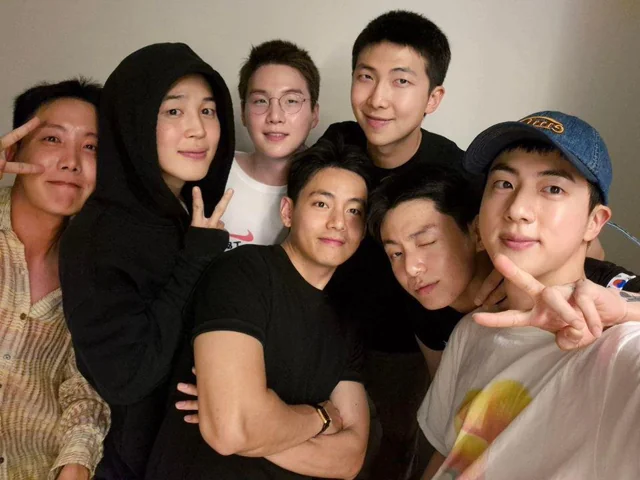
I BTS in un selfie scattato durante il loro servizio militare – dalla pagina IG del gruppo
To date, BTS remains the only idol group to whom this condition has been granted. Other artists—even those known globally—continue to be subject to ordinary regulations: each postponement must be requested, justified, and individually approved, based on documentary evidence, for a maximum of five extensions. Their enlistment must still occur by the time they turn 30, regardless of the type of activity they are engaged in.
In the case of BTS, however, the postponement was structural. None of them had to prove they “deserved” each individual extension; the postponement was granted as a one-time right derived from an institutional recognition, not as a conditional concession. The first and, so far, only South Korean artist to concretely benefit from the new rule was Jin, the group’s oldest member, who chose to enlist in December 2022, right at the deadline. His decision marked the official and symbolic application of the law, confirming not only its legal validity but also its political and cultural value.
The postponement until age 30 was therefore not a personal privilege, but an institutional mechanism designed to recognize and enhance, through law, the cultural impact of certain key figures of the Hallyu wave at a global level.
Professional Postponements: Between Concerts, Scripts, and Contracts to Sign
Outside of the exceptions provided by the “BTS Law” for extension until age 30, the ability for a South Korean citizen—including idols and actors—to postpone military service is based on a series of ordinary postponements granted for specific reasons. Among these, those related to work commitments in the entertainment industry are among the most frequent, but also among the most strictly regulated.
Current regulations state that, once the first summons from the Military Manpower Administration (MMA) is received, the citizen has the right to request a postponement if they are engaged in work activities that make the fulfillment of military service temporarily incompatible (Article 129 – Military Service Act – Enforcement Decree). This also applies to artists, musicians, and actors, provided they submit complete and verifiable documentation, such as production contracts, activity calendars, company attestations, or letters of engagement.
Each postponement is limited in duration: it generally covers only the time necessary to complete the documented activity, with a minimum extension of one month and a maximum of six months per single request. It is not an indefinite extension, but a specific, time-bound extension tied to a precise professional commitment. At the end of the first period, if the individual intends to proceed with other projects, they must submit a new request, which is also subject to review. The law allows for up to five consecutive postponements for justified reasons.
In practical terms, this means that an artist can theoretically defer their enlistment by a few months at a time, and potentially extend it for about two and a half years after the first summons, as long as the maximum deadline of 30 international years is not exceeded (except for cases covered by the special law). However, the process is subject to a case-by-case evaluation: it is not enough to declare a generic activity, nor is a “presumed” calendar sufficient. The documents submitted must specify with precision the dates, responsibilities, and the essential nature of the commitment.
A crucial element is that postponements are not automatic. Even if an idol is participating in a high-profile production or a world tour, the request can be rejected if deemed not sufficiently justified. Furthermore, in case of inactivity or time gaps between one project and another, the MMA can decide to interrupt the sequence of postponements and proceed with enlistment.
An additional constraint concerns the timing of requests. Each postponement application must be submitted with a certain amount of advance notice before the scheduled enlistment date, according to a formalized procedure. Failure to meet procedural deadlines can result in the cancellation of the right to postponement, even in the presence of valid documentation.
It is important to emphasize that, while the members of BTS were able to defer their enlistment until age 30 without having to justify each extension, thanks to the special law and the medal received in 2018, all other artists must justify and document each request individually. This is the real privilege guaranteed by the regulation to those recognized as deserving of a state exception: not the simple postponement, but the ability to exercise it discretionally, without the need for external approval.
In short, postponements for professional reasons are a real but fragile possibility, requiring formal attention, bureaucratic punctuality, and meticulous management of one’s work schedule. They represent a useful tool, but not always one sufficient to guarantee full and stable control over the timing of enlistment.

Jeonghan dei SEVENTEEN – si è arruolato a settembre 2024 – credits to the owners

Woodz – è stato congedato in luglio 2025 – credits to the owners
Duty, Fame, Market: Military Service as a Breaking Point
For those working in Korean entertainment, mandatory military service is more than a civic duty; it is a delicate crossroads between national law, public perception, and commercial strategies. For an idol or an actor, the call to arms represents not just a temporary pause in their career, but can mark a true rupture in their public image and professional trajectory.
The complexity of military law, the deadlines to be met, the windows of tolerance, and the procedures for obtaining approved postponements make every decision subject to narrow margins and continuously exposed to public judgment. Every announcement of enlistment—or postponement—is accompanied by a dual tension: that between the individual and the law, and that between the artist and their audience. Respect for the enlistment obligation is considered a fundamental element of civic responsibility in South Korea, and any deviation—even if legitimate—can generate controversy and suspicions of favoritism.
The very structure of the Military Service Act, while trying to adapt to the evolution of Korean society and the global rise of the cultural industry, maintains a clear distinction between those recognized as national cultural heritage and those who, despite actively contributing to the country’s image, remain subject to common rules. In this sense, the “BTS Law” did not inaugurate a new category of exemption, but indicated a very high and difficult-to-replicate threshold.
For all others, the path remains complex and often fragmented: each year they must prove the value of their work, the necessity of their presence on a given project, the impact of a forced absence on the market and on the internal balance of the industry. It is a mechanism that can generate discontinuity, pressure, and scheduling conflicts, in a sector where the regularity of production and public visibility are tools for economic survival.
Ultimately, for those working in Korean popular culture, military service is located at the intersection of a universal duty and a highly exposed and unstable profession. The current regulatory framework, despite its openings, still reflects a strongly selective conception of cultural recognition, which clearly separates the exception from widespread merit. Awaiting future revisions, every artist walks a fine line: one that separates fulfillment from a forced choice, and privilege from a silent game of institutional balances.
Did you find this in-depth analysis useful? Sharing it can help bring order to fragmented news and misleading interpretations.
Today, more than ever, clarity is an act of respect.

Joohoney dei MonstaX è stato congedato a gennaio 2025 – credits to the owners
Official Sources
ENFORCEMENT DECREE OF THE MILITARY SERVICE ACT – Korean Legislation Research Institute link here
Article 3: Enlistment obligation for all male citizens between 18 and 28 years old.
Articles 8 to 14: Classification from Grade 1 to 7 and their correspondence with types of service (active, supplementary, exemption).
Article 129: Rules for legitimate postponements and maximum duration for permitted reasons.
Regarding the amendment to Article 60-2, relating to the Postponement until age 30 for artists recommended by cultural institutions (BTS Law), the original text can be found at this link (Article 60, paragraph 2)