From Studio Dragon to Netflix: A Playbook on Storytelling, Global Market Challenges, and the Unwritten Rules of World-Conquering K-Dramas
In the vast and at times arid field of global content, where stories are mass-produced like commodities and algorithms dictate the rhythms of the heart, some choose a different path. Some choose to be a cultivator. A person who doesn’t assemble products, but who stoops to find the “seed” of a narrative—a fragile idea, a pure emotion—and nurtures it with care, shielding it from the storms of the market until it grows into a flourishing plant, capable of taking root in the collective imagination.
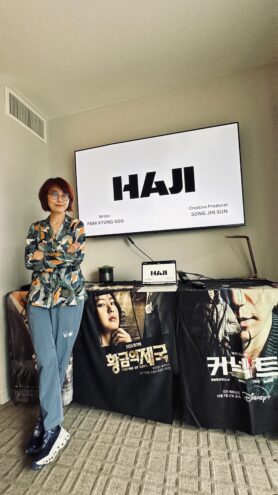
This cultivator’s name is Song Jinsun, one of the most influential, yet discreet, creative forces behind the unstoppable wave of Korean culture. Her business card reads Creative Producer, a role that, as she herself admits, is still relatively new in South Korea. In her interpretation, this title transcends the simple management of budgets and deadlines. It is a role that demands “the sensibility of a writer” and an overarching vision that protects a work’s essence “from start to finish.” It is a path she began as a story writer for comics, before evolving into a producer for giants like SBS and the celebrated Studio Dragon, honing an infallible instinct for what makes a story work.
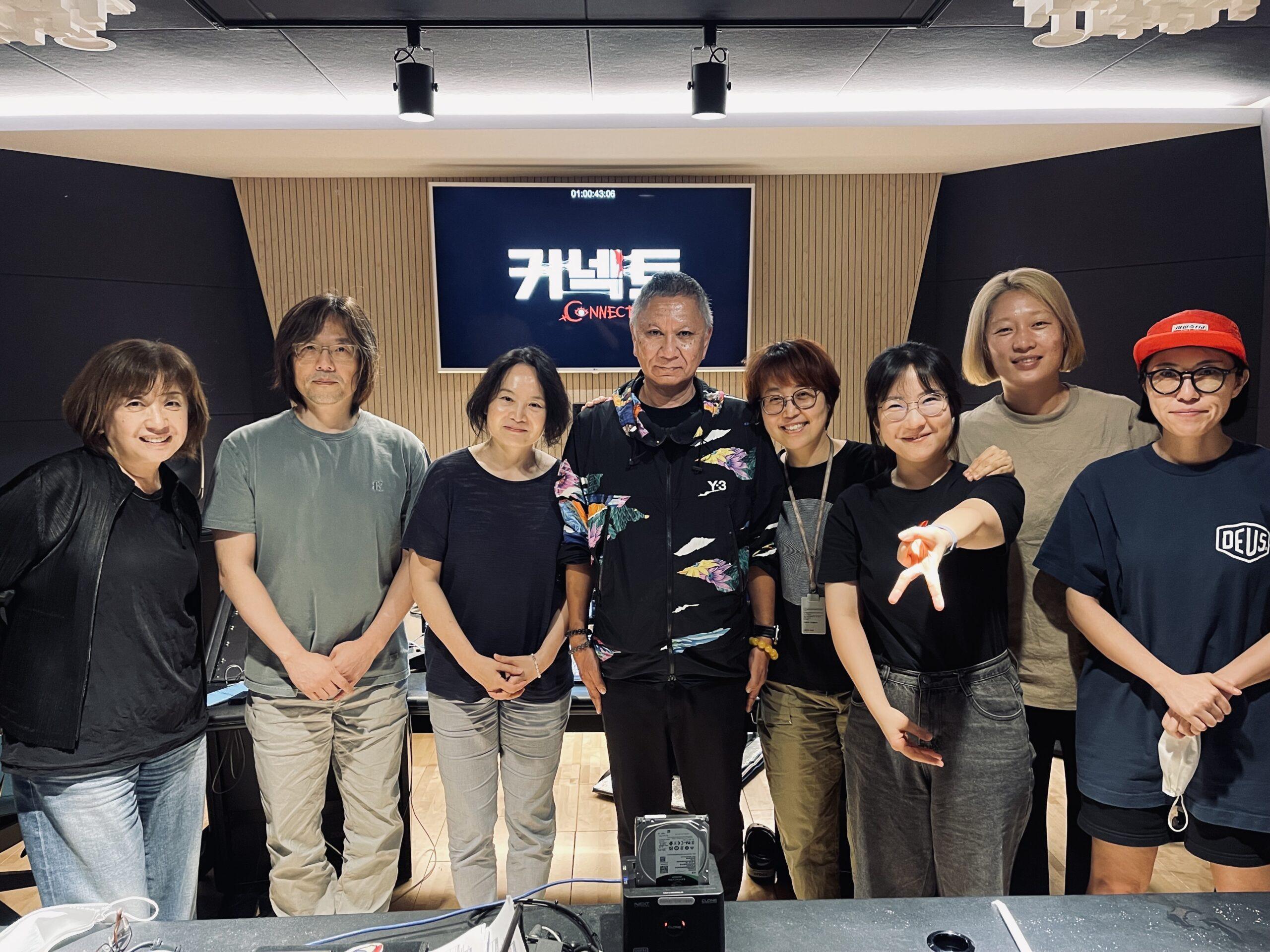
Her garden is filled with successes that have defined genres and conquered the world. She is the mind who helped orchestrate the charm of the romantic comedy What’s Wrong with Secretary Kim, a cultural phenomenon that launched its protagonists into the pantheon of stars. She is the vision that turned the webtoon True Beauty into a cult drama for Gen Z, delicately exploring themes of identity and self-acceptance. But her audacity knows no genre boundaries. She has navigated the dark and visionary waters of science fiction with the miniseries Connect (2022), a Disney+ project directed by the master of Japanese cult cinema Takashi Miike, and plunged into the intrigues of power with The Whirlwind (2024), a high-stakes political thriller for Netflix.
Yet, scrolling through her filmography, a common thread emerges—a mission, almost a personal manifesto, that her production company, HAJI, which she co-founded in 2023, proudly declares: to restore the literary value of drama. In an industry increasingly tempted by “chasing only genre thrills or structural perfection,” Song Jinsun is determined to hold fast to the “essential human story.” It’s a philosophy that drives her to find “the thread of hope even in the darkest and most violent stories,” because, as she states, “the harsher reality seems, the more urgent it becomes to experience that glimmer of light through storytelling.”

To speak with someone like Song Jinsun is to engage with a philosopher of storytelling, an explorer successfully forging a new way to create. It means gaining access to the mind of a woman who is actively shaping the very soul of future global narratives. What follows is more than just an interview; it is a rare lesson in how to cultivate stories destined to endure.

So please, join us in welcoming Song Jinsun to Koreami!
1. You transitioned from being a comic book author to a producer. Beyond the professional shift, how has your early experience in animation influenced your approach to live-action dramas, particularly in terms of visual storytelling and narrative pacing?
My years in animation taught me how to let the image speak for itself. I learned the timing that conveys emotion without dialogue, the pacing of cuts, and how color and lighting can leave an emotional aftertaste. In live-action drama, I design each frame so that every visual element speaks the same “language” as the actors’ performances, creating a viewing experience that allows the audience to read the screen.
2. In Italy, the role of a “creative producer” is not as clearly defined as it is in Korea. Could you please explain what your daily work entails and how you engage with the scriptwriting, casting, and final editing of a project?
The concept of a “creative producer” is relatively new also in Korea. Traditionally, producers were seen as stepping in only after the script was complete. My work starts much earlier. I spend time with a story from the moment I find its “seed” – whether it’s an original concept, a piece of source material, or an early draft. This requires the sensibility of a writer: the ability to read between the lines and sense the emotional undercurrents. While a writer delves deeply into a single world, a creative producer takes a wide view, overseeing the entire work and anticipating every step of pre-production. In essence, I seek, develop, and shape numerous IPs into production-ready projects – protecting the essence of the work from start to finish.
3. In recent years, K-dramas have explored hybrid genres and innovative formats, such as the 8 or 12-episode miniseries. What challenges and opportunities do you see in this evolution, and how do you balance market demands with the artistic integrity of a story?
Eight- and twelve-episode series allow for higher narrative density, but they risk cutting away the breathing space characters need. I believe in accelerating the plot where necessary, but deliberately slowing down in moments when a character’s decisions accumulate weight. Balancing the market’s appetite for speed with the story’s need for rhythm is one of the most intriguing challenges I face today.
4. Many successful K-dramas are adapted from webtoons. How do you balance fidelity to the source material with the demands of the audiovisual medium and your vision of “restoring literary value”? Are you considering expanding HAJI’s stories into other formats, like podcasts or interactive experiences?
I see the original work as a “seed” and the drama as the new soil in which it’s planted. In adaptation, I preserve the core emotions of the source while restructuring it for the genre and medium. By “restoring literary value,” I mean resisting the temptation to chase only genre thrills or structural perfection, and instead holding fast to the essential human story – the desires and emotions that make a narrative resonate. That is what persuades an audience and makes a story linger long after the credits roll. Whenever possible, I hope to bring such stories into other formats, such as podcasts or interactive storytelling, to see how they live and breathe in new forms.
5. K-dramas significantly shape the international perception of Korea. How do you approach the responsibility of representing the country and its culture? In your opinion, what is the primary reason for the immense global interest in Korean content, beyond its high production quality?
Korean content understands the emotional core of how to make people laugh and cry. Works that strike that core are remembered far beyond linguistic and cultural borders. That comes from the creator’s responsibility to truly understand humanity. I take that responsibility seriously – cultural elements in my work are never ornamental; they are central to the story’s engine. I aim to preserve a uniquely Korean sensibility while ensuring the work carries a universality that resonates globally. It is with this responsibility that I create, hoping to meet audiences worldwide with stories that move them in ways only Korean storytelling can.
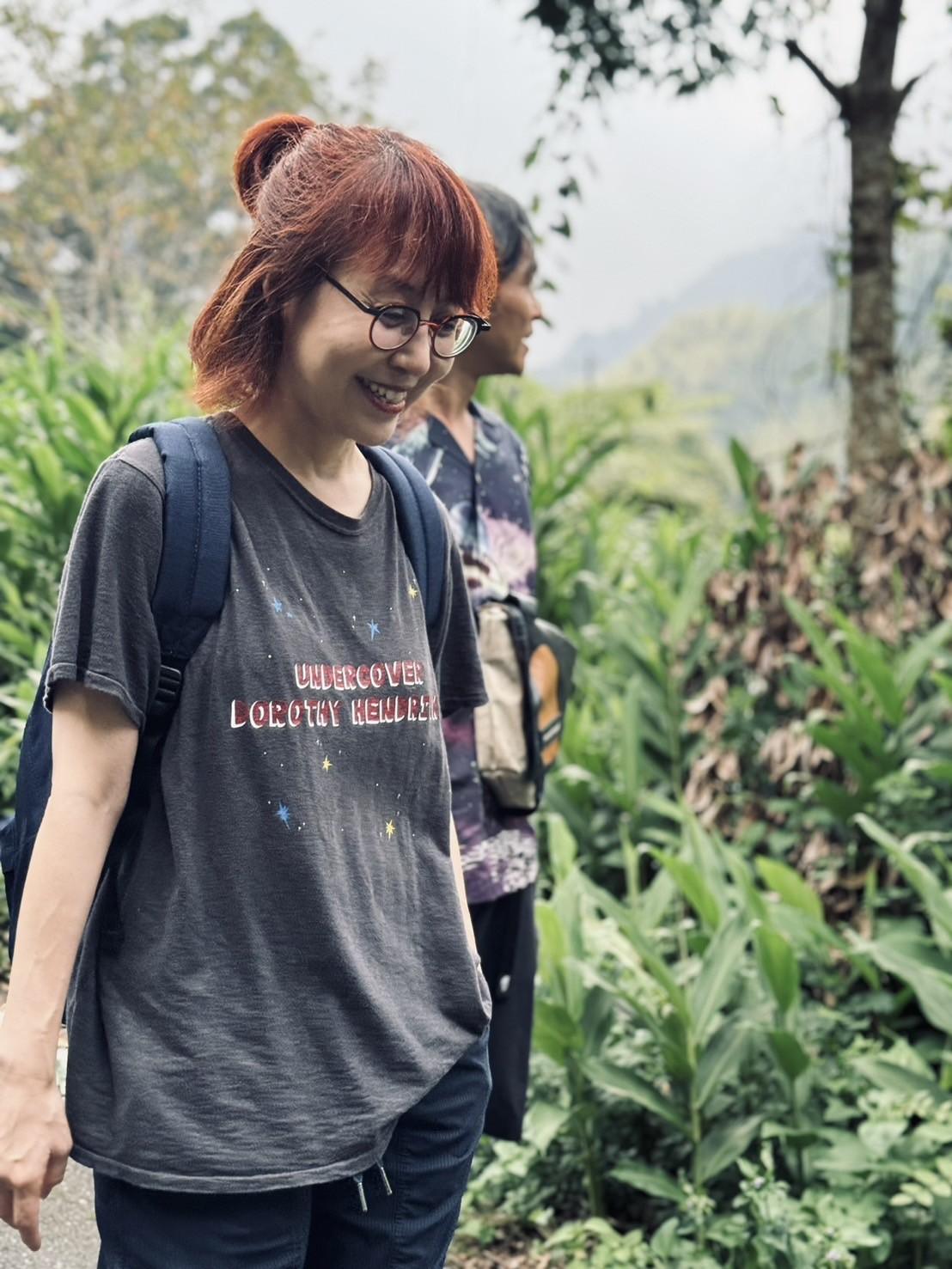
6. Your collaboration with TAICCA (Taiwan Creative Content Agency) is very interesting. Beyond the co-production itself, what kind of cultural and creative exchange emerges from these “IP to Screen Labs”? What is the most important lesson you have learned from working with Taiwanese creators?
Collaboration with Taiwan holds deep meaning for me. I believe the recent global success of Korean content is not the result of sudden luck, but the culmination of years of steady, thoughtful work by talented creators – paired with the fortune of having their work seen.
Around the world, there are creators and original works with immense potential whose value remains unrecognized simply because opportunity hasn’t reached them. As a creative producer, discovering these “seeds” is my responsibility, right, and obligation. Working with Taiwan allows me to expand that mission: sharing my experience in script development, guiding without imposing generic standards, and helping local creators highlight and strengthen the unique qualities of their work.
In some cases, my role might be that of a showrunner, an executive producer, or a script consultant. My personal aspiration is to discover compelling works and promising talents not only in Taiwan or Italy but across the globe — collaborating to bring those projects to life. Even if we speak different languages, the shared joy of seeing our creative visions resonate with the world feels like a collective cheer that transcends borders.
7. Your studio, HAJI, has a mission to create “heartwarming content.” In a market where K-dramas are also exploring very dark and violent themes, this feels like a deliberate choice. Do you believe there is a growing global demand for stories that, in all their complexity, still offer a sense of humanity and hope?
I want to find the thread of hope even within the darkest and most violent stories. The harsher reality feels, the more urgent it is to experience that glimmer of light through storytelling. My principle is to depict complexity without cynicism so that, by the end, the audience feels a renewed desire to live – to keep going.
8. Could you tell us about HAJI’s upcoming projects? Specifically, are there any stories you have always wanted to tell but have not yet had the chance to bring to the screen?
I’m drawn to narratives where a single small incident or mistake spirals outward, swelling until it changes everything. I actively seek such beginnings, keeping my curiosity and passion alive both within and beyond Korea. I never forget that my career began as a comic book story writer. That foundation shapes my belief that a single line of dialogue or a single frame can ripple through an entire work.
One of my current goals is to bring my project — selected in 2025 by the Korea Creative Content Agency (KOCCA) for its animation scenario program — to life at the highest possible level. I hope to carry that achievement forward into film and animation, proving that a story’s value and success can transcend genre and medium.
9. What is the riskiest decision you have ever made on set that ultimately paid off? Was there ever a time you had to defend an artistic choice against commercial logic, and if so, what was the outcome?
Three years ago, while shooting Connect with Japanese director Takashi Miike, we were amid the pandemic. With an overseas director, visa constraints fixed his departure date, and both scheduling and budget were under severe pressure. Then, several crew members showed possible symptoms of infection, forcing a critical choice.
We could press on, risking the crew’s safety, or halt production, accepting financial loss and schedule disruption. I chose the latter, giving the crew time to recover and feel safe. It meant filling the gaps in the schedule and working tirelessly to minimize the losses, but it was the right decision.
Every production faces these decisive moments. And as the creative producer leading the set, the responsibility for every such decision — and its consequences — rests with me. I see accepting that responsibility as the very essence of my role.
10. How do you envision the evolution of Korean drama if the international audience were to become larger than the domestic one? Do you believe the lines between cinema, TV series, and other narrative media (like video games or augmented reality) will become increasingly blurred in the future?
If the international audience for Korean dramas surpasses the domestic one, the work will require far more precise cultural translation — not just in language, but in ensuring that the roots and context of the story can be understood intuitively by viewers around the world. Meanwhile, the lines between film, television, animation, gaming, and augmented reality are already blurring. Expanding a single IP across multiple formats will become less of a special strategy than a natural creative environment.
As a creative producer, I want to be the one who protects the essence of the story amid these changes. My goal is to preserve the emotional core that only Korea can express, while crafting narratives that can move audiences anywhere – making them laugh, cry, and remember.

With her gaze already cast toward the future, Song Jinsun does not fear the ever-changing media landscape, where the boundaries between film, series, and gaming become increasingly blurred. On the contrary, she positions herself as the guardian of what must not change: “the essence of the story.” Her ambition is not to chase trends, but to protect that “emotional core that only Korea knows how to express,” and then translate it into a universal language capable of making us “laugh, cry, and remember.”
We leave her with the knowledge that we have met not just a brilliant mind behind global hits, but above all, a pioneer who is cultivating—with patience and courage—the fertile ground on which the great stories of our time will grow.