
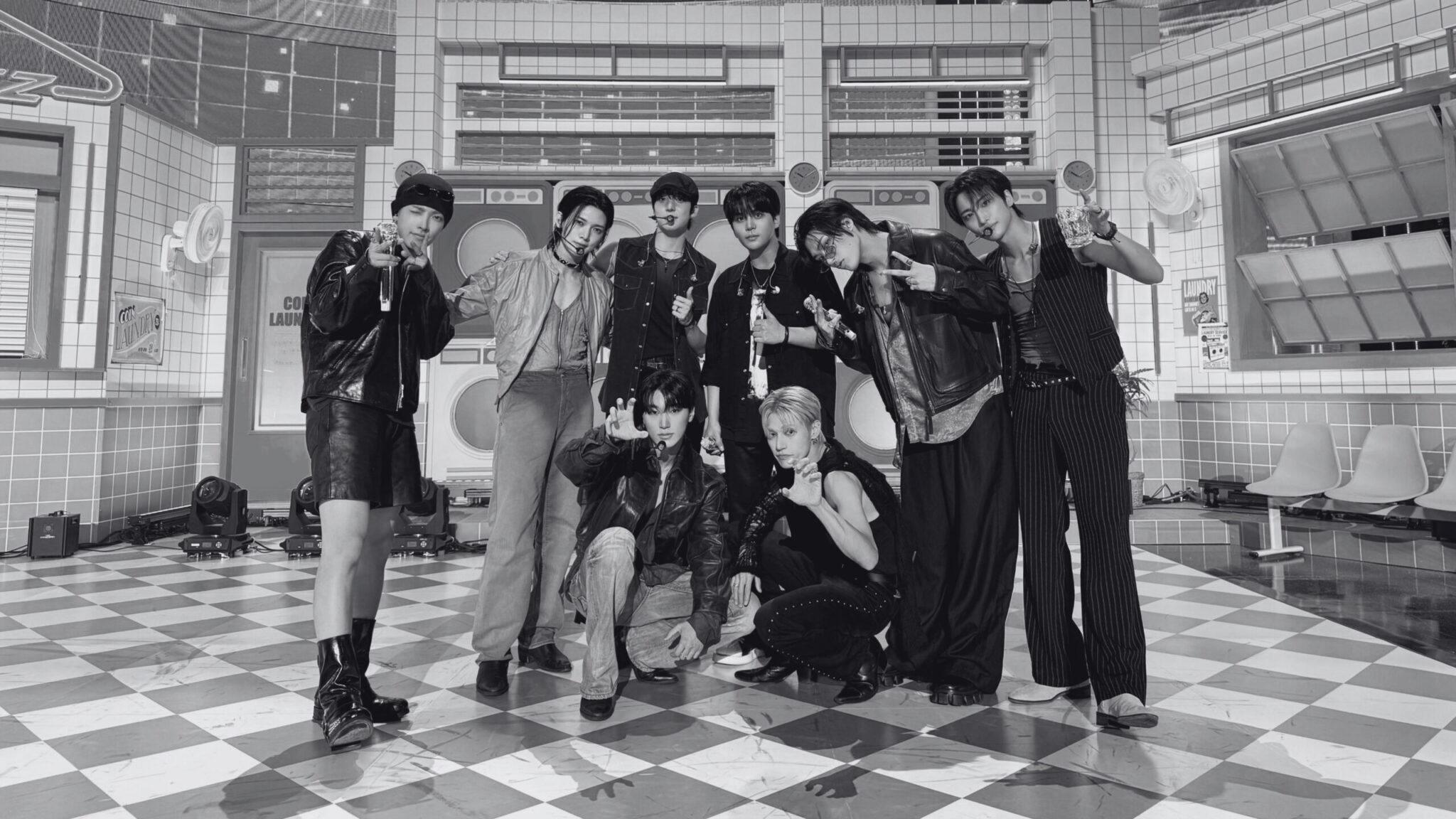

June 13, 2025 marks a pivotal moment in ATEEZ’s discography: the release of Golden Hour: Part.3, a new chapter in an artistic journey that, over the past year, has seen the group boldly and deeply explore the many shades of human emotion. This EP isn’t simply a return to lightness—it’s a radiant statement that celebrates the rediscovery of emotional authenticity.
As Hongjoong revealed during the June 12 press conference, this comeback is a “reclamation”—a return to inner truth, to a renewed connection with themselves and their audience, striking a balance between summer energy and mindful reflection. With Golden Hour: Part.3, ATEEZ manage to refresh their sound without losing sight of who they are: the project glows with a seemingly effortless brightness, but beneath its shimmering surface lies an intimate journey of longing, nostalgia, and emotional tension.
The choice of “Lemon Drop” as the title track is particularly telling: according to Wooyoung and Hongjoong, “Masterpiece” was also a contender to open the album, but the group ultimately chose a more playful and infectious energy—one that still aligns with the EP’s emotional narrative. The structure of the record itself mirrors this tension: initial euphoria gives way to more contemplative, cinematic moments, guiding the listener toward a suspended emotional space. It’s no coincidence that the final track is an instrumental interlude that feels like a held breath before a leap into the unknown. San spoke during the press conference of a “dramatic shift in atmosphere” at the end of the album, and “Bridge: The Edge of Reality” is the embodiment of that shift—a sonic threshold between the known and what has yet to unfold.
In this sense, Golden Hour: Part.3 represents a natural evolution from the previous chapters. If Part.1 celebrated the wonder of discovery, and Part.2 delved into the dynamics of encounter and shared growth, this new installment turns inward—embracing the fragility and unease that arise when we pause and truly listen.
Wooyoung said the goal was to
“preserve ATEEZ’s unique colors”
and reclaim their own season: mission accomplished.
This EP is summery, yes—but it’s a summer that reflects, that remembers, that dreams. It’s an album that dances, then stops to stare at the horizon, leaving space for the listener to imagine the next step. ATEEZ don’t end this chapter with a full stop, but with a dotted line—doing so with the grace of artists who understand that every radiant moment is always the prelude to a new perspective.
To fully grasp the emotional and narrative richness of this work, we now dive into a track-by-track exploration. From veiled confessions of desire to moments of domestic vulnerability, and the eloquent silence of the final threshold—each song adds a new piece to the emotional mosaic ATEEZ have crafted.
Let’s delve into each track and uncover how this EP paints the most mature and cinematic summer of their career.
Lemon Drop
From the very first notes, the track grabs your attention with its vibrant energy—an intoxicating groove that blends R&B and hip-hop with summery synth accents, like an ice-cold cocktail served at sunset. The infectious chorus — “Ain’t nobody, yeah, you’re the only one I see here” — instantly sticks in your mind, repeated like a party mantra, as the beat drives you to move, heart racing, bodies dancing under a rose-tinted sky.
But Lemon Drop isn’t just rhythm. There’s a subtle, sensual narrative woven into the lyrics, full of intense glances, flirtatious games, and that unmistakable summertime vibe—the kind that lasts only one night but leaves a lasting mark. The metaphors scattered throughout — “bitter and sweet, a spread of luxury,” “lemon drop as a palate cleanser” — tell a story of contrasts: lemon that tingles your lips but refreshes your soul, desire that burns yet comforts.
Hongjoong and Mingi lead the narrative with sharp, charismatic rap verses, while San and Yunho add a softer, melodic touch, making the atmosphere even more fluid, sensual, warm. “Love ain’t perfect but focus on me,” they say—inviting us to pause the world and fully live that unrepeatable moment. The line “when you look into my eyes, a parade explodes in my head” bursts with vivid imagery: eye contact turns into fireworks, a mental celebration, pure euphoria.
The reference to “Tequila, tequila sunrise” in the chorus reinforces the sense of a night that doesn’t end, stretching into dawn with glasses raised high and whispered promises. There’s a playful sensuality here, flirting with boldness — “you’re too naughty” — but it never slips into cliché. All of it is laced with a knowing irony — “like a cassette tape, just an average movie” — adding a self-aware twist to the passion.
Musically, the track is finely tuned: mid-tempo rhythms that never fully explode but keep the heat high, pulsing bass lines, and vocal layers that shift naturally to highlight each member’s uniqueness. It’s a production that feels summery without being shallow—crafted with arrangements that favor balance over excess.
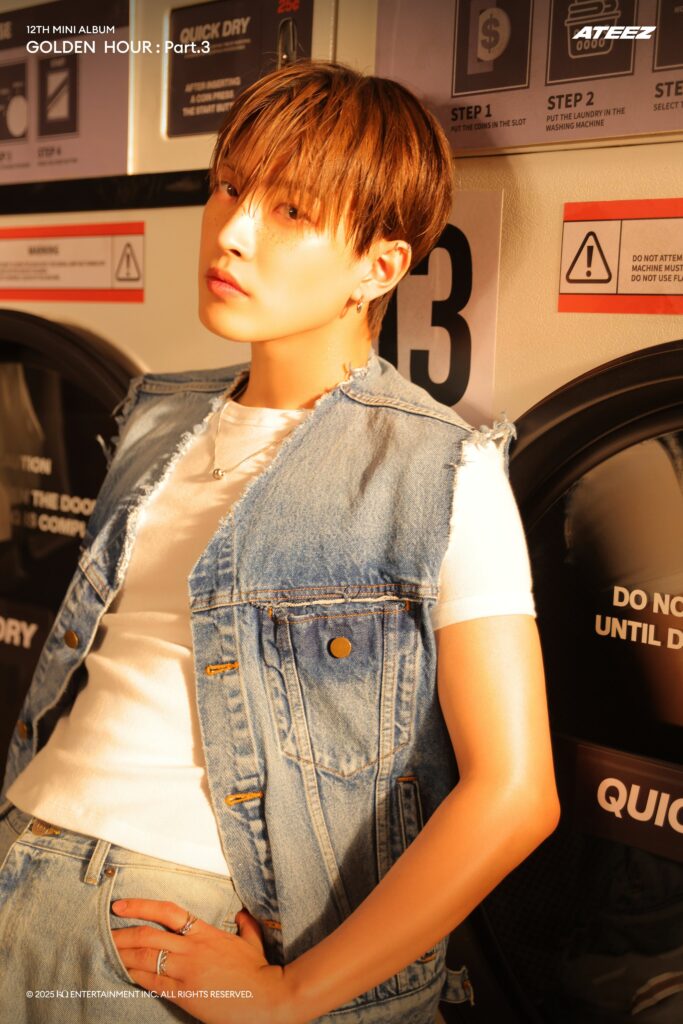
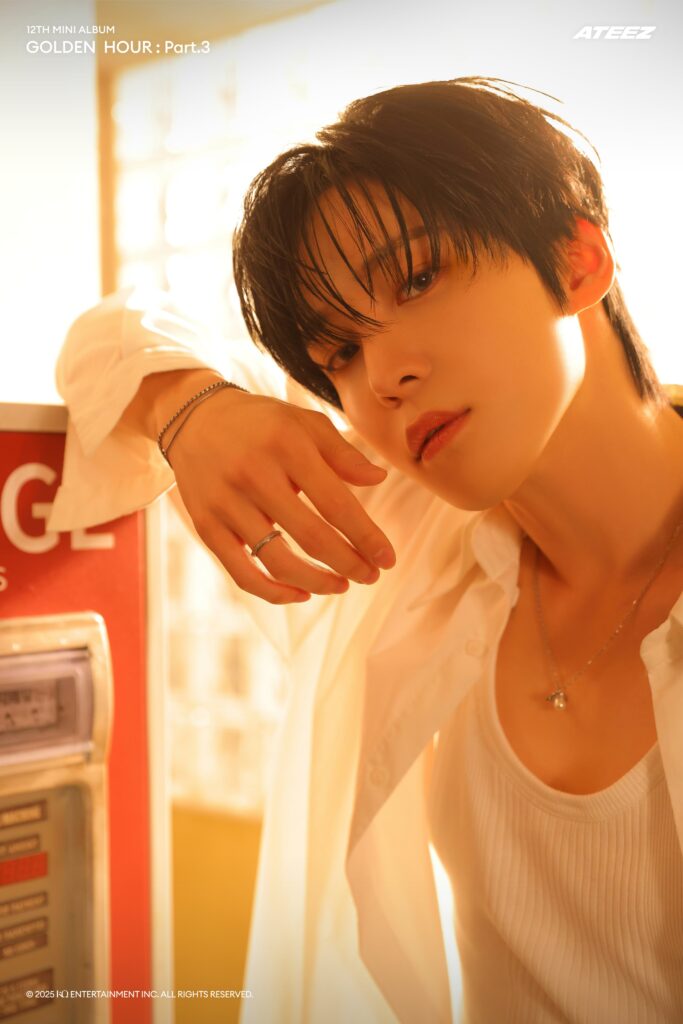
Masterpiece
The second track on Golden Hour: Part.3, Masterpiece is where ATEEZ dim the lights, slow the pulse, and draw the listener into a world of elegant sensuality and creative intimacy. After the sunny, sparkling rush of Lemon Drop, here the mood softens and blurs—but it loses none of its intensity. This is nightfall: enveloping, yet igniting new inspiration.
From the very first moments, the production immerses us in an R&B sound infused with soul and hints of funk, retro-tinged synths, and laid-back beats that seem to breathe with the rhythm of a heart. The track walks a fine line between modernity and nostalgia, with perfectly measured ‘80s references. Every member shines in turn: their voices intertwine like colors on a canvas—each one distinct, yet in harmony—building, in Wooyoung’s words,
“a masterpiece made of eight souls traveling together.”
But Masterpiece isn’t just refined technique: it’s a song rich with meaning, reflecting on what it truly means to build a real connection. The lyrics play with artistic imagery—love becomes a work to sculpt, to paint with strokes of desire, understanding, and complicity. “Chanka-chang it”—an onomatopoeic phrase that sounds like a sudden spark, an inspired brushstroke—gives shape to that moment when everything shifts, when encounter becomes transformation.
In the interplay of voices, the true heart of the song emerges: two people not merely loving each other, but shaping one another, defining themselves through each other’s gaze. It’s an emotional dynamic that refuses to settle for the surface and instead seeks the intensity of shared creation. The relationship described isn’t just about feeling—it’s about building, inventing, continuously—just like a true work of art.
Masterpiece fits seamlessly yet distinctively within the emotional arc of the album. While tracks like Castle or This House Ain’t a Home (as we’ll explore later) seek refuge, identity, and roots—here, the refuge is the relationship itself: a creative space where both can be shaped and shape in return, step by step. It’s a subtle but powerful declaration: love isn’t escape—it’s foundation.
In this way, the song draws a line back to the tenderness of Light (from Treasure EP.2: Zero to One) and the gratitude of Thank U (from Treasure EP.Fin: All to Action)—but it takes things further: it celebrates love as a living, tangible creative process, made of shared actions and choices. Every note, every word is a brushstroke adding depth to the emotional canvas of the album.
Masterpiece is, ultimately, a sophisticated track that wraps the listener in a musical embrace, yet leaves a mark—as only true masterpieces can.
It’s an invitation to see relationships as art—imperfect, radiant, human—and to sign the work together.

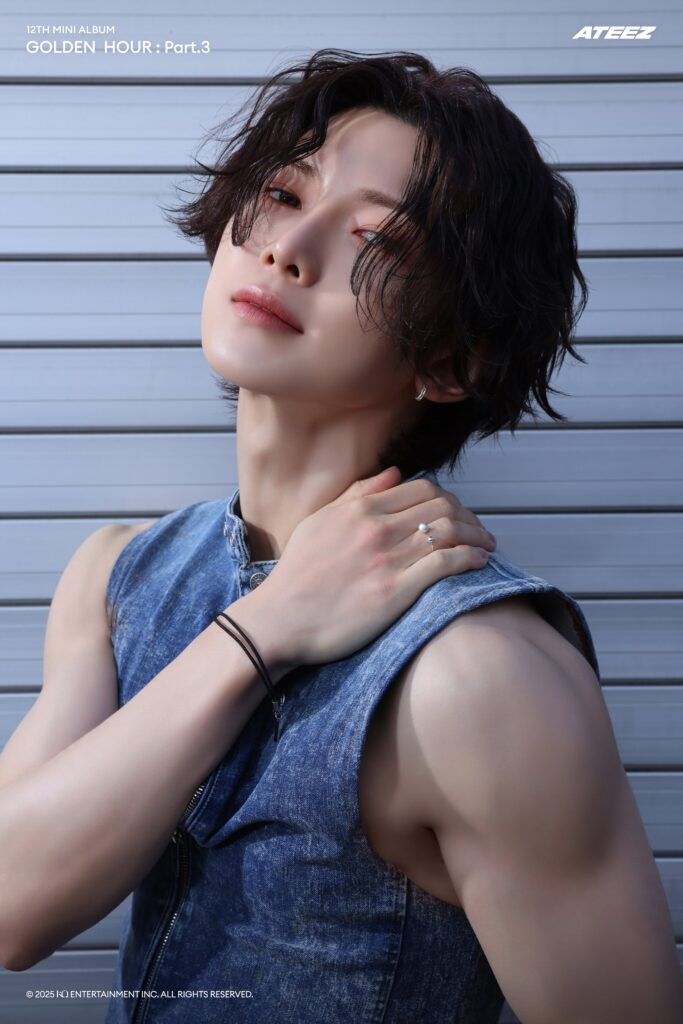
Now this house ain’t a home
There’s a moment in every emotional journey when silence makes more noise than words, when absence weighs heavier than presence, and nostalgia seeps through the cracks of a place that once felt like refuge. “Now This House Ain’t a Home”, the third track on the mini-album Golden Hour: Part.3, is that moment. An intimate, aching ballad where ATEEZ give voice to one of the most universal yet least confessed feelings: the sense of no longer belonging—even to what we once called “home.”
The title immediately plays on the double meaning of house and home: the former is the physical structure, the object; the latter, the emotional dimension, the nest. And this distinction becomes the beating heart of the song. We’re confronted with a place that has lost its soul—where “Sunday night TV” no longer brings warmth, where hallways and windows, once filled with voices, silhouettes, and familiar routines, now echo with emptiness.
The production is restrained, almost held back: acoustic guitar arpeggios, soft synth pads, and digital strings build a suspended, almost rarefied atmosphere where every note seems to carry the weight of something lost. Every musical element serves the melancholy, sketching a sonic space that feels like a dimly lit living room at dusk, full of echoes and shadows.
In the chorus, the key image is “That piece of me that never left” — a fragment of the self that endures, even as everything else crumbles. It’s memory that won’t fade, the essential core that, though fragile, keeps pulsing. The line “Mothers to daughters / Who turn sons into fathers” outlines a relentless existential cycle, while we feel, paradoxically, both “taller” and “smaller”: grown yet more vulnerable.
Mingi and Hongjoong’s rap verses hit like an emotional slap: they speak of expectations, outside judgment, the constant pressure of the world—and how even the most private space, the home, can become a stage for misunderstanding. When Mingi says “I’m still at the playground instead of at home,” it evokes a bittersweet image: a symbolic return to childhood in search of authenticity, spontaneity—that simplicity adulthood has sacrificed at the altar of responsibility.
The second verse (Jongho and Wooyoung) digs even deeper: it’s a dialogue with the inner child, a questioning of lost balance. Nighttime anxiety is a raw wound, and the tears are “forced down,” as if suffering has become a daily ritual to endure. And yet — and here the track takes on a nearly cathartic tone — there’s a glimpse of forward motion: “One day I might make it,” Jongho says, with a hope that is both tender and resolute.
The repeated line “Now this house ain’t a home” becomes a declaration as simple as it is devastating. It’s not just pain — it’s the awareness that precedes rebirth. This place is no longer home — but in recognizing that, space opens up to search for (or build) a new one. Not outside, but within.
As in earlier tracks — “Turbulence,” “If Without You,” “Mist,” “Star 1117” from Zero: Fever Epilogue, Treasure EP.Fin: All to Action, and Treasure Epilogue: Action to Answer — ATEEZ explore identity as a constantly shifting terrain. But here, in “Now This House Ain’t a Home” there’s something new: a narrative maturity that no longer needs to raise its voice. Absence tells the story. The music doesn’t comfort or reassure — it simply stays with you, like a friend who doesn’t have the words, but stays anyway, sharing the silence.
With “Now This House Ain’t a Home,” ATEEZ deliver one of their most vulnerably human songs. A ballad that doesn’t seek answers but accepts the fracture. One that doesn’t promise a return to a lost home, but suggests that maybe — right there, in the void — a new one can begin.
One brick at a time.
One note at a time.
One tear at a time.
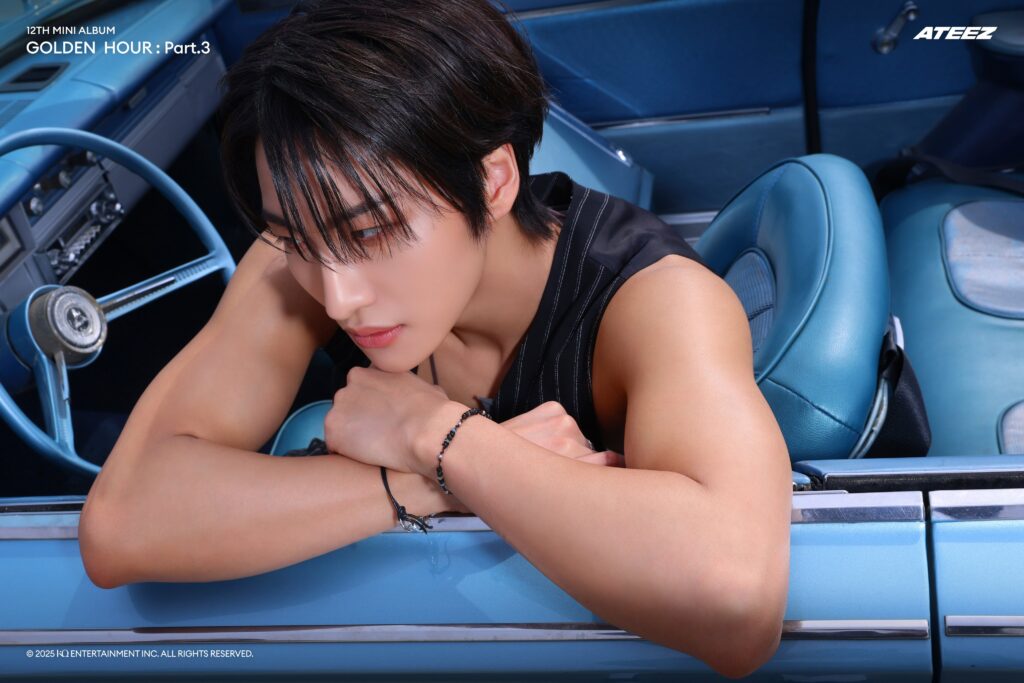

Castle
If “Now This House Ain’t a Home” explored the pain of a house that had stopped being a refuge, “Castle” marks the next step: the beginning of a possible rebirth. It’s the fourth track on Golden Hour: Part.3, and it doesn’t need to raise its voice to be heard.
“Castle” is a whisper of comfort, a quiet promise of emotional shelter. Where once there was a cold, lifeless house, now rises an invisible castle—built from silences that embrace, walls made of understanding, affection, and empathy.
It’s not a castle of stone: it’s made of glances that say “it’s okay,” of hands extended without asking why. The song doesn’t offer miraculous solutions, but it offers presence—and sometimes, that’s all we need to catch our breath.
Musically, “Castle” is an enveloping ballad: soft strings, warm synths, and vocals that feel like they arrive from a dream. There’s no tension, no urgency—only space to pause, breathe, and feel whole, even just for a moment.
Jongho described the song as a place to “rest and let wounds heal,” and Yeosang reminded us that “there is no pain we have to bear forever.” Simple words, yet they become emotional anchors amid everyday chaos.
The narrative continuity with “Now This House Ain’t a Home” is clear: if that track told of the loss of belonging, “Castle” imagines a place where that belonging can be slowly rebuilt, in silence. Both songs speak of home, but from different perspectives: one as a void to be crossed, the other as a refuge to (re)create. Together, they form an emotional diptych, moving through fracture toward healing.
In ATEEZ’s discography, “Castle” fits into their more introspective side: echoing the suspended moods of “Mist” (from Treasure EP.Fin: All to Action), the yearning for connection in “Answer”, or the gentle melancholy of “Blue Summer” (from Dreamers). But here, there’s an extra gesture: not just describing the struggle, but offering a space for recovery.
As Mingi—who also co-wrote the lyrics—said, “Castle” contains his favorite lines of the album. And it shows. Every word is carefully placed, every image an invitation to drop the armor and embrace vulnerability.
Ultimately, “Castle” is a musical caress. An inner sanctuary where pain no longer needs to be hidden, but can become something to move through—together. It’s a silent yet powerful invitation:
Come. Stay.
Here, you don’t have to fight.
Here, you are safe.
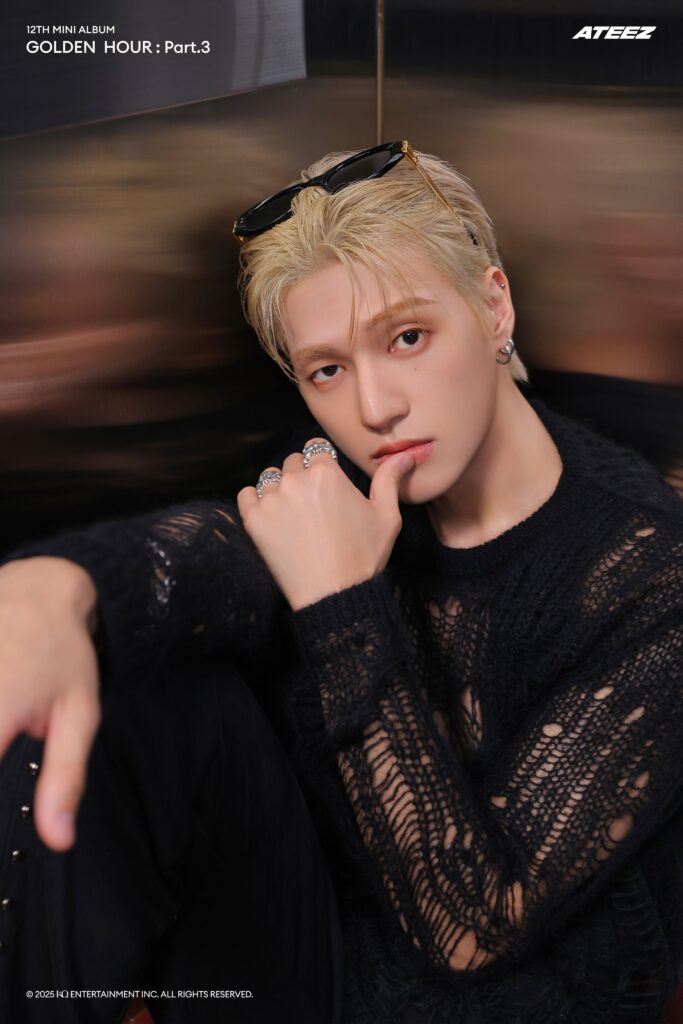
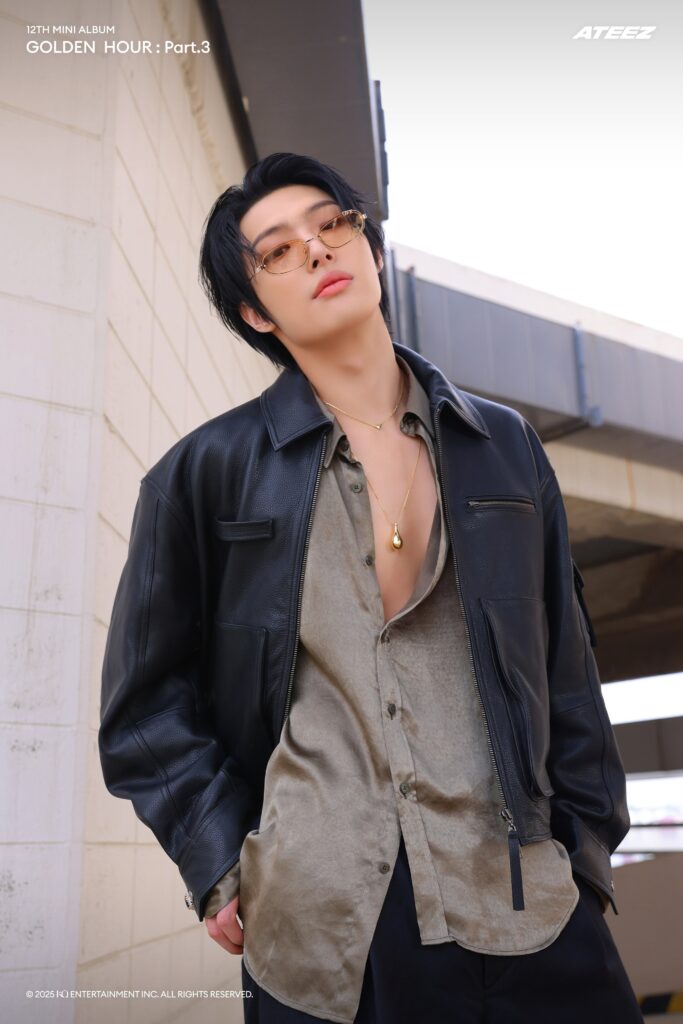
Bridge: The Edge of Reality
“Bridge: The Edge of Reality” is not just the closing track of Golden Hour: Part.3 — it is the threshold. It’s the place where the real blurs into the symbolic, where ATEEZ’s journey pauses and leaves us suspended between what has been and what is still unknown.
Entirely instrumental, the track is crafted as a cinematic interlude, short in length (about 90 seconds) but rich in evocative power. The soundscape is ethereal, almost dreamlike: electronic pads, orchestral hints, and a subtle yet restless crescendo, as if we were standing on a brink — or as the title suggests, on the edge of reality. This is the very shift in atmosphere the members alluded to during the June 12th press conference.
Here, ATEEZ don’t offer answers, but an open riddle. There are no lyrics—except for the looped phrase “I throw it back”—because words fall short of what “Bridge: The Edge of Reality” seeks to express. It’s a moment of suspension, an invitation to cross into something not yet visible, but already felt.
Conceptually, “Bridge” functions as a liminal space. It’s the passage between two worlds, between what was narrated in Golden Hour: Part.3 — disorientation, identity, emotional fragility — and whatever might come next. It’s the moment when your foot lifts from the ground, but hasn’t landed anywhere yet. The title “The Edge of Reality” is telling: we’re on the brink, not of an end, but of transformation. Reality — the tangible, measurable one — begins to give way to something more ambiguous, inward, and imaginative. In this sense, “Bridge” is a sonic portal.
Though ATEEZ’s catalog doesn’t feature many purely instrumental pieces, similar moments exist in terms of narrative function and atmosphere: “Outro: Long Journey” (from Treasure EP.3: One to All) — another instrumental transition, full of implied meaning. “Twilight” (from Treasure EP.1: All to Zero) and “Aurora” (from Treasure EP.3: One to All) — not instrumental, but sharing the same suspended tone, a contemplative gaze toward something beyond. Previous interlude narrations across albums also play a similar role, opening up new narrative phases in ATEEZ’s universe.
“Bridge: The Edge of Reality” doesn’t explain, it suggests. It’s an ending that doesn’t close, but prepares. Like every true bridge, it exists not for itself, but for what it connects.
And ATEEZ seem to be telling us: the journey is far from over. It has only just reached the pointwhere reality, perhaps, can be rewritten.
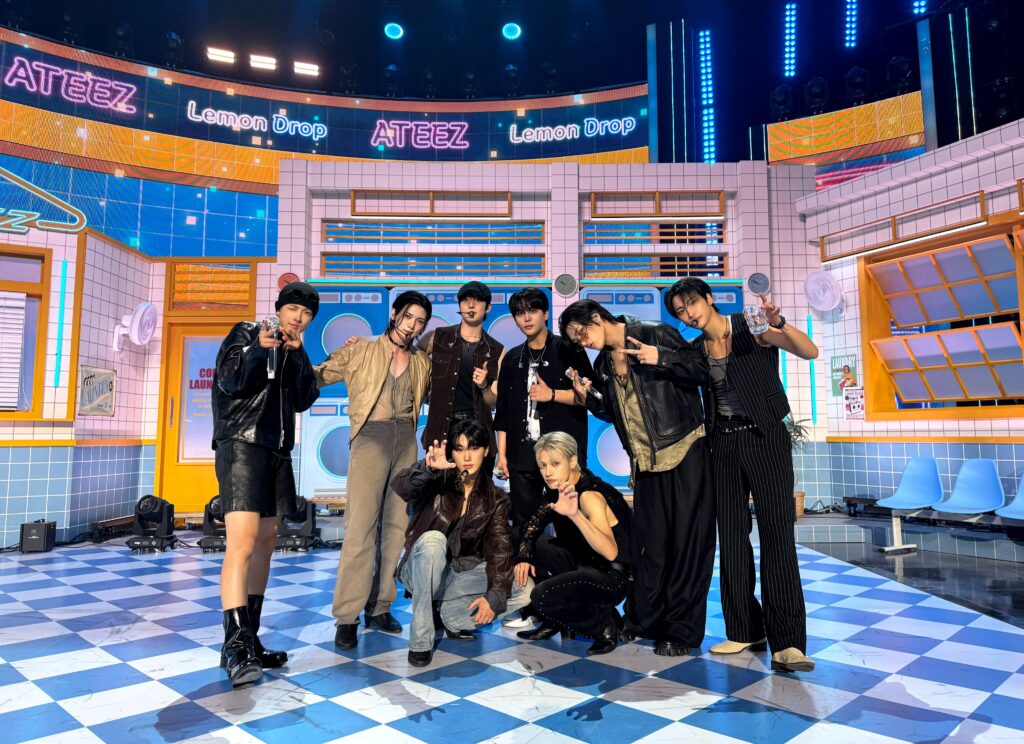
Our Impressions as Atiny: by Yume
The opening melody of Lemon Drop — cyclical and enveloping — captures you from the very first listen. Every time you go back to it, you feel the sensations it promises: freshness, sensuality, summer joy — perfect for a sunset evening or a drive toward the sea. It’s not a track that bursts loudly, but one that draws you in with elegance: Edenary crafted a summery, recognizable sound — a perfect balance of lightness and personality. Despite its simple structure, the beat inevitably gets you moving: light, fluid, the ideal soundtrack for a summer lived on the go.
Masterpiece may sound cryptic or “weird” at first, but it grows on you with every listen — it’s the kind of track you either love or don’t. That urgent beat pulls you into the song’s painted metaphor — a work of art created by two. The idea of comparing love to a painting, made of strokes of desire and shared intimacy, is brilliant. Its spectacular opening is a trademark of ATEEZ — it grabs your ear and doesn’t let go.
Now This House Ain’t a Home is an emotional journey that you welcome step by step. At first, the reverb or autotune effect in the chorus can be disorienting, even irritating — but once you read the lyrics, everything changes. “Now this house…” comforts and hurts at the same time — a bittersweet echo. It’s not a track that wins you over instantly with its melody, but it hits deep with its words. After reading the translation, the full meaning emerges: a dialogue between nostalgia and the need for inner rebirth.
Castle isn’t my personal favorite rhythm-wise, but the lyrics carry a powerful evocative weight. Hongjoong and Mingi’s raps at the end bring a softness that feels almost hypnotic. The chorus, with that repeated “Runnin’”, feels like a lullaby: it gets under your skin and makes you feel safe. It’s the promise of an inner refuge, a verbal embrace that heals.
ATEEZ’s instrumental tracks are always powerful for their ability to evoke deep emotions, and Bridge: The Edge of Reality is no exception. It begins with a mysterious, introspective atmosphere, and then shifts suddenly, leaving you in mid-air. It leaves you suspended, without answers — “unfinished” — as if it were the prologue to a chapter still waiting to be written.
This EP is a journey that feels like summer — but a thoughtful, reflective, mature summer. It begins with the euphoria of Lemon Drop, moves through the canvas of Masterpiece, crosses the fracture of House, finds home in Castle, and comes to rest at the edge of a new world with Bridge.
My impressions as an Atiny?
I felt the lightness, the nostalgia, the vulnerability — but above all, that subtle thread that ties joy to introspection.
A musical and emotional path that invites us, as listeners, to imagine what lies beyond the dotted line.