
It all began on a fateful night: 17 November 1905. Within the halls of Seoul’s Jungmyeongjeon, besieged by Japanese troops and under the direct intimidation of Marquess Itō Hirobumi, the Eulsa Treaty was signed. While five Korean ministers succumbed to the pressure, surrendering the nation’s diplomatic sovereignty to Japan, Emperor Gojong desperately withheld the royal seal.
Thirteen days later, in the solitude of a private chamber, General Min Yeong-hwan (1861–1905), aide-de-camp to the Emperor, reached a harrowing resolution. The treaty was sealed; Korea’s sovereignty had been extinguished. It was a reality Min could not abide. He took his own life, allowing his blood to saturate his garments and the wooden floorboards beneath him.
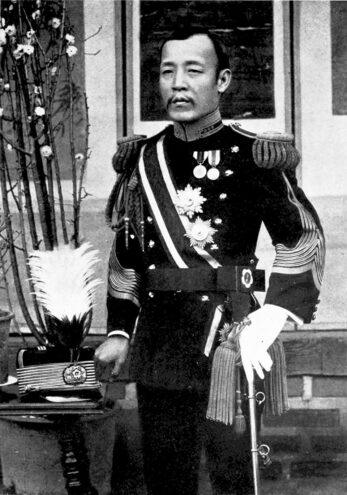
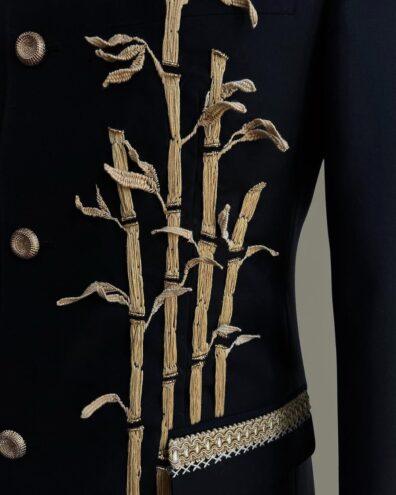
The narrative might have concluded there, in silence. Instead, legend has it that a year later, piercing through the blood-soaked floorboards, four stalks of bamboo emerged. They bore forty-five leaves—the exact number of years the general had lived. It was named Hyeoljuk (혈죽): the ‘Blood Bamboo’.
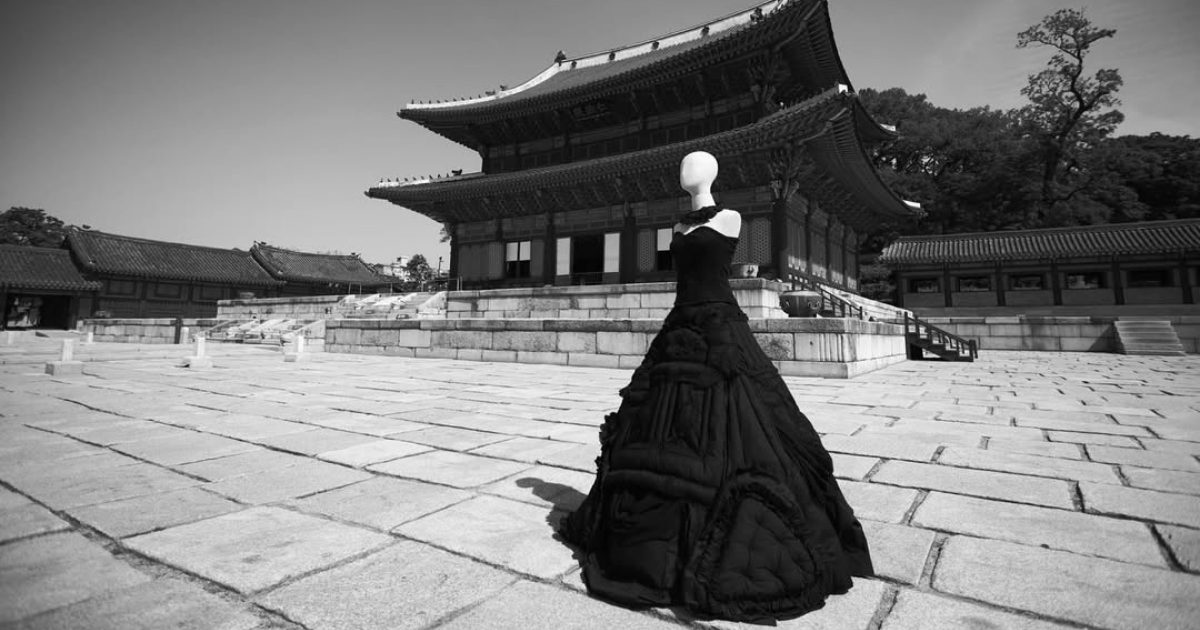
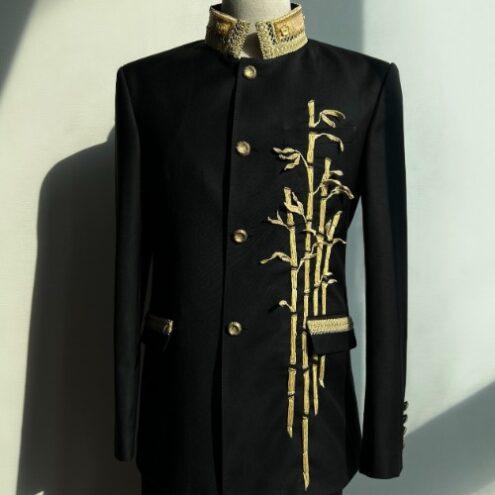
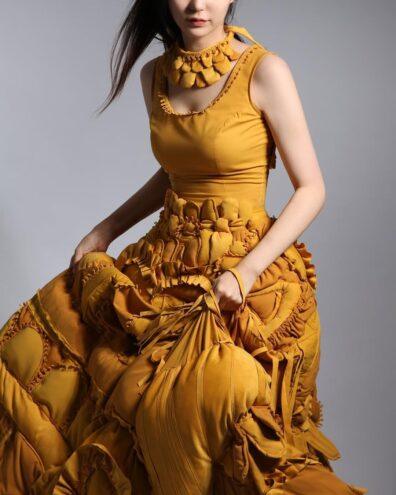
Today, this story resides not merely in a museum, but has been transmuted into a garment. Born from an extraordinary commission by a descendant of the Yi Dynasty to encapsulate that very memory, the result is the Min Yeong-hwan Blood Bamboo Suit. It is the work of Yeaji Lee, the designer currently bringing the art of the ‘architecture of memory’ to Milan.
Jeong
An artistic prodigy nurtured within Korea’s elite creative circles since the age of seven, Yeaji established her label, It’s Yeah, in Seoul in 2021. At its core lies an uncompromising philosophical pillar: Jeong. “To me, Jeong is not merely an emotion; it is a profound, connective energy that binds people and the world in a positive and meaningful way,” she states.
This very energy informs her vision of luxury—a deliberate counterpoint to the transience of seasonal trends. Her ambition is to craft objects that evoke sensations which are “clear, fresh, playful, and pure—a level of sincerity that contemporary luxury so often overlooks.”
Translation, Not Decoration
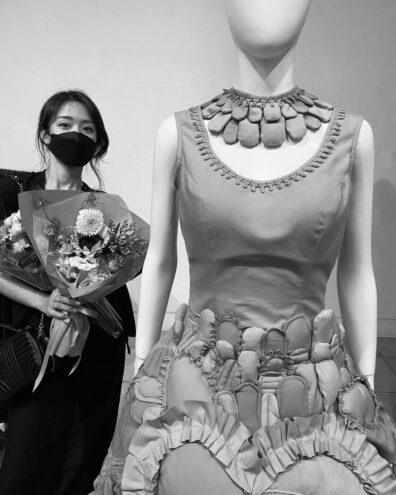
Her practice is an exercise in perpetual cultural translation. The greatest challenge, she explains, is ensuring that Korean references do not devolve into superficial ornamentation. “My process begins with an understanding of the historical, philosophical, and emotional layers behind each reference, followed by restructuring them into a universally resonant language.”
In this regard, creativity stems from a precise dialectic: “recombining what already exists—through adaptation, deconstruction, fusion, and reassembly.” It’s Yeah, she remarks, “embodies that power of reinterpretation, a unique energy of cultural translation.”
Milan
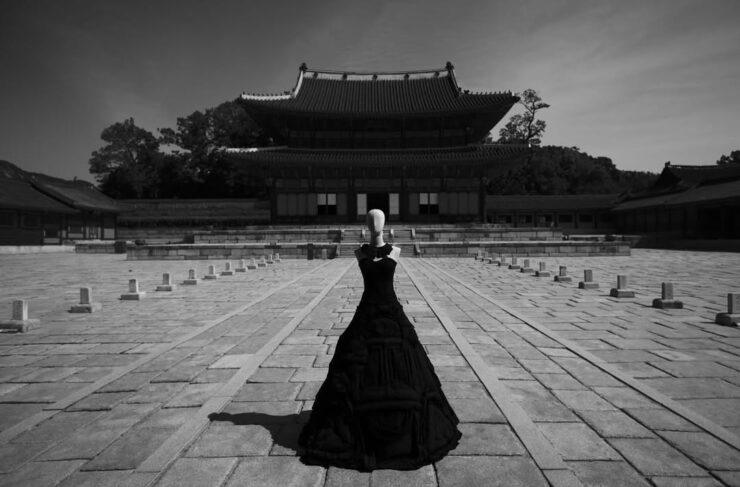
The pivotal turning point arrived in 2022, marked by the first couture commission from a client within the Korean Royal Family for the legacy dress. “The moment I felt It’s Yeah had found its true voice was when our first couture client came from the Korean Royal Family, whose legacy spans five hundred years,” she reveals. What began as a singular project blossomed into an enduring patronage.
However, it was the relocation to Milan and her selection for the Richemont Group’s AZ Academy in 2024 that provided her vision with an international framework. “Living in Milan has profoundly broadened my perspective,” the designer admits. The dialogue between her Korean sensibility and Italian savoir-faire has distilled her approach, rendering it “clearer, more intentional, and structurally robust.”
Per fornire un po’ di contesto, la AZ Academy è un programma esecutivo d’élite sostenuto dal colosso del lusso Richemont, la forza trainante di maison quali Cartier, Van Cleef & Arpels, Alaïa e Montblanc. Yeaji Lee è stata selezionata come una dei soli diciotto designer creativi indipendenti al mondo da una giuria che includeva Isabel Marant, Nicolas Bos e Pascale Mussard.
In seguito, ha ricevuto una mentorship diretta da leader globali dell’industria del lusso, tra cui Micaela le Divelec e Gianluca Brozzetti, formandosi all’interno dell’ecosistema del lusso europeo. Questo percorso le ha permesso di affinare il linguaggio del brand attraverso il rigore della sartoria italiana, culminando in un pitch agli investitori presso la sede centrale di Richemont a Parigi nel dicembre 2025, presentato davanti al board: qui It’s Yeah ha lasciato il segno come brand di lusso di nuova generazione, guidato da un talento creativo emergente.
Timeless Cultural Luxury
Her exposure to the European luxury ecosystem has solidified her trajectory. “It has further fortified my conviction that It’s Yeah can translate heritage into a modern and global luxury vernacular,” she asserts.
While many brands capitalise on the current wave of Korean popularity, Yeaji sets her sights on a broader horizon. “My intention is to build a brand that accompanies individuals throughout their life’s journey,” she says. The fundamental lesson remains that a brand’s essence is shaped “not by trends, but by authenticity, quality, craftsmanship, and enduring values.”
It’s Yeah thus aspires to offer “timeless cultural luxury”: a brand to live and grow with, enshrining an emotional resonance far deeper than any ephemeral appeal.
The story of General Min and his Blood Bamboo is not relegated to history. Through Jeong, Milanese craftsmanship, and the strategic framework of a titan like Richemont, Yeaji Lee reassembles this narrative into a wearable architecture for our time. It is a space of remembrance where a cry of sorrow—and the exuberant affirmation of ‘yeah’—can finally coexist.
The Power of the Unintentional
The narrative of Yeaji Lee suggests that paths taken ‘unintentionally’ can lead us, with striking precision, towards our true destination. Originally, Yeaji aspired to study visual and industrial design, envisioning a future as a theme park designer or a creator of hybrid worlds where space, narrative, and experience converge.
It was upon entering the fashion world that she discovered something unexpected: fashion not as surface, but as structure. It is a medium capable of constructing thematic worlds, identities, narratives, dreams, and memories. Here, Yeaji found the joy of designing not isolated objects, but wearable narrative universes, where each garment becomes a space to inhabit.
This is where the circle completes. General Min Yeong-hwan’s attire is no simple historical citation, but the most profound manifestation of her methodology. Through fashion, Yeaji engages with time—past, present, and future—intertwining craftsmanship, memory, and an intergenerational dialogue. That tragic moment of 1905 is not confined to the past; it is transformed into a breathing, moving space, allowing time to continue its flow through the grain of the fabric and onto the streets of global fashion.