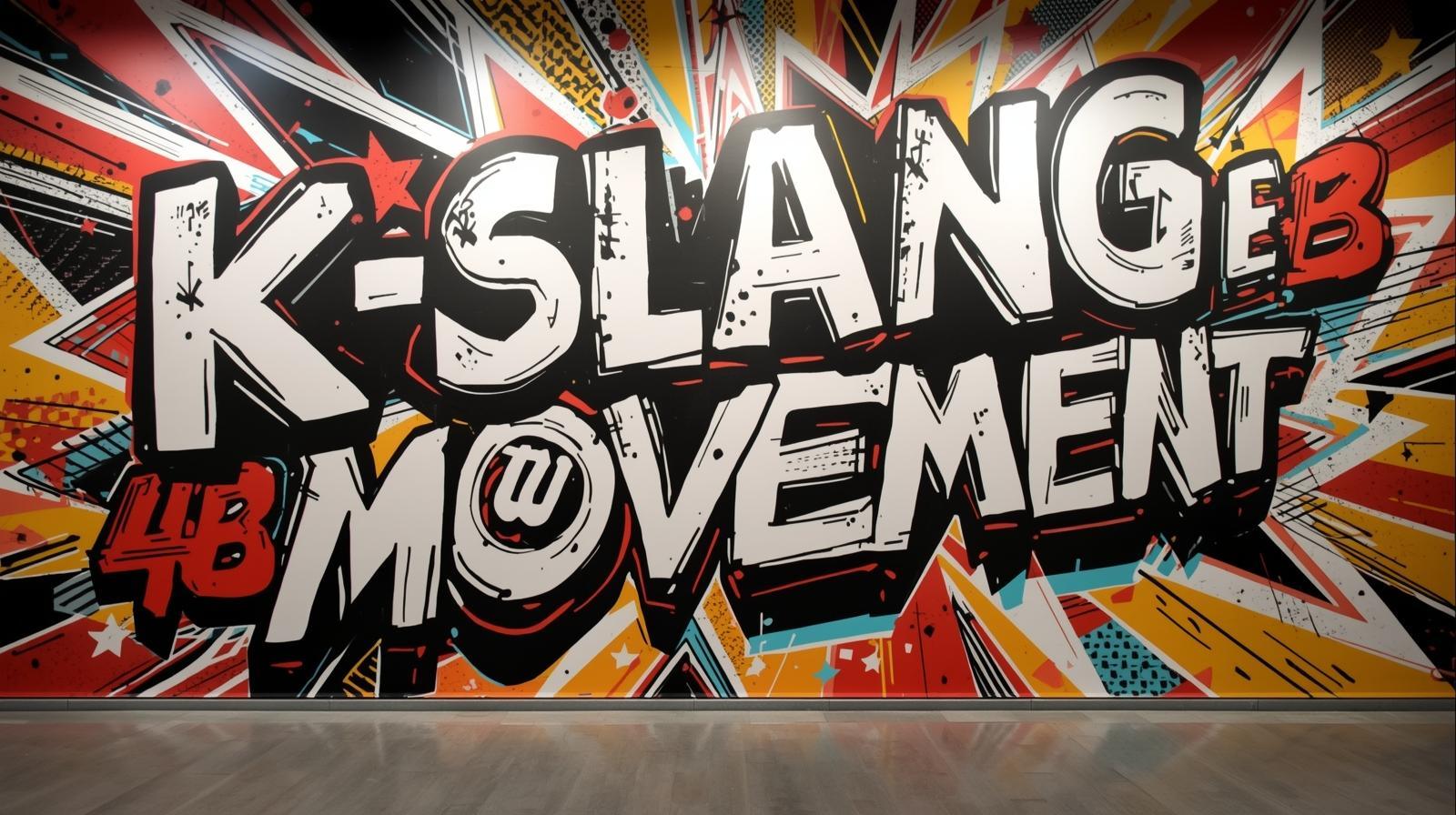

As we often highlight here on Koreami, the social landscape of contemporary South Korea is frequently described as an accelerated laboratory of modernity. Here, the tensions between aggressive hyper-technologisation and resilient traditional structures create frictions unique in the world.
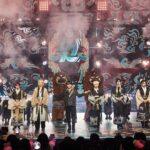
Recently, the forum ‘EMERGING VOICES: K-Slang: The Echoes of Our Lives’ offered a privileged window onto this reality. It gave voice to three young researchers—Yoon Seong-on, Jang Seojin, and Kim Surin—who illustrated how the daily language of the Korean Generation Z is not merely a collection of neologisms, but a veritable “emotional survival dictionary”.
The interpretation of these phenomena and their juxtaposition with the 4B Movement (a radical Korean feminist movement based on the “four nos”: no marriage, no childbirth, no dating, and no sex)—which we have written about here—has sparked a debate. This was exemplified by an article written by David A. Tizzard for The Korea Times, titled “On the Misuse of 4B Feminism to Explain Korea“. The author, who also organised the EMERGING VOICES forum, rightly warns against the risk of using pre-packaged ideological categories to explain complex and individual human experiences.
While it is fundamental to respect the authenticity of the individual voices highlighted by Professor Tizzard, it is, in my view, equally important to recognise that sociology can offer a ‘wide-angle view’, useful for connecting those individual experiences to a broader chorus of dissent.
The point is not to establish whether young Korean women declare themselves followers of the 4B movement—which most of them, including the three researchers who offered their representation at the forum, do not—but to understand how the foundations of their unease are deeply intertwined with the very systemic structures that movement denounces.
Through data from Statistics Korea (KOSTAT) and the contribution of peer-reviewed studies, I will attempt to compose a “big picture” that explains why, even without the “hammers”, the nails of patriarchy and extreme competition are leaving deep marks on the skin of Korean youth.
The Critique of Ideological Reductionism
David A. Tizzard’s intervention represents a necessary voice for anyone involved in Korean studies whilst living within the peninsula. His main observation revolves around the metaphor of the “hammer and the nail”: once an international observer (often Western) wields the interpretative tool of 4B feminism, every Korean social phenomenon inevitably begins to look like a nail to be struck with that specific conclusion.
There are several precise observations raised by Professor Tizzard that merit deep reflection. Firstly, he notes that during the forum, the researchers never once cited the 4B movement. They spoke of exhausting beauty standards, passions for rock music, difficulties in dating, and existential uncertainties linked to late-stage capitalism. Yet, in subsequent accounts, such as the one proposed on Koreami, these testimonies were “translated” into evidence supporting an ideological framework the protagonists had not chosen. Tizzard perceives this act as a form of “soft violence”: using language to explain people instead of listening to them, annulling their individual, complex, and layered agency to feed an algorithm of simplified certainty.
Another point raised concerns lived reality. Professor Tizzard observes that Korea is far more chaotic and complex than headlines regarding “demographic collapse” or the “war of the sexes” might suggest. Many Korean feminists are married, have children, date men, and worry about concrete issues such as housing prices or the glass ceiling, rather than adhering to a total rejection of male society. The author suggests that the term 4B has become a fetish for external observers, a mental shortcut that allows one to feel like an expert on a place without having to confront its messy daily reality.
| Critique | Sociological Implication | Risk Identified |
| Hammer Effect | Universal application of the 4B framework to all data. | Reductionism and loss of nuance. |
| Eradication of Voice | Women’s words are “translated” into political slogans. | Silencing of subjective experience. |
| Empirical Distance | Discrepancy between online activism and daily life in Korea. | Creation of a distorted narrative for foreign consumption. |
| Soft Violence | Explaining people instead of listening to them. | Dehumanisation of research subjects. |
This position, whilst correct and agreeable in its call for ethnographic rigour, opens a question: is it possible that individual voices and structural frameworks are not mutually exclusive? Sociology teaches that an individual may not identify with a movement whilst still suffering from and expressing the very pressures that generated that movement. It is here that the work of the three researchers becomes a possible bridge towards a deeper understanding.
The Survival Dictionary: Voices from Korea
The three researchers—Yoon Seong-on, Jang Seojin, and Kim Surin—presented a catalogue of terms that act as warning lights on the dashboard of Korean society. Analysing them, it becomes clear that the expressed unease is part of an adaptive response to an environment perceived as hostile.
Extreme Beauty Standards
Yoon Seong-on explored the obsession with physical appearance (Eol-gwa) through the term Jeong-byeong (an abbreviation of Jeongsin-byeong, mental illness). It is used by girls when they feel “ugly” or unable to meet aesthetic standards: instead of internalising self-hatred, they say “today the Jeong-byeong has returned”, transforming the discomfort into an external and passing symptom. This fits into a rigid system that divides self-care into levels from 1 to 5 depending on the social importance of the outing.
Although Yoon never cites the 4B Movement, her research describes what academic literature defines as “the corset”. The Escape the Corset (ETC) movement, born between 2016 and 2018, railed precisely against these oppressive devices that force the female body into an economy of desire centred on the male gaze. The term Jeong-byeong is empirical proof of the suffering caused by that “corset” which other women have decided to burn symbolically.
The Rak-lini Catharsis
Jang Seojin’s deep dive into the phenomenon of the Rak-lini (rock beginners) offers a perspective of creative resistance. In a market dominated by choreographed perfection, some young Korean women take refuge in rock for its raw energy. Practices such as Ttang (passionate singing and collective screaming) allow them to reclaim a public and corporeal space that traditional society tends to limit.
Here we find the concept of “indignant anger” analysed by Ji-Yeong Yun in Hypatia. Anger, combined with the cathartic joy of a live performance, becomes a revolutionary force that changes power dynamics. Choosing a culture often labelled as Dantta (a derogatory term for musicians who do not earn money) is a rejection of the tracks of patriarchal success. Even without defining themselves as activists, these women aim to create a gender solidarity that deconstructs traditional roles.
Risk Management in Sseom
Kim Surin analysed modern dating dynamics, highlighting how the phase of Sseom (mutual interest pre-dating) has become an exercise in risk management. Young people have become “efficient” in love, using the Biko (a list of “automatic nos” or red flags) to avoid unpredictable emotional investments. The categorisation of the “Hongdae guy”, who approaches only foreigners, reflects a profound mistrust in the relational market.
This sentimental “efficiency” represents, in my view, a sociological prelude to the “four nos” at the base of the infamous 4B Movement. If the opportunity cost of a relationship is too high and social support is nil, the choice not to date men (biyeonae) or not to marry (bihon) becomes a rational survival strategy. Kim documents the phase of disillusionment; the 4B movement simply represents the endpoint of that same trajectory of rejecting patriarchal scripts.
These three terms—Jeong-byeong, Rak-lini, Sseom-bung—do not constitute an exhaustive list, but a symptomatic selection. They function as warning lights on the Korean societal dashboard, indicating precise pressures:
The tyranny of physical appearance and its impact on mental health.
The fear of judgment in learning and expressing oneself.
Mistrust and the calculated management of risk in intimate relationships.
Collectively, this lexicon represents more than generational slang. It is a set of emotional survival tools that allows one to name, share, and thus make the discomfort slightly more manageable. It transforms a private and alienating anguish into a collective and acknowledged experience. Whether it serves to negotiate with social expectations to “stay in the game” or to draw the boundaries of a more radical rejection, the message is clear: the old script no longer works, and a generation is using every syllable available to write a new one, starting from the simple yet revolutionary practice of giving a name to their own wounds.
The Big Picture: Psychosocial Research, Beyond Empiricism
The risk of the ‘hammer’ denounced by Professor Tizzard is real: people should not be forced into schemas they do not feel are their own. However, ignoring that those ‘nails’ were forged by the same social press would mean giving up on understanding the phenomenon in its entirety. To respond respectfully to Professor Tizzard’s observations, it is necessary to clarify the distinction between identity and condition. A patient may not know the name of their pathology, but their symptoms still describe a precise clinical picture. Similarly, in the researchers’ accounts, one can discern the “symptoms” of a system that 4B feminism has attempted to codify politically.
The difference between “identifying with” and “enduring the basis of”
The fact that the three scholars do not call themselves exponents of the 4B Movement is a fundamental fact that protects their uniqueness, as rightly highlighted by Tizzard. However, arguing that the 4B phenomenon can be set aside because it is “niche” or “online only” means, in my opinion, eluding its function as a symbolic catalyst. As highlighted by various studies, 4B is not a passing trend, but the symbolic articulation of a systemic disenchantment with institutions that have failed to guarantee gender justice and social security.
Psychosocial research has the task of connecting these dots. If we observe Korea from Italy, or from any other external perspective, we do not seek to “invalidate” those who live there, but rather to capture the overall vision that may escape those immersed in the day-to-day. It is the difference between looking at a single pixel and observing the entire image projected on the screen.
KOSTAT 2025 Data: The Numerical Reality of Disaffection
Data from Statistics Korea (KOSTAT) offers a solid basis for understanding why these survival narratives are emerging right now. Despite signs of economic recovery in the 2024-2025 biennium, the long-term picture remains critical.
Recently, the media celebrated a reversal of the trend: marriages increased by 14.8% in 2024 and growth continued in the first nine months of 2025 (+8.9%). However, KOSTAT analysts warn that we are not facing a return to traditional values, but a simple “volume effect”. Those marrying are the “second generation of the echo boom” (those born between 1991 and 1995), a numerically vast demographic cohort that is clearing a post-pandemic backlog. The crucial figure is not the absolute number, but the propensity: the percentage of young people in this generation choosing marriage remains at historic lows. The increase in events is therefore an optical illusion destined to vanish soon: KOSTAT predicts that, once the push of this critical mass is exhausted, the population will resume its vertical decline, collapsing to 36 million in 2072 and potentially below 20 million by 2100.
Beyond Economics: The Rejection of the “Bad Deal”
Deeper analyses confirm that the demographic crisis is the child of an incurable cultural fracture even before material constraints.
If for men the main brake remains money (housing and job stability), for women a systemic rejection of the traditional family model emerges. Certifying this dichotomy is the Korea Population, Health and Welfare Association (2024): in their latest survey, women cite “the inability to find a suitable partner”—often understood as a companion with egalitarian values—and the “burden of care work” as primary obstacles.
This is a political datum, not just a private one: women point to patriarchal culture and career concerns with significantly greater frequency than men (about 9-10 percentage points higher). This resistance finds support in surveys by the Ministry of Gender Equality and Family (MOGEF), which show that single women today register higher life and job satisfaction than their married peers with children; a discrepancy in perceived well-being that fuels the ideological base of radical movements like 4B.
According to data from KOSTAT’s ‘Social Survey 2024’, the percentage of women who consider marriage a mandatory step has fallen below 48%. Conversely, over 52% of Korean women classify it as irrelevant or to be avoided, marking a stark detachment from their male counterparts.
The 4B as a Lens, Not a Label
The fundamental point emerging from the synthesis of these sources is that the 4B movement should not be seen as a sect to which girls “sign up”, but as a lens through which to read a social transformation.
A Transformation of Subjectivity
As noted by Young-Im Lee, 4B represents a shift from reformist feminism to one centred on lifestyle and radical resistance. Even if a Korean girl does not stop wearing make-up entirely, the mere fact that she now possesses a language to define the pressure of having to do so to meet imposed canons changes her subjectivity. Yoon Seong-on’s research demonstrates that critical awareness is already present, even when submission to the standard continues out of social necessity.
Furthermore, the 4B movement has had the effect of “securitising” the Korean demographic crisis, forcing the government to frame the decline in birth rates not as a problem of “youth laziness”, but as a strategic vulnerability linked to gender inequality. In this sense, 4B acts as a catalytic force that shapes the political environment in which even women who are not part of it move.
A Dialogue Between Proximity and Distance
In conclusion, Professor Tizzard’s critique is precious because it reminds us that reality is always richer than any theory. The voices of the three researchers must remain at the centre of the analysis as authentic expressions of a generation trying to “live well as a woman” in a difficult context.
Proposing a link between these voices and the 4B framework does not mean wishing to “invalidate” local reality, but rather offering a long-view panorama. Sociology cannot stop at passive listening; it must interpret silences, neologisms, and subterranean resistances. If the Korean Gen Z is writing a “survival dictionary”, it is the task of the observer to understand what systemic catastrophe they are trying to save themselves from.
In all likelihood, South Korea is showing us, a few years in advance, the challenges that every advanced capitalist society will have to face—and which here in Italy we have already been observing for some time: the erosion of community bonds, the commodification of beauty, and the crisis of social reproduction. Observing these dynamics from Italy, integrating KOSTAT data and academic analysis, is not a stylistic exercise, but a necessity to understand the “big picture” of a world in which words truly shape reality and decide who has the right to inhabit it with dignity.
Bibliography of reference and integrated sourcesKOSTAT (2025). Household Projections and Demographic Trends for South Korea. Ministry of Data and Statistics (MODS).
Yun, J. Y. (2022). Escaping the Corset: Rage as a Force of Resistance and Creation in the Korean Feminist Movement. Hypatia: A Journal of Feminist Philosophy.
Lee, Y. I. (2024). 4B Movement: South Korean Feminist Activist Movement. Britannica / CSUS Scholars.
Tizzard, D. A. (2026). On the Misuse of 4B Feminism to Explain Korea. Korea Times.
Emerging Voices Forum (2025). K-Slang: The Echoes of Our Lives. YouTube Presentation by Yoon Seong-on, Jang Seojin, Kim Surin
Tabirlioglu, I. (2025). Boycotting the Patriarchy: The 4B Movement and its Effects on South Korea’s Foreign Policy. Global Panorama: A Platform for International Affairs Analysis.
Korea Population, Health and Welfare Association (2024) Low Birth Rate Perception Survey: Gender Differences in Marriage and Family Values. KoPHWA Reports.
Ministry of Gender Equality and Family (MOGEF) (2024) Survey on Economic Activities of Career-Interrupted Women and Life Satisfaction. Government of the Republic of Korea.
Statistics Korea (KOSTAT) 2024 Social Survey Results: Family, Education, and Health. KOSIS (Korean Statistical Information Service).