With a visually explosive style and a deeply Korean soul, K-Pop Demon Hunters—the animated film from Netflix and Sony Pictures—has already established itself as one of the most significant titles of 2025. Directed by Maggie Kang and Chris Appelhans and produced by Sony Pictures Animation, it’s much more than a tribute to K-pop: it’s an urban adventure blending music, folklore, and a heartfelt reflection on identity.
This film, which has captured the attention of both audiences and critics, bursts with color, sound, and emotion. Yet beneath the glitter of visual effects and breathtaking choreography lies a powerful story about diversity, acceptance, and the strength to be yourself.

From Debut to Global Triumph
Released on June 20, K-Pop Demon Hunters quickly climbed the viewership charts, entering Netflix’s Top 10 in 93 countries, with particular success in the United States, France, and Germany. It’s not just the visual appeal that wins audiences over: the film speaks to a global generation, tackling universal themes such as vulnerability, authenticity, and the desire to belong.
As noted by critics like David Tizzard (The Korea Times) and Brandon Yu (The New York Times), the film manages to deliver a universal message without sacrificing cultural specificity. It has been described as “an ode to diversity,” showing how even a “demonic” soul can be part of something beautiful. Korean mythology intertwines with the language of contemporary pop, while animation and music create an experience that moves as much as it entertains.
Between Stage and Battles: A Story That Enchants
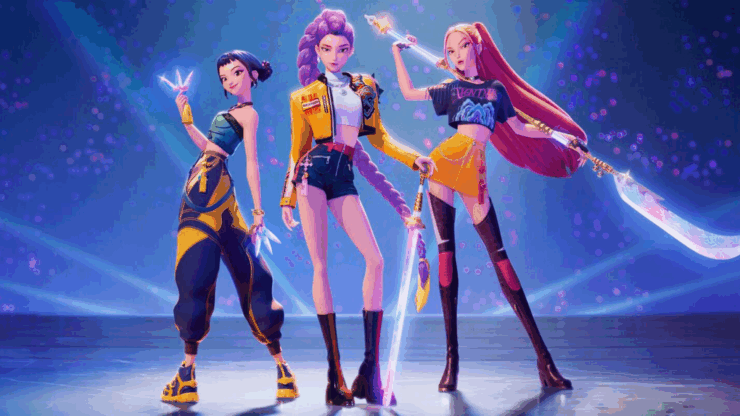
At the heart of the film is a group of idols, the Huntrix, who not only dominate the music charts but also secretly fight demons. The narrative universe draws on magical girl aesthetics, blending the glitz of K-pop concerts with references to Korean mythology. The result is a captivating tale where every choreography is part of the battle, and every song is a weapon.
Alongside the Huntrix are the Saja Boys, mysterious rivals marked by a dark past. Their presence recalls the atmosphere of anime like Pretty Guardian Sailor Moon or My Melody, but with a modern, emotionally charged twist. The action, crafted like a music video, becomes dance, combat, and storytelling all at once.
The fight between good and evil plays out against the backdrop of a musical showdown. The Huntrix, protected by their musical shield known as Honmoon, face off against the villainous Gwi-Ma and his emissaries, the Saja Boys, determined to sabotage their rise.
Rumi and Jinu: Two Souls, Two Conflicts
Leading the Huntrix is Rumi, a layered and intense character. She is a heroine suspended between responsibility and doubt, between the light of success and the shadow of a secret.
By Rumi’s side are a few allies, a spiritual mentor, and ambiguous enemies. The challenges she faces are not only external: Rumi must first accept herself in order to save others.
Her songs become musical confessions: Rumi doesn’t just sing—she tells her story. Through her voice and lyrics, she confronts her fears, her failures, and the aching desire to be accepted for who she is, inner demons included. In the duet Free, the tension between light and shadow dissolves into an intimate, moving melody, where Rumi and Jinu search for each other in the darkness, wondering if the other can love them even in their fragility. The lyrics offer no answers, but allow the voices to hold each other up, like hands reaching out in the dark.
Later, in What It Sounds Like, the song that closes the film, Rumi finally sings alone—no longer hiding. It’s an anthem to freedom hard-won, with every note steeped in the journey she has taken to find herself again. The arrangement bursts into a cathartic crescendo, mirroring her transformation: from fear to self-affirmation, from the mask to the bare face.
Here, the film reaches its emotional peak: strength is born only from a vulnerability that has been embraced.
On the other side stands Jinu, leader of the Saja Boys. He is a human who sold his soul to the king of demons in search of glory and power. His journey is that of an antagonist seeking redemption. He begins as a servant of evil, but the weight of his choices leads him to rebel. His character arc also follows classic lines, yet it retells guilt, redemption, and the possibility of change through a modern lens.
Cultural Decoding
Rumi and Jinu’s journey lends itself to a reading surprisingly faithful to the fairy-tale morphology outlined by Vladimir Propp (Morphology of the Folktale, 1928), reinterpreted through a contemporary, pop lens. Rumi embodies the hero marked by a lack: she has lost touch with her own identity and lives behind a mask. Her call to action and the path that follows run through canonical stages such as departure, trial, and final transfiguration, which occurs when she embraces her vulnerability. In this, Rumi recalls Elsa from Frozen, who transforms from an isolated figure restrained by fear of herself into her true self only once she stops hiding.
Jinu, too—initially in the role of antagonist—develops along a more ambiguous and layered trajectory. Like Te Kā in Moana, he is a corrupted figure, a “monster” born from a wound, seeking redemption. His arc becomes an act of reconciliation, where the enemy is not defeated but embraced. In this reversal, the film rewrites the classic fairy tale without betraying its structure: there is no victory in destruction, but in understanding.
K-Pop Demon Hunters reinterprets archetypal roles with a fresh perspective, where light does not lie in the absence of darkness, but in its integration.
The result is a mythical tale reframed through the codes of Korean pop and digital culture, with a classic structure that engages with the contemporary theme of fame as a mask.
The Power of Music as Healing and Defense
In the film, music is much more than an element of entertainment. It is a shield, a remedy, a ritual, a language of the soul. By singing together, the Huntrix generate a protective aura that repels evil. But for this magic to work, Rumi must first confront her own limitations, overcome fear, and embrace the truth.
The track Takedown, performed by Jeongyeon, Jihyo, and Chaeyoung of TWICE, expresses the group’s anger and determination. The chorus declares:
A demon without feelings doesn’t deserve to live, it’s that obvious.
Yet as the story progresses, the film invites a deeper reflection: even those who are “different,” even those who carry a dark side within, can be worthy of love, trust, and rebirth.
A Fresh Look at the Idol World
K-Pop Demon Hunters portrays the behind-the-scenes of the idol world with affection, but without idealization. The Huntrix, stars of spectacular shows, are also ordinary girls: we see them in pajamas, sharing Korean snacks and hugs on the couch, caught between laughter and fears. The Saja Boys, dazzling and flawless on stage, are in private demonic beings, tormented. The humanity of both Huntrix and Saja Boys emerges between an interview and a guerrilla live, between a fan signing and a break from fame. This dual nature is not just a fantasy device, but a powerful reflection of the reality of show business: behind every flawless performance is a person with vulnerabilities, fears, desires, and limits.
Many critics—including Matt Goldberg (The Wrap), who noted how the narrative manages to strike a balance between spectacle and humanity while avoiding idealization—emphasize the film’s ability to “demystify” the idol. It gives them back to the audience as human beings, not untouchable deities, and in doing so, it succeeds in being empathetic, respectful, and authentic.
Korean Myths in Pop Form and Seoul Between Reality and Magic
Another strength lies in the blending of Korean mythology and pop culture. The Saja Boys, with their black outfits and straw hats, recall the jeoseung saja—silent ferrymen who guide the souls of the dead to the afterlife. The golden Honmoon barrier, the Huntrix’s shield, evokes rites of purification and protection. Creatures such as the three-eyed crow (samjok-o), shown in key moments and echoing the mythological solar crow—an emblem of power and truth—and the blue tiger, evoke shamanic symbols and ancient legends, reimagined in an urban, recognizable, and contemporary style.
In the world of demons, the atmosphere recalls gut rituals, with floating lanterns and decorations inspired by Buddhist and Taoist iconography. The grotesque, monstrous masks reference the faces used in ritual dances to drive away evil spirits, while the dokkaebi mascots seem ready-made for merchandising.
This cultural blend, rich yet never heavy-handed, makes the film accessible even to those unfamiliar with Korea, while still rewarding viewers who recognize its symbols and meanings.
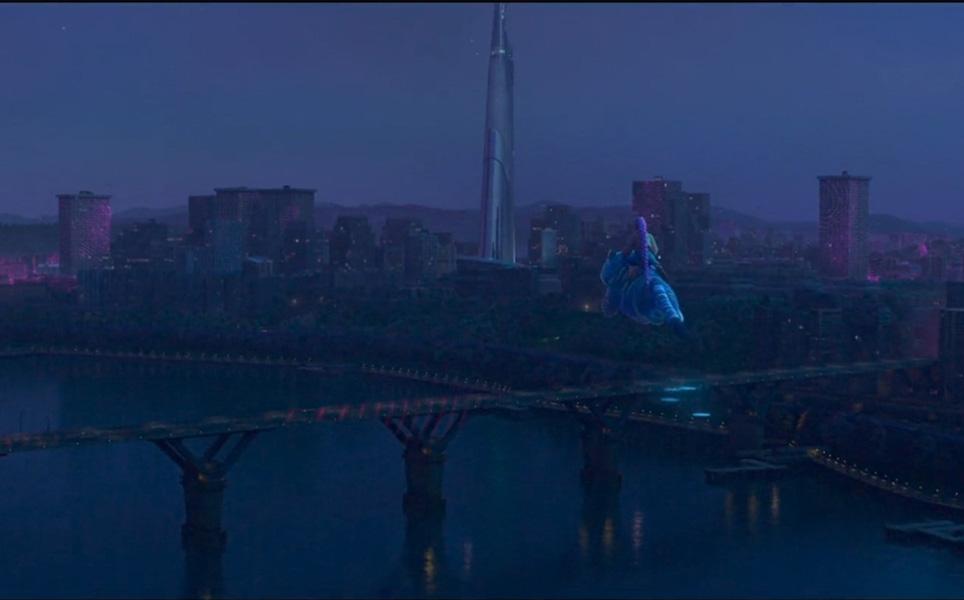
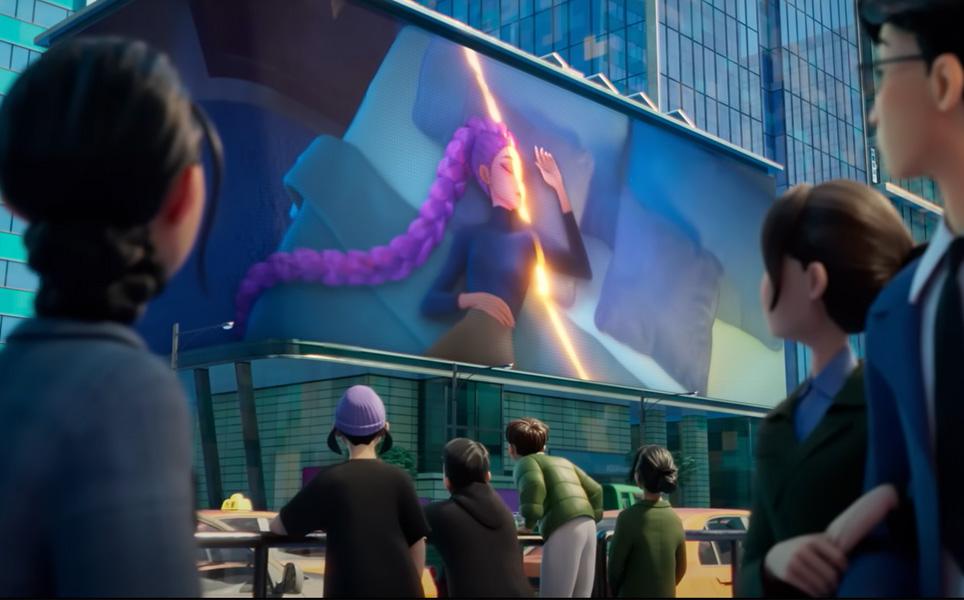
The city of Seoul is not just a backdrop, but a living part of the story. Night scenes at Namsan Tower, the skyline dominated by the Lotte World Tower, and concerts at the Jamsil Sports Complex are just some of the realistic glimpses the film renders with precision and passion.
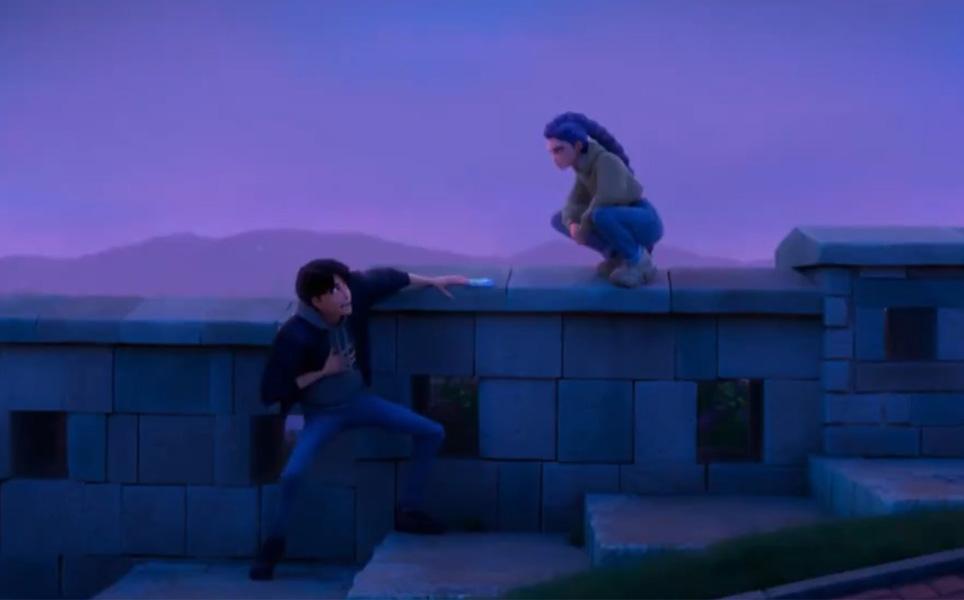
From Line 2 of the subway to walks along the Naksan Park walls, passing through the neighborhoods of Myeongdong and Hongdae lit by neon signs and screens, and the panoramic views from Cheongdam Bridge—every corner of the capital becomes a place of wonder. In this urban space, magic finds fertile ground. Reality blends into fantasy, and the everyday transforms into legend.

A Powerful Message for Everyone and a Soundtrack That Speaks to the Soul
K-Pop Demon Hunters speaks to everyone. Its message is clear and powerful: being different does not mean being wrong. Social pressure, double identities, and the fear of not measuring up are universal experiences. The film portrays them with sensitivity, through the eyes of characters who shed their masks to rediscover their own truth.
Resonances with Real K-pop
The movie maintains a constant dialogue with reality. Sharp-eyed fans have noticed similarities between Jinu and actor-idol Cha Eunwoo of ASTRO, or between the Saja Boys’ outfits and ATEEZ’s costumes in Hala Hala. Some members seem inspired by BTS’s Jimin, ATEEZ’s San, and TXT’s Yeonjun.
The industry has taken notice as well. TXT released a “demon hunter” version of their track Eternally with choreography inspired by the film, while ENHYPEN and Monsta X also published film-related content. K-Pop Demon Hunters has gone beyond the screen, becoming part of the very language of K-pop.
Beneath the Sparkling Surface
K-Pop Demon Hunters plays with the language of spectacle to tell a much deeper story. It doesn’t just stage idols fighting demons—it speaks to what it means to be young, visible, and vulnerable. It addresses the struggle to stay true to oneself in a world that pushes toward conformity. And it does so with a glittering aesthetic that doesn’t conceal but rather enhances the inner complexity of its characters.
Behind the lights, the choreography, and the special effects lies a real story. Every character bears a wound, every song is a confession. As Maggie Kang said:
This movie is about the fight to stay true to who we are, even when it feels easier to become someone else.
The movie doesn’t seek perfection—it dismantles it. It doesn’t idealize the idol—it humanizes them. And it does so without cynicism or judgment. It portrays fragility without indulging in drama, and diversity without reducing it to a slogan. It is accessible but never shallow. Colorful, but never superficial.
K-Pop Demon Hunters is one of the most original animated movies in recent years. It is neither a parody nor blind praise of the idol system. It is an affectionate, aware, and profound gaze. Watching it also means agreeing to look at yourself. Because behind every monster there is a fear, and behind every fear, a possibility for change.
In the end, the message is simple: you don’t have to be someone else to deserve to shine. You just have to stop hiding.