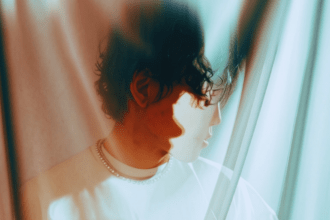
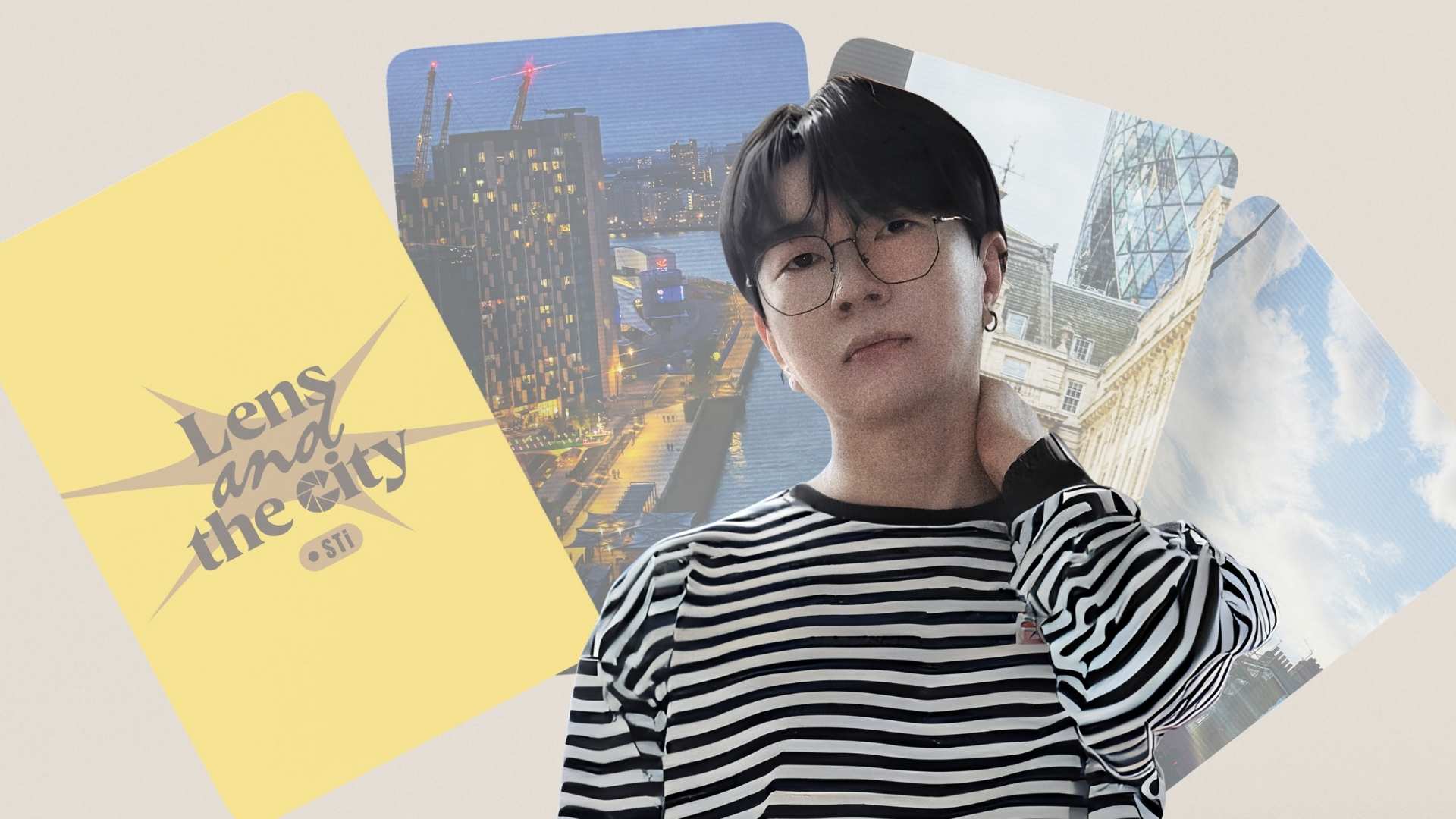

It was thanks to Lens and The City, his latest album released just a few days ago, that I discovered STi. In preparing for this interview, in studying the life and career of this prolific artist, I realized I was in the presence of a true auteur. Far from the fast-paced, mass-production system that often characterizes Korean music, Jang Seo-hyun, known as STi, has built a decade-long independent career with the precision of an artisan and the consistency of a cult artist.
But what makes his work so special is the complete integrity of his art. His songs, intimate and profound, stem from a unique background: he composed music for the celebrated video game series DJMax Technika 3, an experience that gave his sound design an edge, making his tracks more sophisticated than simple emotional R&B.
Beyond the music, STi personally handles all the visual and graphic aspects: he takes the photos for the album covers and curates the photocards, as he did for the EP ride out. His mission has never changed: to use “sincerity” to face melancholy and give “courage” to his listeners. Today, with the visual and introspective reflection of Lens and the City as a new focal point, we have the opportunity to talk with the artist about his creative control, his relationship with his solid and loyal fanbase, and the meaning of success in 2025.
The Interview
Koreami: You are considered a true auteur, an artist who maintains complete control over every aspect of his work, from composition and production to the visual aesthetic. Since you are formally defined as both a singer (가수) and a producer (프로듀서), how do you balance the two roles? Does the producer identity constrain or, conversely, liberate the singer’s creative expression?
STi: My biggest goal has always been to put my heart and my thoughts into my voice. Producing my own music is simply the way I found to achieve that. Sometimes I’ve taken on the role of a producer for other artists, but those are rare occasions, and I don’t have plans to shift my focus to being a producer for others. My priority is always my own music, so I don’t separate the roles of “singer” and “producer” too strictly. Producing is just part of what allows me to be a singer. For me, both roles are important—but only within the context of my own music.
Koreami: Many international listeners know you through K-R&B, but your early work includes electronic tracks like ‘유령’ (Ghost) and ‘Metro Project Fate’ for the rhythm game series DJMax Technika 3. What influence did composing for an arcade game—which requires extreme rhythmic precision and meticulous sound design—have on your current approach to producing emotional R&B?
STi: When I first started music, I was actually a rapper. I didn’t sing at all back then. But I’ve always loved pop music, so naturally I felt the desire to sing, which led me to mix both rap and vocals in my work. Over time, singing took on a bigger role than rap, and that brought me to where I am today. Game music was a similar story—I love exploring different genres, so when the chance came up, I took it, and it turned out to be a really great experience. I don’t like committing myself to one strict, traditional path, because doing so requires being truly exceptional in that field, and I know myself well. My strength lies in blending different emotions and colors in a balanced way. The time I spent working on game music also gave me lessons and inspiration that still help me now.
Koreami: Your 2023 EP, ride out, is described as having a “dark and sad” feeling, but with the explicit goal of offering “comfort” and “courage.” How do you balance the need to honestly express melancholy with the intention of giving hope? Is this a form of therapeutic realism?
STi: I used to be someone who never shared my struggles with others. I thought talking about my difficulties would only pass on negative energy, so I kept everything to myself. But before making ride out, I was going through a very hard time. When I finally opened up to people who cared about me, they welcomed it and even asked me to keep sharing. Spending time together and talking made things lighter, and for the first time, I felt what it meant to be healed. That taught me something important—through music, even if I’m expressing pain, someone out there might connect with it, gain courage, or feel comforted. Hope doesn’t always require explicitly hopeful lyrics. Of course, every listener interprets music differently, but that’s the purpose I had in mind.
Koreami: You’ve had a reputation for being a “sincere” artist since your debut. What is the biggest risk a singer-songwriter faces when they decide to be completely honest with their audience, especially when dealing with dark and intimate themes?
STi: I can’t really write about things I haven’t experienced. That’s why people often say my work feels sincere. The main risk of addressing darker themes is that fewer people might relate to them—which means it could lack mainstream appeal. That’s why I prefer making albums over singles. Albums let me tell a wider range of stories within one larger flow.

Koreami: Your EP 6am: unhappy people 🙁 suggests a specific moment of loneliness and introspection. What time of day or state of mind allows your most authentic music to take shape, and how important is creative isolation in your process?
STi: Like many musicians, I used to mostly work at night. But in the last few years, I’ve realized the actual time of day doesn’t matter much for me. What matters is whether I have something meaningful I want to express. In overly repetitive daily routines, I don’t feel the drive to create. But once I have something I need to say, the process comes quickly. I don’t really get inspired by isolation itself—it’s more about living life and then drawing ideas from those experiences. That said, once I’m working, I do need time alone to focus.
Koreami: Your new album, Lens and the City, suggests a strong visual theme related to urban observation. How did your experience as a photographer and the act of “looking at the city through a lens” translate into the sound and lyrics of this album?
STi: In fact, most of my albums—even before ride out or 6am: unhappy people 🙁—were visually based on photos I took during my travels. This new album just makes that approach more explicit. Lens and the City started with the theme of “how I see myself” versus “how others see me.” So I emphasized cameras, lenses, and the act of observing. The lyrics deal with these ideas, and I shaped the sound to create an atmosphere that delivers them more clearly.
Koreami: Your EP ride out focused on exploring melancholy and the “courage” to overcome hardship. Does your new album, Lens and the City, maintain this emotional philosophy, or does it represent a shift in perspective after reaching that point of resilience?
STi: To be precise, ride out wasn’t really about overcoming struggles. It only hinted at the simple desire to overcome in the last track. Lens and the City, on the other hand, reflects the actual process of going through that journey toward resilience.
Koreami: For the album ride out, we understand you personally took the photographs used for the design and the photocards. Why was it crucial for the visual image to be directly controlled by you, and how do these photos intensify the album’s “dark vibe,” transforming the physical product into an art object?
STi: Everyone knows that music feels different depending on the listener’s state of mind and environment. When I was making ride out, I thought that if I captured in photos the same moods and places I felt when writing those lyrics, then including those images with the album would help listeners connect with the music on a deeper level.

Koreami: Your fanbase is often described as a “cult following” (or “niche”), and you reward fans of the physical format with limited editions (like the 300 autographed copies of ride out) and early releases. In an era dominated by streaming, why is it important for you to maintain and value the album as a collector’s item and cultivate such a dedicated audience?
STi: Honestly, most of my fans are people who have supported me for a long time, rather than new listeners who discovered me recently. They already understand my intentions, and I believe that’s why they continue to wait for my music and enjoy it. And personally, I also like having EPs or full albums as physical items. They feel more permanent to me.
Koreami: How do you see your unique position within K-R&B? Unlike some of your peers, you seem to maintain a focus on autonomy and a niche fanbase. Is there pressure to conform to trends, or does maintaining a cult following offer you more creative freedom than the mainstream?
STi: To be honest, I’ve sometimes thought about being a songwriter or producer for other singers, and I’ve tried it before. But I didn’t really feel much fulfillment from it, and I don’t think I’m especially skilled at making the exact music that others want. What makes me happy is creating my own music. So instead of chasing trends, I focus on making songs that I can express most authentically.
Koreami: After a long independent career that blends your solid background in music production (DJMax) with the emotional depth of your work, culminating in the new album Lens and the City, what defines success for STi in 2025? Is it about streaming volume, future projects, or the depth of connection with your listeners?
STi: These days, music doesn’t generate as much income as it used to, and that’s something I’ve struggled with. But while making this album, I came back to a simple but important realization—what matters most to me is making my own music. In that sense, I already feel successful, because I have the ability to express my heart and mind through music and production. Of course, I’d be grateful if more listeners enjoy it, but the core of “success” for me is that ability itself.
Koreami: You are now reaching out to a European/international audience. What message or aspect of your work do you hope resonates most with listeners who may not be familiar with your DJMax or K-R&B roots, but who are looking for honest and complex music?
STi: No matter the language, race, or region, I believe the emotions we feel in life are very similar. If listeners anywhere can connect with the feelings I’ve expressed in my lyrics, that would make me happiest. I just hope people will spend time with my music and enjoy it.