
Writing about EL CAPITXN used to be relatively straightforward. One could simply rely on the most immediate shortcuts: the hits, the figures, the names. The producer behind global successes. The heavy-hitting collaborator. The man who, while staying a step back, manages to leave his mark everywhere. All true, of course, but—ça va sans dire—decidedly reductive.
Listening to him speak—or in this case, reading his words—it becomes immediately clear that the core of his artistry isn’t just his track record, the collaborations, or the numbers. It is the way he perceives music. For instance, despite living and breathing music for years, EL CAPITXN does not start with a sound. He starts with an environment: an atmosphere, a tension, a “click” that marks a before and an after. The image precedes the beat; the emotion precedes the technique. Everything else takes shape from there.
It is a perspective that explains a great deal. It explains why, when discussing his influences, he does not cite My Chemical Romance or Radiohead as mere stylistic preferences, but rather as emotional galaxies to be traversed. It explains why his productions and DJ sets never feel like a simple sequence of tracks, but a journey defined by ruptures, accelerations, and shifts in light. It all culminates in the tour title: WHO KILLED EL?
This is not a search for a culprit, but rather for the element that must be buried so that something new can emerge. In our “Eyes On” feature, we attempted to bring him into focus, framing his trajectory as a story of loss, resilience, and reconstruction—from a lost voice to the birth of a new identity. The following interview, however, adds different pieces and colors to the mosaic. It reveals an EL CAPITXN less defined by outside observation and more vivid from within—wittier, more vulnerable, and fully aware that the stage is not just a place to perform, but the space where a transformation finally becomes visible and shared.
This is the most compelling point. Now defining himself as a Hybrid DJ Performer, EL CAPITXN seems entirely uninterested in becoming just another producer-turned-personal brand. Instead, he gives the impression of wanting to inhabit a form expansive enough to contain everything: the music, of course, but also the persona, the live instruments, the risk of exposure, and even the inevitable misunderstandings that arise when you step out of the shadows.

Then, you will read it, the tone shifts. Behind the intense, cinematic aesthetic, something more tender emerges: the pleasure of nocturnal writing, of ordinary moments, of the fertile silence where new ideas begin to take shape. It is here that the persona cracks just enough to reveal the person—not to contradict the image, but to make it… human.
There we go. EL CAPITXN takes us inside his universe, with its rock influences, emotional fractures, an identity to be left behind, and empty stages that one day, perhaps, will become entire worlds.
Koreami: Your productions show a rare balance between commercial impact and artistic depth. In your recent Instagram posts, tracks by My Chemical Romance and Radiohead appear—bands known for their theatricality and emotional intensity. Is this alternative/rock background part of your musical upbringing? And how does it influence the narrative energy of your productions and DJ sets?
EL CAPITXN: I have never felt like just a producer. In a sense, I feel more like a storyteller. When I make music, I don’t just think about sounds: I think about a world, an atmosphere, someone who is moving toward their destiny. That is where it all begins.
Since I was a child, I never listened to music as a simple combination of notes. To me, it was already a landscape, a presence, a tension. My Chemical Romance or Radiohead were not just bands to be admired: they were artists capable of showing me emotions at the edge, characters, atmospheres that seemed to live beyond the song. That is what shaped me the most.
Because of this, my tracks and my DJ sets never feel like a list of tracks put in order. I imagine them as a journey. On certain nights, there is someone walking toward the light. On others, someone encounters their own darkness for the first time. The audience might not receive a precise explanation, but by the end, they feel they have crossed through something.
Koreami: Tracks like Welcome to the Black Parade or Bohemian Rhapsody are built on drastic, highly theatrical shifts. When you produce electronic music or perform live, do you consciously think in terms of narrative arcs and emotional dramaturgy, much like in rock songwriting?
EL CAPITXN: Yes, very consciously. When I create music, I always see a precise moment before the sound. Sometimes it is the point where someone collapses. Other times, it is the instant they encounter something hidden within themselves. Still other times, it is the transition where they are reborn with a different name. Once 그 image becomes clear, the music begins to follow it.
This is why very sharp fractures often appear in my tracks. Everything can suddenly go silent and then explode, or change direction without warning. I don’t love music that always flows safely. If there is true emotion, there must also be a crack. And sometimes, it is precisely that crack that completely transforms the person experiencing it.
Koreami: In your world tour WHO KILLED EL?, the narrative seems to revolve around a decisive turning point in your artistic persona. Instead of choosing a celebratory title, you opted for something that suggests a crime, or at least an ending. Why was it necessary to “kill” your previous identity to establish yourself as a global artist? What part of the “old EL” had to die for your live performance to exist?
EL CAPITXN: This tour isn’t just a concert. It is an event. For a long time, the EL people knew was someone who lived behind the scenes. I created music for many artists, and it has been a tremendous stroke of luck. But, at the same time, I was never truly the protagonist of my own story. That’s why everything starts with a question: WHO KILLED EL? And for now, a definitive answer doesn’t yet exist.
Some might say it was the world. Others, the industry. But there is another possibility: that EL himself killed his previous version. Sometimes, to start something new, what came before must truly end. This show is how we reconstruct that event together with the audience. At first, they might just be witnesses. By the end, perhaps, they will realize they were part of it too.
Koreami: Today you define yourself as a Hybrid DJ Performer, integrating live bass, guitar, and keyboards into your sets. Do you think the future of a producer inevitably involves becoming a personal brand and a performer?
EL CAPITXN: I think that to truly understand an artist, listening to their music isn’t enough. You also need to sense the way they live and look at the world. Otherwise, everything remains just a concept. Sometimes harsh criticism arrives; other times, you are overprotected. I try to see all of this as part of a growth process. Today, more than before, I feel I can no longer remain silent.
Recently, I’ve had to deal with quite a few fools—let’s put it that way. It reminded me that people often only see and hear what they want to. Even those moments, however, become material. While they were happening, I was already taking notes on new ideas. Maybe a great song will even come out of it. Every now and then, I enjoy provoking the “madmen” of the world a little, even if I occasionally get caught up in it for a second. But it doesn’t last long: I have too much to do to stay stuck there.
Koreami: Your public image often evokes a cold, intense, cinematic aesthetic. If you could share one simple, everyday thing that would help fans feel closer to the “real” you beyond that image, what would it be?
EL CAPITXN: If you only look at me from the outside, perhaps I seem that way. But those who really know me know that I am a person much more full of love than I appear. Sometimes I don’t even know if I am someone who loves deeply or someone who desperately wants to be loved. Perhaps both.
In reality, I love very simple moments. Not “empty” daily life, but those moments where I can keep writing what’s inside me. I like being in a quiet environment; I like the night and the dawn, letting new musical ideas surface. They are very normal instances, but they mean the world to me.
There is still a lot of me that I haven’t shown, musically speaking, not even on tour. I love the orchestra. I love the opera. And I believe that in the future, my show will evolve toward a form that unites opera, musicals, and a certain Broadway energy. I’m interested in the idea of a performance where electronics, orchestral drama, and storytelling coexist on the same stage. This current tour, in the end, is just the initial phase of a much larger design. Right now, I am building that world starting from an empty stage, together with my friends. But I believe all great shows start exactly like that.
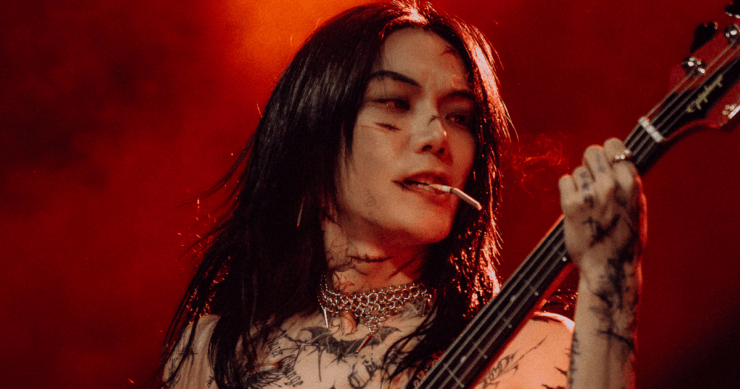
And perhaps some already know: that voice which seemed lost never truly disappeared. It simply found another way to keep resonating.
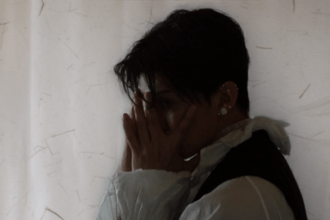
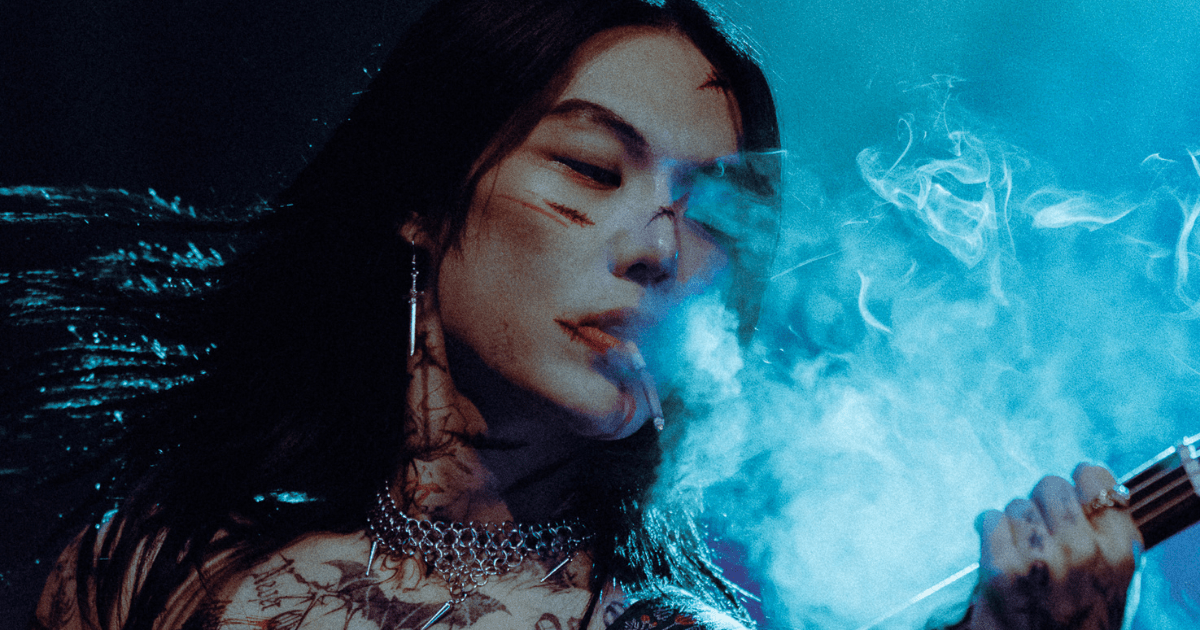
The photos in this article are by Roxy Faith Alexandria; you can find her IG profile here.
Post correlati
-
 “I chose the path I love”. Exclusive interview with the singer and songwriter Eunhye.
-
 Interview | Light and Shadow: Dept Opens Up, “I’m more playful than my music suggests”
-
 Beyond OSTs. Elaine Kim on Creative Urgency | Interview
-
 Seoul Drive: Turning Traffic Into Therapy, Directly on YouTube | Exclusive Interview
-
 Um Jungwoo (ex-BVNDIT): Betting on Independence and the Truth Behind ‘Still Here’ | Interview
-
 SUMMER: “With Little Kitty I feel naked” | Interview