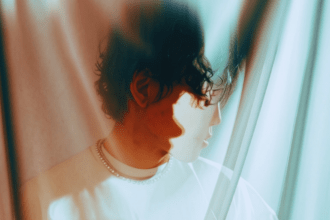
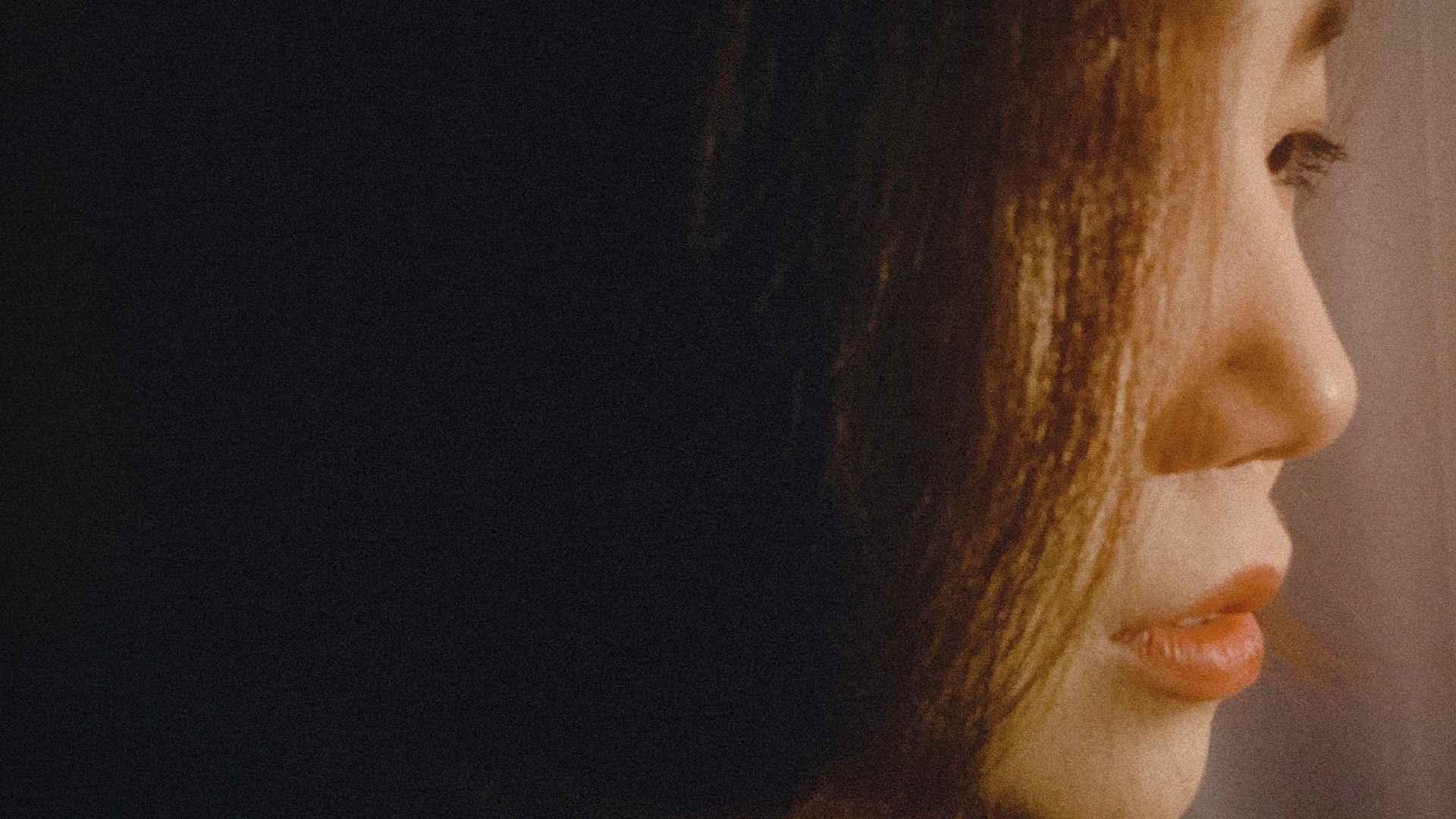

From the beginning, in the newsroom we all knew that the interview with Shirosky wouldn’t be a superficial chat. When you do research and discover that one of Seoul’s top-rated jazz-hop producers has a degree with honors in Political Science, you already know you’re about to talk to a complex mind.
We had prepared targeted questions, precisely because we were curious to understand how the “straight-A student” and the “artist” could coexist. We were curious to ask her about her EP Harvest and its connection to The Seed.
We even had a hunch about her process, asking her if there was a hidden ‘Shirosky system.’ But we still weren’t ready for her answer. Her revelation that she is a ‘pattern collector’ wasn’t just a confirmation; it was the key that connected everything—her degree, her passion for astrology, and her music. That was the moment that genuinely impressed us.
Our questions were accurate, yes. But her answers exceeded every expectation. Shirosky didn’t give us pre-packaged answers; she gave us pieces of her thought and her life, in a way that sincerely surprised us. We hope it has the same effect on you.
The Scholar and The Artist
Koreami: You went from getting top grades in Political Science to composing super emotional music. How do these two sides of you coexist? Do the straight-A student Shirosky and the artist Shirosky get along, or do they sometimes clash over how to make a track?
Shirosky: When I was young, I wanted to become a psychologist or a social scientist. That’s why I went to study Political Science and International Relations. Since my family couldn’t afford to pay for my tuition, I worked hard to earn scholarships. At that time, music was only a hobby. Ironically, I loved music so much that in my third year of college I eventually decided to make it my profession. Still, I wanted to graduate properly, so I kept a strict routine: studying during the day, making music at night, and working part-time jobs on weekends. It was really tough back then, but looking back, I eventually graduated at the top of my class.
The political science and sociology I studied became a huge advantage later on when I started working as Shirosky the musician. It shaped the way I view society and the arts industry, helped me participate in national support programs for the arts, and even gave me tools to evaluate my own artistic situation through social science theories. The social experiences I gained through those part-time jobs also made me a healthier artist. In hindsight, those years of working so hard to study political science on my own turned out to be a real blessing for me as a musician. In other words, when I was younger, I thought the “studious me” and the “musical me” were in conflict, but now I see that they were always closely connected and interacting with each other in inseparable ways.
Koreami: Your father is an actor, and at first, the artist’s life scared you because of its “instability”. Now that you’ve made it, what’s the biggest lesson you learned from watching his career that still helps you stay grounded today?
Shirosky: When I was young, my father was a well-known actor. He often appeared in K-dramas (such as KBS First Love and SBS Yeon Gaesomun), and people would recognize him on the streets. But those days didn’t last long, and they eventually brought financial difficulties and instability. Afterward, my father worked as a taxi driver before later becoming a politician. Even then, it took him a long and difficult journey to establish himself. Now he is retired and studying traditional Korean music.
The biggest lesson I learned from watching my father is that “an artist’s life is long.” If there was something he needed to do, or truly wanted to do, he always made it happen, even if it took a long time. I saw how some of his projects failed while others succeeded, and how opportunities sometimes didn’t come for years—but then, with time, new chances would eventually appear.
My father never once opposed me doing music. In fact, whenever I felt stuck in a rut as a freelance artist, he gave me words of encouragement. He taught me that even if the albums I make are not always commercially successful, I should continue to create music that carries my own color and voice in my own place.
Koreami: Early in your career, your label built a “mysterious artist” image for you, because they said your real personality—the bright and playful one—didn’t fit with your music. Did that bother you? What was it like to finally show everyone who you really are, between running with your crew and doing horoscopes on Instagram?
Shirosky: It never made me uncomfortable. Following the label’s direction actually felt right for “Shirosky” at that time, since I was still young and also naturally a bit shy. (Smile) I believe those years I spent creating and studying music gave me the foundation and confidence to eventually show my true self more openly.
Building an Entire World, Not Just Music
Koreami: Many producers search for the perfect sample on old records. You, on the other hand, often play the piano, record it, and then sample yourself. What are you looking for when you start playing? Do you already have a clear idea in your head, or is it more something you “feel” in the moment?
Shirosky: It depends on the situation. I wouldn’t say I always have a clear picture, but I enjoy imagining images like “friends,” “the Han River,” “a forest,” or “pineapples,” and then creating background music for those imagined scenes.
Koreami: You do more than just music: you organize “The Vibes” parties, collaborate on media art exhibitions, and named an album after a Renoir painting. For you, are a beat, a party, and a work of art all part of the same universe? What’s the common thread?
Shirosky: Shirosky’s motto is: “To create music where the listener becomes the main character, and parties where the people who attend become the main characters.” I find joy in knowing that when people experience my art, it helps them carry out what they do with more comfort and ease, and allows them to feel their own existence in a more positive way.
Koreami: With “The Vibes” parties, you’ve created a real hub for the jazz-hop scene. In a competitive music world, why is it so important for you to build a community and make everyone feel at home?
Shirosky: In Korea, the hip-hop scene is very popular and has now become completely mainstream. But jazz hip-hop, on the other hand, has always remained a niche and non-mainstream genre. One of the darker sides of Korean society is that if you don’t belong to the mainstream, you often feel a deep sense of loneliness and isolation. I wanted to create a scene where I myself could also feel at home.
Starting from Itaewon, where I live, I hoped there would be more spaces where people could listen to jazz hip-hop comfortably. Along the way, I joined forces with jazz hip-hop artists from around the world such as Sam Ock and Myk to hold performances, and through organizing parties, I was ableto build various activities together. What mattered most to me was that anyone could come and feel welcome.
Life Beyond the Studio
Koreami: In 2019, you released an EP called The Seed, and your latest work is called Harvest. We see a clear progression here! What are the “seeds” you planted back then that you feel you’ve “harvested” today, both in your music and in your life?
Shirosky: I believe the true harvest is, in fact, “us.” For example, this very encounter between me and koreami. It also includes the relationships I’ve built with the many artists who took part in my album, and with the fans who listen to my music. Within these countless connections of “us,” the time and space we share together itself is the most precious harvest. And I am truly grateful for it.
Koreami: Your music is super relaxing, almost meditative. Your life, however, seems anything but still: you run, play futsal, you DJ. Is your music sort of an “escape” to find some peace, or is that calmness a part of you that you carry with you, even when you’re in the middle of all the action?
Shirosky: I’m an ENFP. I’ve always loved sports and enjoy being around people, so I think some people feel a disconnect between my calm music and my image. (Smile) In reality, I’m actually very far from being calm. But I do love meditation and philosophy.
Koreami: On one hand, you say your priority is to “work freely”. On the other, you create soundtracks for giants like Adidas and BMW. How do you balance those two things? When you’re working for a brand, do you have to “turn off” a part of yourself, or do you manage to be 100% Shirosky all the time?
Shirosky: Thankfully, when brand proposals come my way, most of the time it’s because the clients already like something about Shirosky’s unique color. So I’d say I usually work while staying about 90% Shirosky. I create music by imagining the images I want to deliver to the product, the brand, and its customers. On very rare occasions, I do have to set aside my own style completely, but it doesn’t happen often. Even in those moments, I don’t feel drained. Instead, I sometimes feel joy in discovering new ways of transforming myself.
Koreami: You studied political science and have been studying astrology as a hobby for ten years. Both disciplines, in different ways, try to find patterns and systems in chaos. Does this way of thinking reflect in how you build a track? Beneath the emotional surface of your music, is there a hidden structure, a “Shirosky system”?
Shirosky: That’s such an incredibly striking question—it gave me chills. Yes, I am someone who finds patterns and transforms them. If I had to describe what I do in a single word, I might even say I’m a “pattern collector.”
In political science, I analyzed and compared countless political and social cases to uncover the patterns of human society. In astrology, I look at the symbols of the constellations and trace the recurring patterns in a person’s life according to the flow of fate. And in music, I discover loops and patterns sonically, then repeat and transform them as a way of communicating with people.
It might fall short of fully capturing it to simply call it “minimalism,” but in my own way, I do pursue a kind of minimalism. What I truly hope for is to be a pattern collector who can bring benefit to people and to the world.


Post correlati
-
 Abbiamo intervistato Dane, la nostra (e vostra) nuova crush.
-
 Un’anima R&B, un’ispirazione dolce come un gelato e un passaporto che sogna l’Italia: la nostra intervista a Riaan.
-
 Song Jinsun, la mente dietro a ‘True Beauty’ e ‘What’s Wrong With Secretary Kim’: intervista esclusiva alla produttrice che coltiva storie
-
 La penna segreta del k-pop: intervista esclusiva a Dailog
-
 Aaron Young: il nuovo capitolo con l’EP Ma Jia Xian. La nostra intervista esclusiva
-
 “Ho scelto il percorso che amo”. Intervista esclusiva alla cantante e compositrice Eunhye.