
KAZU SHOWTIME’s responses were collected in writing on the occasion of Milan Loves Seoul, Seoul, September 2026.
No Korean DJ has ever managed to make a name for themselves in Europe while staying who they were in Seoul. Those who have made it, so far, have always had to choose: either the international audience, or their original identity. KAZU SHOWTIME, Korean, working in hybrid genres between trap and electronic music, named Top 25 DJ Asia at the 2024 EDM Droid Awards, says he wants to be the first exception.
I don’t want to be known simply as “a DJ from Korea.” Through my music, my performance, and everything I’ve lived through in my career, I want to show another side of what a Korean artist can be.
To understand how difficult what he’s attempting really is, you have to look at who has already tried.
Two paths, and a new one to trace
KAZU grew up artistically inside WATERBOMB, the summer festival founded in Seoul in 2015, where he performed alongside k-pop idols, rappers and other EDM DJs on a lineup that mixes genres rather than separating them. Ultra Korea, since 2012, brings the Korean version of the franchise born in Miami, with a strong presence of international headliners. It’s a solid ecosystem, capable of building major careers almost entirely within its own borders.
The career closest to the one KAZU is trying to build is that of DJ Soda: debut in Seoul’s clubs in 2013, a contract with Warner Music Group from 2015, a placement at the EDM Droid Awards. Over the years she has taken her tours to North America and Europe as well, but without ever breaking into the circuits that matter to the industry’s critics: no placement in DJ Mag’s Top 100 DJs, no coverage comparable to that reserved for Peggy Gou. It’s a measure of how far a career can go while staying within the same genre and the same original audience: quite far, in terms of dates and audience, but not far enough to change the international perception of one’s work.
The comparison with Peggy Gou doesn’t hold up on genre: her house music is a different thing from KAZU’s EDM-trap-hip hop. It holds up on nationality and on the kind of milestone reached — proof that a Korean electronic music artist can truly reach the top of the international charts. Fashion studies in London, a move to Berlin, a career built within the European house and techno circuit, far from Korean stages. In 2023 DJ Mag named her World’s No.1 House DJ and placed her at number 9 on its Top 100 DJs list. She was the first South Korean artist nominated in the International Song category at the Brit Awards, and she has played at Berlin’s Berghain, where several sources describe her as the first Korean DJ to perform at the club. But she got there by leaving the Korean industry, not by representing it from within.
These are the only two paths taken so far: those who stay within the Korean circuit go far only in Asia, those who want international recognition change genre and scene. KAZU is setting out to trace a third path: taking abroad the same audience and the same sound that made him a familiar face in Seoul.
The path that prepared him
Before being a DJ, KAZU was something else, for years. At seventeen he entered the orbit of Jang Woo-hyuk, member of H.O.T., the boy band that in 1996, alongside Seo Taiji, opened the era of modern k-pop and remains a canonical reference point for anyone working on stage in Korea. Within that orbit he spent years as a trainee inside the Korean idol system, with a brief stint as a singer even before touching a mixer. At nineteen he wrote the choreography for one of Jang Woo-hyuk’s own concerts: an apprenticeship as a dancer and performer, not as a musician. DJing arrived once all of this was already behind him — the last instrument he learned to use, not the first.
Before becoming a DJ I spent many years as a dancer and rapper, and it’s that experience that shaped the character that is KAZU SHOWTIME today. I don’t want to limit myself to being a DJ. I want to make music, rap, perform and build, together with the audience, a complete show.
Neither DJ Soda nor Peggy Gou come from a similar background: both arrived at DJing from a starting point that was already musical or already inside club culture. KAZU didn’t. He spent years inside the machine that produces idols, dancers and singers before ever sitting behind a console. If the bet is to become known abroad as a fully rounded Korean artist, this background is an advantage: it gives him a show that neither Soda nor Gou ever needed to build, because neither of them had to prove they could do anything beyond mixing or producing.
No-label Sound
His EPK classifies him as Electro, Trap, Future Bass, Hip Hop — four labels that, put together, mostly say that none of them is enough on its own. YBBD is a breakbeat built on janggu and jing, the percussion instruments of traditional Korean music; Fly To The Sky (both produced with HANG5VA) is a drum and bass track that has nothing to do with the first one, except for the signature of whoever made them both.
From the very beginning I never wanted to limit myself to a single genre. Because of my background as a dancer and rapper, the groove and energy of Hip-Hop have always been a natural part of me. Then, as I developed as a DJ and producer, I became fascinated by the energy of electronic music. To me, the name of the genre matters less than the question: “what kind of energy can I give the audience at this exact moment?” My live sets don’t stay in a single mood from start to finish. The music, the BPM, the performance can keep changing, and that pulls the audience deeper into the show.
It’s a choice consistent with his stated ambition: if he wants to represent a new side of Korean culture rather than a specific genre, it’s in his interest not to be boxed into any one of them. That said, the same European market rewarded Peggy Gou precisely for the stylistic consistency of her house sound.
A name for something that doesn’t exist yet
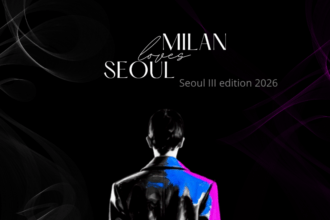
At Milan Loves Seoul, the event created to build a bridge between Milanese and Korean fashion, KAZU brings out a label he has never heard anyone else use. He calls it “K-Rave.”
The world already knows many forms of Korean culture that start with the “K” — k-pop, k-drama, cinema, fashion. I’m not saying my music is better than those things. But just as k-pop artists all have different sounds and styles while still connecting with European audiences, I want to represent myself as a Korean artist, and maybe as a small part of another, developing side of K-culture — something we could call “K-Rave.”
The term doesn’t exist anywhere else: no industry label uses it, no festival puts it on a lineup, no critic had written it before this interview. For now, K-Rave exists in one person. In light of Soda and Gou, this may be the most exposed point of his whole bet: coining, on his own, a category that neither the most established Korean DJ at home nor the most established one abroad ever felt the need to invent.
If someone in Italy watches my performance and thinks, “I didn’t know this kind of artist existed in Korea,” I would be very happy.
An identity seen before it’s heard
K-Rave, for now, is a name without an audience that recognizes it. But even before convincing anyone with the sound, KAZU seems to believe the battle is won on image.
To me, fashion and image are forms of expression just as important as music. When I get on a stage, before I even say a word, the first thing the audience encounters is what they see.
This is no small statement for a genre that has yet to gain recognition: if the name isn’t enough to explain what K-Rave is, the body on stage becomes the first argument. This year KAZU took up boxing again, losing 14 kilos ahead of his performances, and at summer festivals he found himself performing shirtless more than once.
It’s funny that I’m talking about wearing nothing while answering a question about fashion. But sometimes I think it can become a “look” stronger than any elaborate outfit.
Whether it’s a carefully studied outfit or nothing at all, KAZU places it on the same level as the music: a choice of energy, not a detail on the side. It remains to be seen whether Europe, which has already opened a contractual door for him, will be willing to judge K-Rave on this terrain too, and not only on the sound.
On Europe, KAZU speaks in the present perfect: a deal is already signed.
I’m no longer at the stage where I just say I’d like to enter the European market. I’ve already signed a deal for my European activities and I’m preparing the next steps together with the people who work with me.
What exactly that deal is, with whom, for which dates, is not specified. Its real scope will only be seen when, and if, an actual date in Milan materializes.
The goal is to become one of the first names Europe thinks of when looking for a Korean DJ with an openly Korean identity. In light of DJ Soda and Peggy Gou’s trajectories, this is far from a given: neither of them has achieved it, so far, while staying within the genre and the circuit KAZU operates in.
Behind the console, KAZU has also built other things: $HOWTIME CREW Asia, the HANG5VA collective, the hip hop duo WEHIGHTER. Yet when asked what made him the artist he is today, he doesn’t mention any of these.
I don’t consider myself a finished artist yet. Every time I encounter new music, people, cultures and stages, I’m still learning. I absorb those experiences and try to bring them back into the next KAZU SHOWTIME performance, in a new form.
To close, he chooses a lighter line:
This time it’s Milan Loves Seoul, but for me it’s also Seoul Loves Milan. And personally, I’d add one more thing… KAZU loves Milan. I really hope next time we’ll meet there.
The joke about Milan closes the interview on a lighter note compared to the rest, yet it doesn’t change the terms of the bet. The deal, the European audience, a genre that outside his own vision hasn’t yet found a shared name: all of this he’ll have to prove, stage after stage. DJ Soda and Peggy Gou have already marked the two extremes of the map. If there’s a middle point, we’re positive KAZU will find it.
Post correlati
-
 An R&B soul, an inspiration as sweet as gelato, and a passport that dreams of Italy: our interview with Riaan.
-
 We interviewed Dane, our (and your) new crush.
-
 Colde is back! Here’s what he told us about his new EP, ICY BABY.
-
 EL CAPITXN: to start a new life, the previous one must end | Interview
-
 Changing the k‑pop alphabet — Big Ocean and communication as performance | Interview
-
 oceanfromtheblue: Refusing to Drift Away | Exclusive Interview