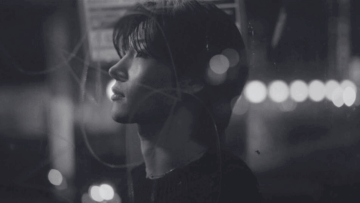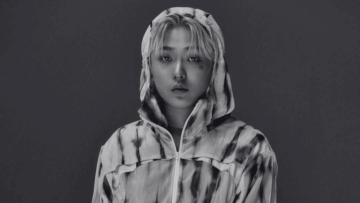


I’ll be honest. Seeing them for the first time, so perfectly sculpted, faces hidden under layers of flawless makeup, poses studied to perfection… I wasn’t drawn to them in the slightest. They looked like yet another group designed to be gorgeous and, frankly, harmless. Pretty, skilled, and nothing more. In my mind, I filed them away as ‘cute, but next‘.
Then, completely by accident, during some mindless listening, I came across them. On headphones. It was a shock. This thick, industrial, almost aggressive sound, these voices that felt part acidic, part neon green. A sound that you simply can’t be indifferent to.
That’s when I went back and looked at them. For real.
And it was right there that I saw the fissure.
Under the smooth veneer, behind the meticulous choreography, lies something strange, something dissonant. Something that didn’t correspond to any convention I knew. Their bodies’ movements create a visual paradox: you can’t discern where power stops and sinuous grace begins. And yes, of course, the androgyny is the first thing that stands out… but it’s not the typical androgyny K-pop has trained us to see. Not the ethereal, confident beauty of, let’s say, Ren from NU’EST, or SHINee Taemin. Nor was it the performative fluidity of G-Dragon. It is… something else, entirely.
A compelling curiosity took hold of me that night, and so here I am, writing about them and relentlessly spreading the word.
XLOV, this fracture in the system, absolutely must be experienced.
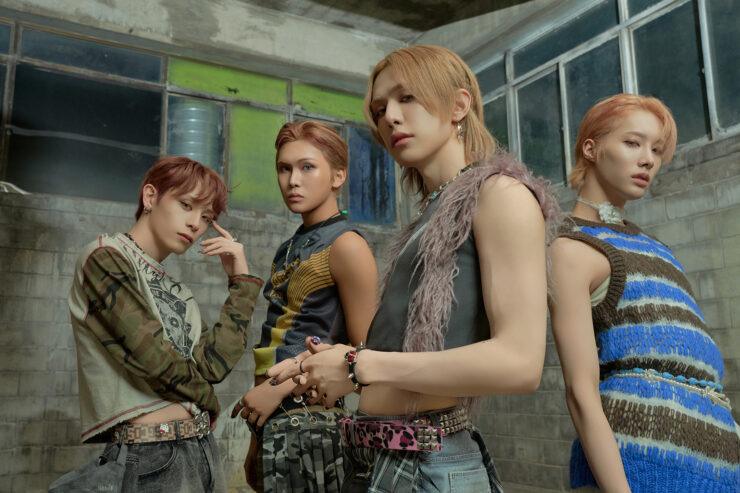
The Body is a Political Message
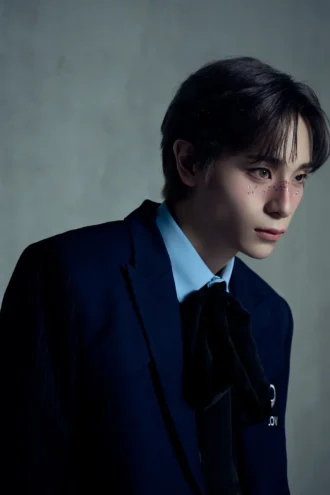
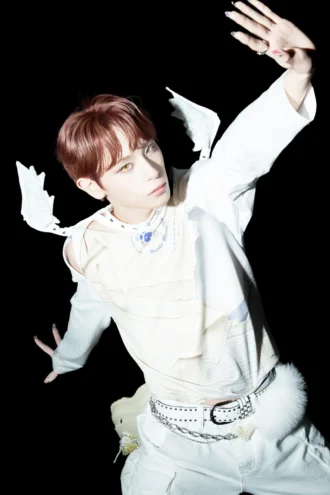
The concept that the agency has crafted for XLOV is genderless. In the musical marketing of 2025, this word risks being an empty label, a trendy way to describe pretty boys with eyeliner. But with them, it’s different. They defined it themselves with disarming clarity:
When we use the term ‘genderless’, we think it might be difficult for international fans to fully grasp its meaning. With ‘genderless’, our goal is to break the stereotypes that only certain genders can do this or that. The art we express is ‘gender-free’, and we hope it empowers more people to embrace their true selves and be who they want to be. (source here)
Their fluidity isn’t an accessory; it’s the language they speak and the air they breathe. It’s the very matter they are made of.
As we well know, K-pop is an industry built on rigid archetypes: the bad boy, the flower boy, the beast-dol. Clear, recognizable, reassuring roles. XLOV has taken these archetypes and gently told them to get lost. In a single performance, in a single camera movement, a member can project an aggressive masculinity and, an instant later, a feminine vulnerability, without either seeming fake. It’s a constant flow, a liquid identity that both disorients and fascinates.
This is not a purely aesthetic choice. It is, most likely unconsciously, a political act. In a cultural system that still recognizes and partly relies on rigid binaries, presenting four bodies that refuse to be labeled is a powerful statement. The symbol of a new normal. It means telling the viewer: “You, too, can contain multitudes. You, too, do not have to choose.“
The Four Worlds at the Origin of the Fracture
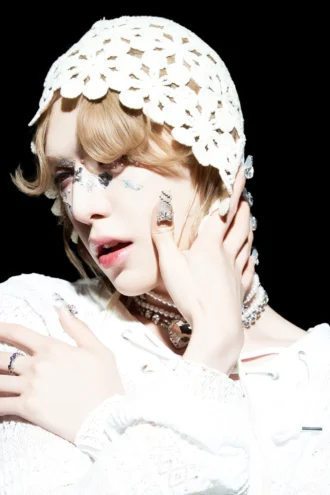
Wumuti – The Complex Soul
There’s an entire universe behind Wumuti’s eyes (birth name Umut Tursun, born July 7, 1999), and that’s not just a cliché. The group’s leader and co-producer of their tracks comes from Ürümqi, in Xinjiang. Not the glittering metropolis of Seoul, but a crossroads of cultures on the Silk Road. The smell of spices from the Grand Bazaar, the melancholic sound of the Uyghur dutar mingling with Mandarin and Turkish, the architecture that whispers stories of deserts and empires. Wumuti carries all of this with him, a heritage made even more precious and fragile by the tensions running through his homeland.
His dance embodies the grace of his people’s traditional dances and the hunger of someone who had to fight twice as hard to make it, going through the hell of survival shows like Boys Planet (but his resume has an incredible number of them… at least 5 others). He is the intellectual center of the group, the philosopher, the author of those captivating verses. His complexity is the root of their depth. And his aura glues you to the screen.
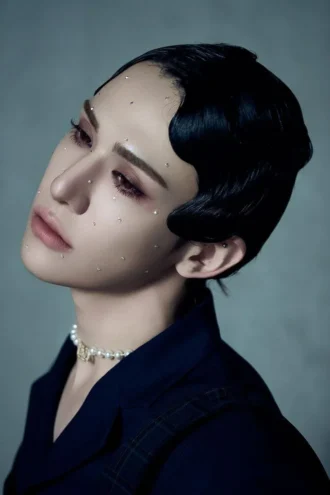
Rui – The Silent Bridge
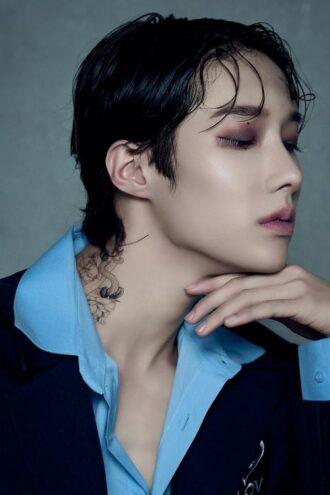
Rui, whose birth name is Chen Kuan Jui (December 28, 2000), is the incredibly flexible, acrobatic member of the group from Taiwan. His artistic training is distinguished by a specific and high-impact background: traditional Chinese dance. This skill was clearly evident during his participation in the show Boys Planet, where his performances, rooted in that discipline, stunned the judges with their technique and grace.
With his style and a disarming sweetness, Rui creates a unique bridge between the precision and ancient discipline of classical dance and the more instinctive energy of street dance, which he absorbed from the Taipei scene. A top-tier all-rounder, if you ask me.
Hyun – The Sudden Energy
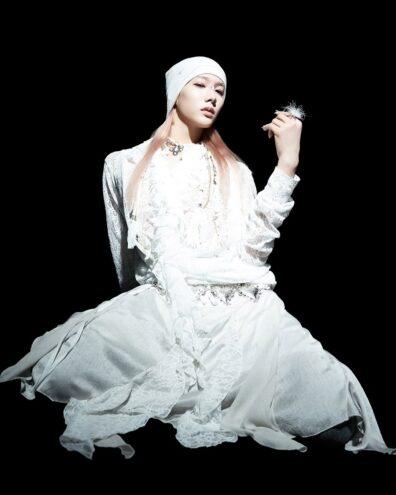
Hyun (July 26, 2002) is the enigma. The only one not from a survival show: while we know the tears, failures, and victories of the other three members, we know almost nothing about him. He just appeared, as if to claim his place in the world. And the story of how he met Wumuti is the kind that seems written for a movie: they met by chance in a gelato shop. A fortuitous encounter that convinced Wumuti he had found the final, essential piece of the puzzle.
This lack of an official trainee history is his greatest strength. He has no public past to be compared to, no expectations to meet. He is pure potential energy. In performances, he is a wild card. His stage presence is almost feral, an explosion of instinct that contrasts with and completes the surgical precision of the others. Hyun is the wildest, most unpredictable part of the crack, whose genesis was not in a practice room, but with an ice cream cone in hand.

Haru – The Explosive Growth
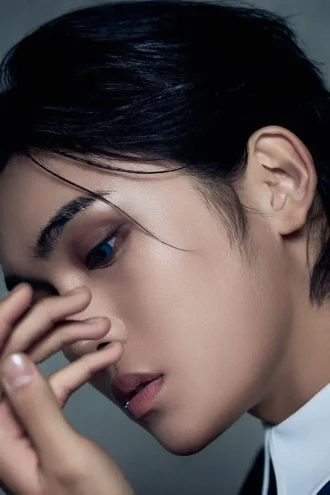
Haru, the youngest of the group, the Japanese maknae. His full name is Katō Haru, born on May 1, 2006. When he first presented himself artistically on Boys Planet, he was a very talented but visibly green kid, all raw potential. With XLOV, he has exploded in an almost violent way. Seeing him on stage today means witnessing a metamorphosis in real-time: in him, the typically Japanese etiquette and discipline coexist with a mature and at times shameless expressive ability, which he has developed at an impressive speed.
He had to learn to embody a complex and adult concept while still a teenager, and this immense effort has transformed him. Haru represents the ability to grow inside the crack, to use pressure not to break, but to transform a fracture into a fertile space, into a new, powerful way of existing. To observe Haru today is to observe a shining example of anti-fragility.
The Art of the Short-Circuit
Let’s take their debut track, I’mma Be. The production is sleek and sharp. A dry, almost surgical beat serves as the foundation, while a deep, distorted bass snakes beneath the surface, creating constant tension. Nothing about it is comfortable. Upon this sonic tapestry, their voices intertwine, sometimes harmonious, sometimes deliberately jarring. But it’s the lyrics, co-written by Wumuti, that serve as their banner.
Initially, the song’s most powerful line, I’m riding on the wall of prejudice, was questioned—considered too direct, too political, too risky for a debut group. It was Wumuti himself who stubbornly fought to keep it, pushing back against the demand to replace it with something more generic and safe. His insistence wasn’t a whim: that line was non-negotiable because it contained the very essence of why XLOV exists. That walk on the wall of prejudice becomes tangible proof that theirs is not a pose, but a promise.
And then there’s the choreography, which is never a secondary element in their artistic work. Their bodies merge, exchanging roles. Classically “masculine” movements, powerful and sharp, dissolve into sinuous, almost liquid gestures. There is no division of roles; there isn’t the “sexy” dancer and the “powerful” one. Everyone is everything, simultaneously. Man, woman, dancer, singer, powerful, delicate, black, white. They dance as a single fluid organism, a collective body that is more than the sum of its parts. It’s by watching their dance practice, without lights or costumes, that you understand everything. It is there, in the sweat and exertion, that their rebellion becomes tangible.
Why Listening to Them is an Act of Rebellion
We live in a world, and in a music industry, that constantly asks us to choose, to label ourselves, to be understandable at a first, quick glance. It wants us to be simple, because simplicity sells better.
XLOV is the antidote to all of this. They are deliberately complex. They are a question—or rather, a series of questions—never an answer.
This is why listening to them, and truly watching them, is a small but incredibly significant act of rebellion. An act we owe to ourselves, if we believe the time has come to reject the comfort zone of archetypes, to train our gaze to see beyond binarism, and to accept ambiguity.
Ultimately, it means giving ourselves permission to be fluid, contradictory, and undefined. And, for that reason, incredibly, fiercely free.